
Idea 1
Geography Shapes Power and Destiny
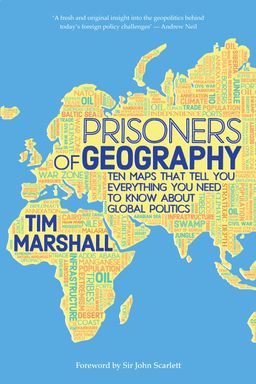
Have you ever wondered why some nations always seem to rise to power while others remain trapped in cycles of conflict and poverty? In Prisoners of Geography, Tim Marshall argues that geography—mountains, plains, rivers, deserts, and coastlines—continues to shape nations' destinies, regardless of technology or ideology. Our maps are the invisible lines of power, history, and struggle that dictate war and peace more than any political speech ever could.
Marshall contends that despite technological breakthroughs, humans remain prisoners of the land they inhabit. Each nation’s behavior, alliances, and ambitions flow from its geographical realities: Russia’s flat plains force its obsession with buffers; China’s rivers and deserts determine its internal unity and expansion; America’s natural riches make it an invulnerable superpower; and the Middle East’s artificial borders guarantee recurring turmoil. Geography defines not only what countries can do, but also what they fear—and whom they fight.
A Blueprint for Power: The Map as Destiny
Marshall opens with the story of Vladimir Putin praying for mountains in Ukraine—a metaphor for every leader’s struggle against geography. Without natural barriers, Russia has historically faced repeated invasions, from Napoleon to Hitler, explaining its obsession with controlling its western buffer states. From Ukraine to Georgia, Russia’s moves are less ideological than geographical, driven by survival instincts embedded in the topography itself.
Each chapter of the book explores how geography burdens or empowers nations. The United States inherited vast, fertile plains and inland waterways, allowing it to unify quickly and dominate oceans—its physical geography granted it an empire. China’s heartland, bound by mountains and deserts, created internal unity but discouraged naval exploration until economic necessity forced it outward. Europe’s rivers and mountain ranges created small, trade-rich nations—but also made it the world’s battlefield. Africa’s waterfalls and poor harbors limited trade, prolonging fragmentation and dependency. Every continent in Marshall’s map tells a story of constraint and opportunity.
Geopolitics as the Old Game with New Tools
You might think that in an age of satellites and drones, geography no longer matters. Marshall counters that it matters more than ever—it defines where those satellites are launched, where those drones fly, and the resources nations fight over. The Arctic’s melting ice is opening a new chapter of competition for oil and control of sea lanes. The deserts of the Middle East still dictate military movements, just as mountains keep India and China apart. Even cyberspace has a geographical underpinning: server locations, underwater cables, and drone bases depend on alliances shaped by territory.
Marshall’s key argument is geopolitical realism: nations act not from morality or ideology but from physical necessity. Leaders are constrained by mountain ranges as much as by voters. Geography is destiny, but not fatalism—it’s understanding the limits of power. The book draws vivid examples: America’s pursuit of warm-water ports, China’s need to control Tibet’s water sources, and Europe’s dependency on Russian gas pipelines. Geography tells you where interests collide—and why peace treaties fail.
Why Geography Still Matters to You
Marshall invites you to look at the world differently. When reading headlines about wars or trade disputes, he asks you to see not just ideologies but rivers, deserts, and coastlines beneath them. Understanding geography means understanding why leaders make “irrational” decisions that, in truth, obey geographic logic. It means realizing that climate crises, migration, and resource scarcity are modern faces of ancient geographic constraints.
In essence, Prisoners of Geography teaches that power lies not only in armies but in maps. Geography is the silent puppeteer of politics—and if you learn to read it, you can anticipate the world’s next moves. Marshall urges readers to think spatially, not just politically, reminding us that history unfolds not in time alone but across terrain, where human ambition forever collides with the immovable features of the Earth.