
Idea 1
The Emotional Core of Leadership
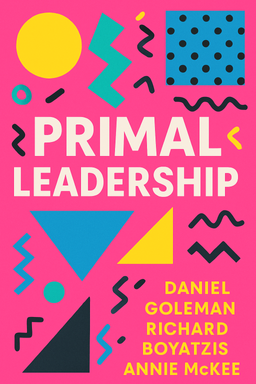
Why do some leaders seem to radiate calm energy that pulls people forward while others create tension that drains teams? The authors of Primal Leadership (Daniel Goleman, Richard Boyatzis, and Annie McKee) argue that the heart of effective leadership is not strategy or intellect but emotion. The book’s central claim is simple but profound: the leader’s first job is to create emotional resonance—a sense of shared positivity that amplifies everyone’s best capacities.
This idea builds on decades of research in psychology and neuroscience. We know now that emotions are contagious; the moods and tone of leaders literally shape how others feel, think, and perform. Leadership, therefore, is an emotional transaction: it succeeds or fails depending on whether you generate resonance or dissonance. Resonance mobilizes hearts and minds; dissonance fractures them.
How emotions shape performance
The so-called open-loop limbic system means our emotions are regulated through interaction. This is why leaders act like emotional weather fronts—if you’re anxious, sarcastic, or disengaged, those emotions ripple through everyone else. Conversely, humor, optimism, and empathy can steady an anxious group and inspire commitment. A well-timed laugh or a moment of empathy acts as a neurological reset (as in the retailer case where laughter turned tension into problem-solving).
Consider Mark Loehr at SoundView after 9/11. He invited employees to grieve openly and then asked them to donate trading proceeds to victims—a symbolic act that gave meaning to trauma. He sent personal nightly emails and turned a tragedy into purpose, raising millions. That is resonance in action.
The emotional brain in leadership
Neuroscience explains why this matters. The amygdala (your emotional radar) constantly scans for threat; if triggered, it hijacks rational thought. The prefrontal cortex can override these surges, allowing self-control and empathy. Successful leaders maintain awareness of their own emotional state—what Goleman calls emotional self-awareness—and use the prefrontal 'veto' to guide their reactions intentionally. Leaders who prime positive left-prefrontal circuits foster optimism and creativity across teams.
Leadership training must therefore go beyond lectures and powerpoints. You change behavior only by rewiring emotional circuits through practice. Just as athletes drill fundamentals, leaders must rehearse empathy, listening, and calm under stress until these become automatic responses. Weatherhead studies show sustained growth in emotional intelligence (EI) over years when people practice like this, rather than in short seminar bursts.
The evolutionary and historical context
Historically, leaders have always guided emotional life in tribes or organizations—from shamans to mentors. The “primal leader” archetype remains relevant: great leadership starts not by commanding intellect, but by orchestrating emotion. A charismatic or reassuring leader can literally stabilize the physiological stress responses of followers. In today’s volatile organizations, this instinctual emotional guidance determines whether you thrive or burn out.
The book’s arc and progression
The book begins with this primal truth, then builds a framework to act on it. It identifies the four domains of emotional intelligence needed to lead with resonance: self-awareness, self-management, social awareness, and relationship management. It describes six leadership styles anchored in these competencies—visionary, coaching, affiliative, democratic, pacesetting, and commanding—and shows how each can build or erode emotional climate. It then explores the neuroscience behind habit change, the social dynamics of learning, and how to embed emotional intelligence at scale across organizations.
The power and risk of emotion
When emotions are tuned right, performance soars. Research shows climate can explain up to 30% of performance variance, and the leader’s behavior drives most of it. But when leaders create dissonance through bullying or neglect, turnover spikes, talent flees, and long-term results deteriorate. The 'SOB paradox' describes short-term success through fear—often achieved at the cost of morale, creativity, and ethics. Sustainable leadership relies instead on empathy and inspiration.
Core insight
Leadership is a biological and emotional process first, a cognitive process second. You move people not by argument but by emotion—and the emotional climate you create determines the limits of their performance.
When you lead with resonance—anchored in emotional intelligence, practiced through constant adaptation, and reinforced by relationships—you do far more than manage tasks. You help people feel that what they do matters. In the authors’ words, you become not just a manager of facts, but a manager of meaning, capable of transforming both individuals and organizations from the inside out.