
Idea 1
Presidents at War: The Drift of Power
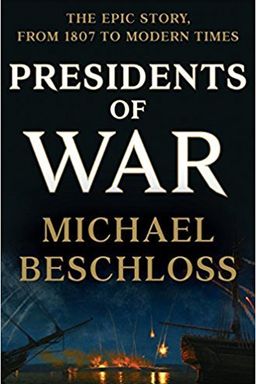
How does a republic built to restrain power become one where a single leader can launch global wars? This book traces that transformation—from Madison, Jefferson, and Polk through Lincoln, McKinley, Wilson, Roosevelt, Truman, Johnson, and up to modern presidents after 9/11. It argues that presidents at war gradually dismantled the Founders’ design that Congress declares war while the executive merely executes it. Instead, emergency, technology, and politics forge the 'presidential war power' that now defines the modern Presidency.
The Founders’ fearful design
You begin with the framers’ logic: Congress declares war; the President carries it out. Madison warned explicitly that executives are most tempted to war and thus should not decide it alone. Jefferson’s restraint after the Chesapeake–Leopard crisis tested that belief—he resisted popular fury, refused war, and chose embargo instead. It was a model of constitutional deference that limited conflict but exposed weakness in readiness. That contradiction—prudence breeding vulnerability—sets the pattern for centuries.
From Madison to Lincoln: gradual expansion
Madison’s 'state of war' request in 1812 blurred the line between executive and legislative authority. Polk’s secret diplomacy and engineered skirmishes in Mexico carried the model further, using limited incidents to force Congress’s hand for his expansionist aims. Lincoln’s response to Fort Sumter and his wartime acts—mobilizing troops, suspending habeas corpus, blockading ports—redefined necessity as justification. In each case, Presidents moved from constitutional cooperation toward unilateral initiative, citing crisis or necessity to act before consultation.
The role of opinion and media
You discover how the press becomes part of the machinery of war. Jefferson faced newspaper firestorms; Madison contended with regional backlash; Polk and McKinley rode frenzies whipped by editors like Hearst and Pulitzer. Presidents used outrage as both constraint and weapon, manipulating public sentiment while shielding secret aims. By the twentieth century, public interpretation itself becomes a battlefield—Lincoln’s rhetoric, Wilson’s moral mission, and FDR’s 'arsenal of democracy' exemplify the political craft of shaping perception into permission for war.
Modernization and moral evolution
Wars grow not only in scale but in theory. Lincoln fused morality into strategy with emancipation; Wilson universalized ideals with his Fourteen Points; FDR paired industrial mobilization with the Four Freedoms. Yet these transformations also widened executive freedom: each moral aim justified broader command powers. As communications accelerated, decision windows shrank; nuclear and intelligence technologies forced Presidents to act instantly. Truman’s Korea 'police action' and Johnson’s Vietnam escalation occur without declarations—proof that the Founders’ firewall crumbled under modern urgency.
The modern presidency of perpetual war
By the time of FDR and Truman, the presidency had become the nerve center of continuous mobilization. War production, intelligence, and atomic technology entrench permanent military structures that endure peace. The result is a presidency capable of instant strike and sustained command. Johnson’s secret decisions, Nixon’s interference in peace talks, and later Bush’s post‑9/11 actions show how emergency rhetoric justifies preemptive or covert conflict. Even attempts at legislative restraint—the War Powers Act—prove toothless against executive speed.
The book’s warning
Across two centuries of episodes, you watch ambition, fear, and crisis make war a presidential instrument rather than a constitutional process. The concluding message is clear and urgent: America’s safety now often rests on a single person’s judgment. The Founders intended divided responsibility precisely to avoid that peril. What began as consensus for self-defense has evolved into executive primacy over life and death decisions. The remedy, the author insists, lies not only in law but in civic culture—citizens must reclaim vigilance and demand that each President justify war by the principles that once bound Madison, Lincoln, and Roosevelt.