
Idea 1
The Science and Practice of Presence
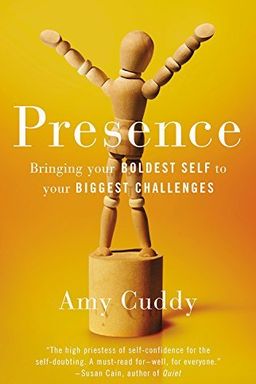
What happens in the moments when you fully show up—as yourself, without pretense or fear? Amy Cuddy’s Presence argues that these brief, high-stakes moments—job interviews, first meetings, arguments, performances—can define opportunity and self-belief. Cuddy’s central claim is that presence is not a permanent state of enlightenment but a temporary alignment between your thoughts, feelings, and behaviors. When your internal self-trust matches your external expression, you project authenticity and confidence. She calls it the “next five minutes”—the immediate window where you can access your best self.
Presence arises when values, body, and mind synchronize. It’s practical rather than mystical. Through experiments, stories, and neuroscience, Cuddy shows how presence can be trained by changing your beliefs, posture, breath, and self-dialogue. The payoff is freedom from fear, deeper connection with others, and resilience under pressure.
Presence as alignment, not performance
When people try too hard to manage impressions, they appear manipulative; when they trust their own story, they become convincing. This synchrony—when your tone, posture, and words agree—reads as authenticity. Lakshmi Balachandra’s analysis of 185 venture-capital pitches found that presence, not credentials, predicted funding. In mock interviews, candidates rated as confident and comfortable—signs of inner alignment—were deemed more hireable. You can’t fake it by mimicking gestures; you have to believe your story first so that your body tells it naturally.
The roots of impostorism
Cuddy reveals that the biggest barrier to presence is self-doubt—the chronic belief that you don’t deserve success. Pauline Clance named it the impostor phenomenon, and its symptoms—attributing success to luck, fearing exposure, and withdrawing under stress—are widespread across genders and professions. Impostorism kills presence by hijacking cognitive bandwidth and encouraging self-monitoring. Recovery starts by naming the pattern, talking about it openly, and reframing mistakes as learning. Rather than waiting for confidence to arrive, you act your way into it.
Personal power and the body-mind loop
Presence relies less on social power—controlling others—and more on personal power: control over your inner state. Keltner’s approach–inhibition theory explains that feeling powerful activates an optimistic, action-oriented system, while feeling powerless activates vigilance and inhibition. Powerlessness even impairs working memory and empathy. The physical and hormonal level mirrors this dynamic: high-testosterone and low-cortisol profiles signal calm assertiveness. Cultivating internal power—instead of commanding others—frees you from anxiety and restores agency.
Embodied cues of presence
Your body doesn’t just reveal confidence—it helps create it. Expansive postures, open chests, and slow voices signal security both to others and to yourself. The haka of New Zealand’s All Blacks shows embodied strength and synchrony; Jessica Tracy’s work demonstrates that even blind athletes express pride expansively. Conversely, contraction—slumping, crossing arms, face-covering—signals and induces low status. Cuddy distinguishes healthy expansion from aggressive posturing: presence aims for synchrony and warmth, not domination. Power posing, despite debate, captures a deeper truth: posture reshapes hormones, emotions, and risk tolerance, nudging you toward authentic readiness.
The biological levers of calm
Breath, facial feedback, and vagal tone give you entry points to presence. Slow exhalations activate your parasympathetic nervous system, lowering heart rate and cortisol. Emma Seppälä’s work with veterans shows that breathing-based yoga can reduce PTSD symptoms for months. Facial feedback research—from James Laird to modern Botox studies—demonstrates that smiling can lift mood and that inhibiting expression blunts emotion and empathy. These findings update William James’s insight: we don’t just feel first and act second; often, we act our way into feeling.
From personal to shared presence
Presence is contagious. Reverend Jeffrey Brown’s patient “ministry of presence” in Boston reduced youth violence by simply showing up to listen. Bill Ury’s diplomatic successes likewise hinge on listening before solving—building trust before asserting competence. Warmth precedes respect. When you attend fully to others, their defenses lower; when they feel heard, they reciprocate authenticity. Presence thus becomes a feedback loop: when you’re real, you invite others to be real too.
Practical synthesis
Across chapters, Cuddy’s evidence and stories converge: you can cultivate presence deliberately. The process starts inward—affirming core values, recalling strengths, visualizing success—and extends outward through breath, posture, and voice. It’s a physiological, psychological, and relational phenomenon. When you believe your story and align your body with it, you gain immediate access to your best self—the person you’re capable of becoming for the next five minutes.
The essence of Cuddy’s argument
Presence is the practice of showing up—mind, body, and values aligned—in the moments that matter. It’s not perfection or dominance; it’s real confidence born from connection and self-trust.