
Idea 1
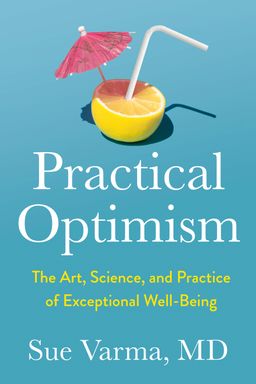
Practical Optimism: A Blueprint for Flourishing
How can you stay hopeful without being naïve, and realistic without being cynical? In Practical Optimism, psychiatrist Dr. Sue Varma answers this question with a science-based framework for living grounded resilience. Her core message is clear: optimism is not blind positivity, but a trainable skill—an evidence-supported mindset that fuses hope with practical action so you can flourish under uncertainty rather than merely endure it. Varma defines Practical Optimism (PO) as a mindset of positive potential plus behavioral tools that help you choose the most rational and hopeful course when facing ambiguity, hardship, or change.
The book blends neuroscience, psychology, and lived stories—from patients, 9/11 survivors, and Varma herself (her mysterious leg weakness and recovery through CBT)—to demonstrate how optimism transforms both thoughts and physiology. Across her framework of eight Pillars—Purpose, Processing Emotions, Problem-Solving, Pride, Proficiency, Present, People, and Practicing Healthy Habits—Varma walks you through skills that can be deliberately trained, reinforced, and automated.
Hope Rooted in Science
Varma grounds optimism in evidence. Research cited from JAMA Network Open and neuroscience studies show optimistic people live longer, recover faster, and express healthier immune and cardiovascular profiles. Her argument is that optimism enhances proactive behaviors—sleep, exercise, relational investment—and even has neural correlates: left-hemisphere activation supports approach-oriented thinking, while right-hemisphere bias links to threat scanning. Roughly 25% of optimism is inherited (OXTR gene and oxytocin pathways), meaning 75% is achievable through practice—a hopeful statistic itself.
What Practical Optimism Rejects
Varma is adamant that Practical Optimism is not denial or passive surrender. Telling someone in crisis to "look on the bright side" is patronizing, not healing. Instead, PO honors uncertainty while choosing constructive action—a philosophy captured in her sailor metaphor: you can’t control the wind, but you can adjust the sails. This balance between realism and hope sets PO apart from traditional positive-thinking approaches (as seen in Seligman’s and Neff’s work, but here deeply embedded in behavioral training).
The Eight Pillars of Practical Optimism
Each Pillar represents a mindset and skill set you can apply repeatedly. It begins with Purpose—clarifying values and direction—and moves through emotional processing, problem-solving, self-worth, proficiency, present-moment focus, relationships, and health habits. Together they create an integrated blueprint for well-being.
- Purpose: articulate meaningful goals using AIM—Acknowledge, Identify, Move forward.
- Processing Emotions: use the four-step Name, Claim, Tame, Reframe framework to regulate feelings.
- Problem-Solving: incorporate emotional regulation through tools like ABCDE restructuring and the 5 Rs.
- Pride: cultivate healthy self-worth through GRACE—Gratitude, Reality, Acceptance, Compassion, Empathy.
- Proficiency: build self-efficacy using mastery, modeling, feedback, and physiological care.
- Present: reclaim attention and presence from digital overload through mindful practices.
- People: strengthen relationships and overcome loneliness through active empathy and boundary setting.
- Practicing Healthy Habits: automate self-care behaviors so resilience becomes effortless.
Examples in Action
Through vivid case stories—Sam’s career burnout, Nicole’s shame about childcare, Sejal’s workplace anxiety, Liz’s recovery from suicidal despair—Varma shows how PO operates in real lives. Each transformation reveals the same principle: acknowledging pain, reframing narrative, and taking incremental action rebuild momentum. These examples mirror her father’s kintsugi metaphor of mending broken pieces with gold: your cracks aren’t flaws; they’re sites of renewal.
From Surviving to Flourishing
The journey through PO moves you from reaction to creation—from enduring life’s stress to shaping its meaning. You learn to align intention, behavior, and physiology to create lasting change. The closing metaphor—the Taj Mahal built as both memory and masterpiece—captures her deeper message: you craft resilience not by avoiding loss, but by transforming it into purposeful expression. Practical Optimism thus becomes not a mood but a way of living with grace, agency, and renewal.
A guiding essence
Practical Optimism teaches you that optimism is a muscle, not a mantra. It strengthens through daily reps of purpose, awareness, connection, and compassion—making growth, not perfection, the measure of flourishing.