
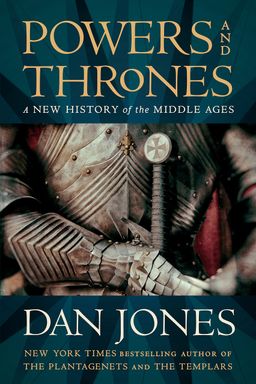
Idea 1
From Empire to Renaissance: The Making of Medieval Civilization
How did the fragments of Roman civilization evolve into the complex worlds of medieval faith, chivalry, and humanism? This book traces that thousand-year transformation from imperial unity to Renaissance reinvention. It argues that Europe’s story after Rome is neither decline nor rebirth alone—it’s a continuous process of adaptation, where institutions, ideas, and technologies shift but persist in new forms.
From Roman Foundations to Medieval Systems
You begin with Rome’s legacy: its roads, laws, military professionalism, and linguistic unity created frameworks strong enough to survive empire’s political death. When elites like Aurelius Ursicinus buried the Hoxne Hoard, they were preserving the symbols of a system that defined wealth, communication, and identity. Even after the barbarian migrations—from Huns and Goths to Vandals and Franks—Roman infrastructures and culture endured, morphing into the foundations of medieval kingship and Christian organization.
Collapse and Continuity through Migration and Adaptation
Climate crises and population movements—like the fourth-century steppe drought pushing Huns toward Roman frontiers—exploded the empire’s boundaries. Yet Rome’s administrative DNA persisted. Barbarian rulers such as Odoacer and Theodoric governed Italy through Roman law and city frameworks. This hybridization produced the post-Roman kingdoms where successor cultures—Franks in Gaul, Visigoths in Spain—blended ancient and new modes of rule.
Religion, Power, and Cultural Transformation
The conversion of Constantine and adoption of Christianity as state religion gave spiritual permanence to imperial institutions. By Justinian’s era, religion and law fused—his Codex Iustinianus and Hagia Sophia embodied both divine and imperial authority. As Byzantium faced plague and climate shocks, its resilience became emblematic of how faith and administration could stabilize civilization amid catastrophe. Later, Islamic conquests built their own version of universal empire, carrying classical learning through Baghdad’s House of Wisdom and making Arabic the lingua franca of a vast intellectual world.
Medieval Synthesis: Kingship, Monasteries, and Warriors
Western Europe rebuilt itself through the Carolingians—Charlemagne’s coronation in 800 reactivated the Roman idea of empire with papal blessing. Monastic reforms at Cluny turned religious centers into engines of education and welfare, preserving texts and social order. Knights emerged through feudal exchange (land for service), developing a caste that structured medieval politics and literature alike. Chivalry, reflected in Chrétien de Troyes’s Perceval and embodied by William Marshal, transformed violence into moral performance, while crusades dramatized faith as organized warfare.
From Crisis to Cultural Renaissance
Economic and intellectual revolutions followed catastrophe. The Black Death reshaped labor systems and provoked reform, while merchants, bankers, and scholars reinvented commerce and education. Cities like Florence and Bruges transformed wealth into art and civic expression. Universities systematized learning through scholasticism, translating Arabic science and Aristotle into Latin frameworks. These institutions anchor a new intellectual confidence that enables the later Renaissance.
The Humanist and Global Turn
Petrarch’s introspective writing synthesized classical learning with personal spirituality—his Mont Ventoux moment symbolizes the inward turn of Renaissance imagination. Patronage by the Medici, technical mastery by artists like van Eyck and Leonardo da Vinci, and architectural feats like Brunelleschi’s dome channel that confidence into visual and scientific creativity. Meanwhile, global exploration—from Henry the Navigator to Magellan—expands Europe’s horizons, creating both connection and exploitation. Gutenberg’s press finally democratizes this transformation, accelerating the Reformation and reshaping communication forever.
Core Argument
The medieval millennium is not a dark age but a bridge—an era where ancient systems and faith-driven creativity converge to form the foundation of the modern world.
By tracing this evolution—from Rome’s fall to Gutenberg’s press—you understand how law, religion, technology, and imagination interact across centuries to build a civilization of endurance, reinvention, and self-awareness.