
Idea 1
Powering Up: Taking Control of Your Career and Confidence
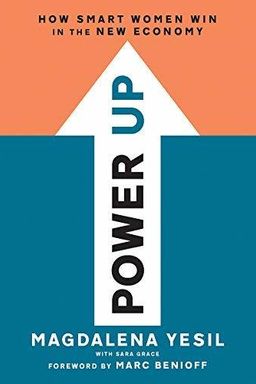
Have you ever wondered why some people seem to move effortlessly through setbacks, criticism, and bias while others get stuck defending themselves or waiting to be noticed? In Power Up, Magdalena Yeşil—a pioneering Silicon Valley entrepreneur and first investor in Salesforce—argues that true success in the modern economy doesn’t come from waiting for permission or relying on others to validate you. It comes from taking ownership of your power.
Yeşil contends that technology and the new economy present unprecedented opportunities for women and outsiders—yet these opportunities demand courage to fail, confidence to act, and clarity of purpose. Powering up is not about claiming victimhood or shouting for equality; it’s about behaving as though equality already exists and proving your value through excellence, vision, and integrity. Everyone in any industry can cultivate this kind of power, but women especially must learn to apply it deliberately, given persistent structural obstacles and bias.
Seeing Obstacles as Rivers to Cross
Yeşil opens with her vivid childhood story from Turkey, where local tradition bids travelers farewell by throwing buckets of water behind them—wishing them to "flow past obstacles." This metaphor of flow defines her life: from emigrating alone to the U.S. for college, to confronting sexism in multiple tech boardrooms, she learns to move around barriers instead of smashing headfirst into them. Powering up, she insists, is not about denying bias but about refusing to let it determine your trajectory.
When she entered Silicon Valley in the 1980s, microprocessor sales conferences featured topless performers and women were treated as props. Yet instead of retreating, Yeşil spoke directly to AMD’s infamous CEO Jerry Sanders, calmly asserting professionalism and dignity without anger. In doing so, she ended the practice and gained respect overnight. This pattern recurs throughout her career—assertive but unemotional action, grounded in gravitas, not confrontation.
Gravitas and Authenticity as Power
One of the book’s central insights is that power begins with gravitas: a blend of dignity, confidence, and integrity that others can feel immediately. Gravitas is cultivated daily through posture, tone, clothing, and purpose, not charisma or aggression. Yeşil recounts coaching younger women to dress for their professional goals without apology—"wear the clothes that make you feel powerful." For her, true authenticity meant expressing femininity without fear of judgment: long red hair, simple clothes, and a kind demeanor that disarmed sexist environments without sacrificing authority.
Gravitas also means remembering why you’re there—to do excellent work that matters. It helps you protect yourself from innuendo and manipulation. In one example, Yeşil describes perfecting the calm “Spock stare” to deflect inappropriate comments, keeping interactions purely professional. In this way, she teaches that control over your emotions and presentation is the most immediate power any professional can exercise.
Attitude over Victimhood
Yeşil’s motto—“Better a bitch than a victim”—captures her philosophy on confidence. She chronicles the story of Lara Druyan calling out interrupting colleagues at Silicon Graphics with poise, choosing respect over meekness. Across industries, Yeşil observes that women often face a double standard: assertive behavior earns men respect but earns women labels. Yet the antidote isn’t retreat—it’s to embrace assertiveness and redefine it as professionalism, not rebellion. This resilience echoes findings by researchers like Angela Duckworth (Grit) and Brené Brown (Dare to Lead): courage without bitterness beats perfectionism every time.
Building Momentum Through Relationships
Powering up isn’t solitary. Yeşil advises cultivating sponsors, mentors, and allies—not fairy godmothers who fix problems but colleagues who advocate for you because you’ve earned their trust. Her own career accelerated through sponsorship from figures like Marc Benioff, Eric Schmidt, and Irwin Federman, who backed her ideas because she contributed measurable value. The book insists that every professional needs “people power”: a circle of allies who create openings.
She differentiates mentors (those who advise) and sponsors (those who act). The fastest career growth happens when powerful figures publicly invest in your advancement—something women often miss due to overly modest self-presentation. Instead of waiting, Yeşil encourages you to ask boldly, present data-driven accomplishments, and engage confidently with potential allies across gender lines.
Leadership Through Values and Inclusion
Late in the book, Yeşil argues that true leadership in the new economy lies not just in personal success but in shaping inclusive organizations. She recounts Salesforce’s multimillion-dollar pay parity audits, GoDaddy’s partnership with Stanford researchers to remove bias, and Etsy’s creative solution to open “Hacker School” for female engineers. These examples prove that diversity, when pursued through clear processes rather than shaming or quotas, drives innovation and morale.
She closes with a challenge: integrate your personal values at work, because integrity and empathy are renewable sources of power. Leaders like Benioff, who once made her wait while he talked to his grandmother, exemplify compassion over convenience—a trait Yeşil regards as the cornerstone of powerful leadership.
Why It Matters
In Yeşil’s view, the modern technology economy amplifies both inequality and opportunity. It rewards those who move fast but forgets those who freeze. Powering up means cultivating inner confidence, clarity, and conviction to act, even when no one gives you permission. Whether you’re entering a male-dominated space, balancing parenthood, or starting over after a failure, Yeşil’s formula is the same: believe in yourself, lead with dignity, and keep flowing toward your destination. In short, powering up isn’t just career advice—it’s an approach to life where courage, conviction, and compassion converge.