
Idea 1
The Transformative Power of Asking Better Questions
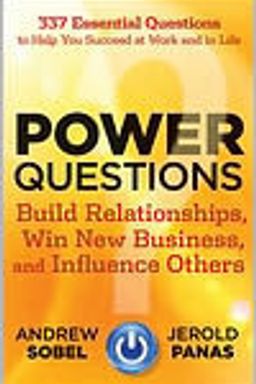
What if the secret to influence, success, and connection wasn’t knowing the right answer—but asking the right question? In Power Questions, Andrew Sobel and Jerold Panas argue that mastering the art of inquiry is one of the most life-changing skills you can develop. They contend that well-crafted questions unlock trust, spark understanding, and turn ordinary conversations into transformative relationships.
Across hundreds of examples—from CEOs and philanthropists to historical figures like Socrates, Jesus, and Einstein—the authors illustrate how powerful questions can reframe problems, open hearts, and catalyze action. They show that the most effective people don’t fill the air with information; they create space for discovery. As one CEO emphasizes early in the book, you can “tell how experienced and insightful someone is by the quality of their questions and how intently they listen.”
From Answers to Insight
Sobel and Panas insist that good questions surpass easy answers because they invite reflection rather than defense. They challenge assumptions, foster curiosity, and make others feel heard—qualities that are essential whether you’re selling a product, leading a team, or nurturing a friendship. The authors trace this lineage back through luminaries like Peter Drucker, who began his consulting sessions with simple yet profound queries (“What business are you really in?”) and Socrates, whose method shaped Western philosophy by teaching through questioning.
Power questions aren’t about interrogation—they’re about illumination. They help us see reality more clearly, step out of mental “caves” of limited perception, and grasp what truly matters. This is why the book begins by reframing questioning as an act of empathy: when you ask sincerely, you tell others that their story matters.
Transforming Relationships Through Curiosity
The authors weave stories showing questions as sparks of trust and intimacy. A consultant learns to stop selling and start listening when he replaces a self-focused presentation with one thoughtful query, “What would you like to know about us?” A university vice chancellor discovers that the four most neglected words in leadership—“What do you think?”—can ignite dialogue and loyalty. In both moments, questions become bridges of care.
The authors teach that curiosity isn’t passive—it’s strategic empathy. Like Dale Carnegie in How to Win Friends and Influence People, Sobel and Panas show that asking and listening are forms of power because they honor others’ perspectives. In a world drowning in declarations, great leaders learn to listen aggressively, using silence to draw truth out instead of rushing to fill it.
Why Questions Matter for Modern Success
Sobel and Panas extend their philosophy into everyday business and personal life. Questions can sell ideas, reorient values, and even heal relationships. “Mission isn’t important—it’s everything,” they remind us; asking if your actions align with your mission can redirect entire organizations. Likewise, asking “Why do you do what you do?” rekindles intrinsic purpose when motivation wanes.
At its heart, Power Questions is not only about persuasion—it’s about meaning. Each inquiry acts like a mirror that helps others articulate their own values. Whether through “What in your life has given you the greatest fulfillment?” or “Is this the best you can do?”, you help people confront their motivations, rediscover integrity, and choose purpose over routine. The right question liberates people from autopilot thinking.
What This Book Offers You
By the end of the book, you’ll have learned how to turn any interaction into an exchange that builds trust and produces insight. The authors give you hundreds of examples—301 in fact—to adapt for leadership, mentoring, sales, or simply richer human connection. Through these, you learn how to:
- Replace stale statements with curiosity-driven questions that uncover meaning.
- Use silence and follow-ups (“Can you tell me more?”) to deepen understanding.
- Ask transformative questions that help others clarify intent, mission, and aspiration.
- Shift conversations from transactional to transformational—focused on insight rather than influence.
“Most often, the question is more important than the answer.”
This line, dedicated to “all who wish to build fresh and exciting relationships,” encapsulates the authors’ thesis: your power lies not in what you know, but in what you evoke.
Reading Power Questions is an invitation to slow down and practice curiosity as a discipline. It reminds you that behind every question lies an act of leadership—and behind every great leader lies a question that opened a door.