
Idea 1
Building Power: The Real Game of Success
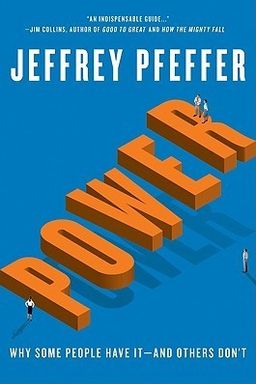
Why do some people rise swiftly through the ranks while others—with equal or even greater talent—struggle in obscurity? In Power: Why Some People Have It and Others Don’t, Stanford professor Jeffrey Pfeffer tackles this question head-on. He argues that success in modern organizations depends far less on talent, intelligence, or hard work than we like to think. The real determinant of career success is power—how to get it, use it, and keep it. But because many of us are taught to view power as manipulative or unethical, we fail to play the very game that defines who wins.
Pfeffer’s central claim is both unsettling and liberating: organizations are political arenas, not meritocracies. Those who understand this reality—and act on it strategically—can not only survive but thrive. Those who cling to fantasies about fairness or justice often end up sidelined, bitter, or burned out. Pfeffer blends decades of research, case studies, and personal stories from corporate, academic, and political worlds to map a concrete path for anyone who wants to rise in influence without compromising their sense of self.
A World That Rewards Power, Not Merit
At the heart of Pfeffer’s argument is a vital observation: doing your job well isn’t nearly enough. As stories like Rudy Crew, the award-winning superintendent fired despite excellent results, or Jamie Dimon, who lost his job at Citigroup despite stellar performance, reveal, power and perception matter more than results. Promotions, opportunities, and survival hinge on relationships, visibility, and your boss’s interests—not objective metrics of success. Pfeffer shows that assuming the world is fair or that merit will be rewarded is a dangerous illusion—a concept psychologists call the just-world hypothesis.
This illusion, he warns, “anaesthetizes” people to the real political landmines around them, leaving them unprepared. Whether you’re in a start-up, government, hospital, or university, Pfeffer argues, the laws of power—visibility, alliances, reputation—govern outcomes more than job performance. Once you accept this, you can learn to navigate, rather than protest, the system.
Power as Survival, Health, and Fulfillment
Surprisingly, Pfeffer insists that power isn’t just about ego or money—it’s about control and well-being. Drawing on Michael Marmot’s studies of British civil servants, he demonstrates that people at the bottom of hierarchies not only feel more stress but literally die earlier. Those with decision-making authority live longer and healthier lives, even after accounting for factors like smoking or diet. “Seek power as if your life depends on it,” Pfeffer concludes, “because it does.”
Beyond health, power brings autonomy and influence over one’s destiny—freedom to shape one’s work, environment, and career. It’s not an evil to be avoided but a skill to be mastered. And unlike raw intelligence or charisma, power skills can be learned, practiced, and refined.
Breaking the Myths: Why Leadership Books Mislead You
Pfeffer takes aim at what he calls the “toxic optimism” of most leadership literature. Books that preach authenticity, humility, and virtue as keys to success, he argues, promote comforting fantasies rather than useful truths. CEOs love to portray their success as the result of integrity and modesty when, in reality, they often maneuvered politically and aggressively to reach the top. We prefer these sanitized stories because they confirm our moral worldview. Yet Pfeffer shows how this wishful thinking keeps people powerless.
He advises readers to trust not the leadership self-help genre but empirical evidence and lived observation. Watch how powerful people actually operate in your organization—not how they describe themselves—and you’ll start to see patterns: they build allies, control information, cultivate reputation, and mitigate risks. They also confront, rather than deny, the political nature of organizational life.
The Inner Enemy: Overcoming Self-Sabotage
Perhaps the biggest barrier to gaining power, Pfeffer argues, is not external politics but internal psychology. People often self-handicap—they downplay their ambitions, refuse to “play the game,” or avoid risk to protect their self-image. He gives examples of professionals like Beth, a high-achieving executive who stalled because she found politics distasteful and didn’t want to appear “calculating.” By avoiding the power game, she inadvertently ensured her own marginalization. Meanwhile, those like Anne, a strategist in Silicon Valley, learned to engage politically and rose rapidly by taking initiative, asserting authority, and seizing opportunities others ignored.
Pfeffer’s message is provocative but liberating: ambition and self-promotion don’t make you unethical—they make you effective. The real danger lies in giving away your power through timidity or denial. As he reminds us with Eleanor Roosevelt’s words, “No one can make you feel inferior without your consent.”
From Awareness to Action
The book’s thirteen chapters outline a hands-on journey—what Pfeffer calls the path to power. You learn how to build credibility, leverage personal qualities like will, focus, and energy, choose the right organizational environment, master networks, act and speak with authority, build a reputation, and withstand inevitable backlash and setbacks. He combines blunt realism with surprisingly compassionate advice: play the game, but play it well—and never surrender your agency by waiting for fairness that will never arrive.
Ultimately, Pfeffer’s message is neither cynical nor ruthless. It is practical humanism grounded in empirical truth. Life inside organizations is political—but once you understand the rules, you can stop resenting them and start playing to win. As Pfeffer concludes, “If you don’t like the news, go out and make some of your own.”