
Idea 1
The Emotional Reality of Poverty
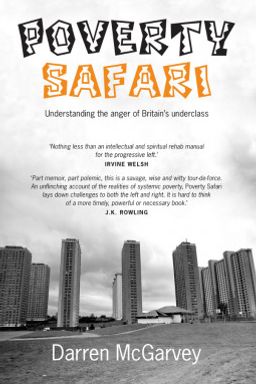
How can you truly understand poverty—not just as numbers and statistics, but as a living, breathing emotional reality? In Poverty Safari, Darren McGarvey argues that poverty is far more than an economic condition; it is an emotional, psychological, and cultural experience that seeps into every corner of a person’s life. McGarvey, raised in the deprived housing scheme of Pollok in Glasgow, contends that society’s misunderstanding of poverty stems from emotional illiteracy—a collective inability to empathize with those living in chronic stress, trauma, and social exclusion.
Drawing from autobiography and social critique, McGarvey’s book challenges readers to look beyond systems and statistics to the emotions that underpin poverty. He claims that real progress cannot happen until we develop “emotional literacy”—the ability to recognize and process feelings that drive destructive behaviors and fractured communities. Poverty is not something “out there” to be solved by politicians or economists—it’s something that operates in the human heart and mind.
Why Emotional Literacy Matters
McGarvey opens with the tragedy of the Grenfell Tower fire, describing how victims’ warnings were ignored for years. He uses the event to expose how society consciously tunes out the emotional experiences of the poor. When people suffer in silence, policymakers respond only with abstract procedures. Emotional literacy, he argues, means recognizing the anger, fear, and exhaustion people feel when living in unseen, unmanaged chaos. Until we learn to listen—to feel—nothing meaningful will change.
Living Inside the Stress Loop
McGarvey frames poverty as an endless feedback loop of stress and reaction. Growing up amid violence and addiction, he explains how fear of humiliation or physical harm made him hypervigilant, always scanning for danger. This psychological conditioning mirrors that of adults in his community—people for whom aggression and defensiveness replaced communication. Such internalized stress becomes inherited, shaping generations psychologically before they can act economically.
He explores this idea through neuroscience and lived experience: chronic stress rewires the brain’s emotional circuitry, how children raised in dysfunction become adults driven by anxiety and impulsivity. Poverty, therefore, isn’t just unfair wages or inadequate housing—it’s the physiological embodiment of social neglect.
Rage, Responsibility, and Complexity
Throughout Poverty Safari, McGarvey fights against simplistic narratives from both left and right. The left blames the system; the right blames individuals. McGarvey insists that both are partially right and disastrously incomplete. Rage against injustice is valid—but without self-reflection, anger can turn poisonous. At the same time, demanding personal responsibility without acknowledging structural inequality is cruel. His book proposes a middle ground: social change requires both systemic reform and personal accountability.
From Memoir to Manifesto
The book’s autobiographical frame—from his violent childhood and addict mother to his work as a rapper and activist—humanizes abstract social debates. But McGarvey’s goal is not sympathy; it is understanding. He transforms his story into a call for self-examination, for citizens and systems alike. Through chapters set in prisons, at protests, in youth centers, and even McDonald’s queues, he demonstrates the subtle interplay between trauma and culture. Every lesson reflects a universal truth: emotional denial perpetuates inequality.
Why This Matters to You
McGarvey’s argument matters because poverty, in his view, mirrors every domain of stress in modern life—from workplace burnout to online outrage. He writes, “We all need to become emotionally literate.” Whether or not you grew up poor, his story forces a mirror into your own assumptions about comfort, control, and empathy. Poverty Safari shows that true social progress is emotional as much as political—a transformation that begins when you stop observing “the poor” from a safe distance and start acknowledging the universal fragility within us all.