
Idea 1
The Great Acceleration: How Crisis Reshapes Capitalism
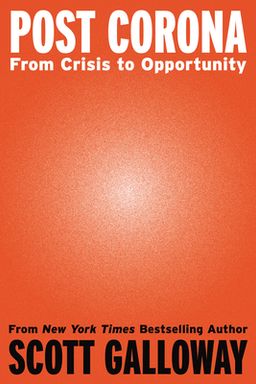
Have you ever felt that time itself seems to speed up when life changes dramatically? Scott Galloway’s Post Corona begins with this insight: small disruptions can warp the flow of history. The coronavirus pandemic, he argues, is not just an event—it's an accelerant. It didn't invent new trends but compressed decades of evolution into months. What was destined for 2030 arrived in 2020.
Galloway contends that the pandemic revealed our vulnerabilities while propelling existing power structures forward—especially in business, technology, and education. The world didn’t merely pause; it fast-forwarded. Companies with strong balance sheets and digital infrastructure surged ahead, while weaker ones were culled. He sees this dynamic everywhere: from Amazon’s trillion-dollar growth to universities forced online overnight. The core argument of Post Corona is that crises don’t reinvent capitalism—they accelerate its existing inequities and opportunities.
A World Built for Speed—and Shock
At the start of 2020, the economy was humming along, unemployment was low, and billion-dollar valuations were commonplace. Then the virus hit. Within weeks, markets crashed, entire industries froze, and household names went dark. Yet amid the devastation, technology stocks soared. Amazon doubled its valuation, Apple climbed from $1 to $2 trillion, and Tesla’s market cap eclipsed that of all major car manufacturers combined. This paradox, Galloway says, is proof of a new physics of commerce: crisis accelerates concentration. Those already dominant become unstoppable.
It’s what he calls “the culling” — survival of the financially fittest. Firms with cash reserves and low debt thrived, while leveraged companies collapsed. 2020 didn’t just cause a recession; it separated the strong from the weak at hyper speed. Like Lenin’s quote, “decades happen in weeks,” Galloway shows that transformation doesn’t wait for permission—it happens when systems collide with shock.
Acceleration as Opportunity—and Warning
Every crisis, Galloway notes, presents a crossroads. The Chinese word for crisis famously combines “danger” and “opportunity.” Yet he cautions that this translation is only half right—the second character instead means “critical juncture.” Humanity stands at one now: we can rebuild society around empathy and innovation, or double down on greed and exploitation. During the pandemic, technology became humanity’s lifeline—Zoom for work, Amazon for goods, Netflix for escape. But those conveniences also deepened inequality. While millions lost jobs, tech billionaires added $637 billion to their wealth.
“In crisis there is opportunity—but opportunities are not guarantees.” Galloway reminds us that what feels like evolution can also be exploitation if empathy doesn’t guide progress.
A Mirror for Capitalism’s Flaws
Beyond business, Galloway turns his lens on society itself. America’s pandemic response exposed its underlying “comorbidities”—weak institutions, declining trust in government, and chronic inequality. He contrasts World War II’s culture of shared sacrifice with today’s obsession with shareholder value. In 1943, Americans bought war bonds and rationed tires; in 2020, CEOs earned millions while their companies took bailouts. “Patriotism used to be sacrifice,” Galloway writes, “now it’s stimulus.”
He sees a generation emerging from the pandemic with scar tissue but also potential—a generation that may rediscover civic duty, honesty, and collective action. But whether humanity matures or regresses depends on what we do next: rebuild institutions or continue outsourcing sacrifice. This is not just an economic forecast but moral calculus.
What You’ll Learn from Post Corona
Over the chapters that follow, Galloway explores how the acceleration reshapes specific arenas:
- Big Tech’s monopoly era: Amazon, Apple, Facebook, and Google rose from disruptors to empires, using crises to expand their reach and crush competitors.
- Other disruptors: New players like Shopify, Peloton, and Lemonade illustrate the anatomy of successful innovation—and the pitfalls of hype culture and “founder worship.”
- Higher education’s reckoning: The pandemic revealed academia as a $700-billion industry stuck in the past, ripe for technological transformation and hybrid learning.
- The commonwealth: Galloway’s philosophy of “capitalism with empathy” argues that government and community are not obstacles to prosperity—they are its foundations.
In the end, Galloway’s thesis feels both urgent and timeless. Change, he insists, is not driven by time but by shock—the before and after moments that reset our trajectory. Covid‑19 was the accelerant that melted away illusions of stability. Whether we emerge smarter, kinder, and more equitable—or descend further into exploitation—depends entirely on how we shape the “after.”