
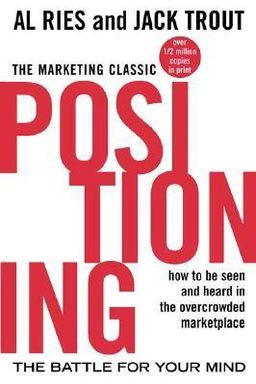
Positioning cover

Positioning

by Al Ries and Jack Trout

Positioning, by Al Ries and Jack Trout, reveals groundbreaking marketing strategies that help brands stand out in an overcrowded market. Discover how to effectively position your product, create a memorable brand, and avoid common marketing pitfalls, ensuring your product resonates with consumers and maintains a leading position in the industry.

Positioning: Winning the Battle for Your Mind

When you think of your favorite brands—say, Coca-Cola, Apple, or Nike—what comes to mind first? Is it the product itself or the feeling, identity, or image associated with it? Positioning: The Battle for Your Mind by Al Ries and Jack Trout begins with a striking insight: success in business, marketing, and even personal branding isn't about what you do to your product—it's about what your product represents in someone else's mind.

Ries and Trout argue that we live in an overcommunicated society. The human mind is bombarded by messages—from advertisements, media, digital alerts, and competitors—all competing for attention. In such a noisy world, you can't win by shouting louder or claiming to be simply “better.” You win by claiming a space—a clear, memorable idea—in the minds of your audience. This, the authors call positioning. It’s the act of defining and owning a unique place in the mental map people use to navigate products, people, and ideas.

The Shift from Product to Perception

In traditional marketing, businesses worked endlessly on product features—advertising their superiority, taste, or reliability. But Ries and Trout show that this “inside-out” thinking has become obsolete. Consumers are not objective evaluators. They don’t absorb technical data; they rely on mental shortcuts, emotions, and pre-existing beliefs. Success now requires “outside-in” thinking: understand what your prospects already believe, and position yourself in a way that aligns with those beliefs rather than fighting them.

For example, when Avis realized it couldn’t beat Hertz as the number-one car rental company, it didn’t pretend otherwise. Instead, it embraced second place: “We’re No. 2, so we try harder.” That simple admission made people trust Avis more—and the company became one of the most memorable brands in its category. Similarly, Seven-Up called itself “The Uncola,” positioning itself not as another soda but as an alternative to Coke and Pepsi’s dominance.

The Overcommunicated Society

Ries and Trout paint a vivid picture of how overloaded our minds have become. Americans consume hundreds of dollars worth of advertising each year; the brain becomes a gatekeeper that filters almost everything out. It only lets in messages that fit what it already believes. In this world, the most dangerous strategy is trying to change people's minds completely—because once the mind makes a judgment, it aggressively defends it (“Don’t confuse me with the facts”).

So effective communication must simplify. The authors advocate for a ruthless clarity: boil down your message until it cuts through the mental fog. It’s why “Lite Beer from Miller” succeeded—not by inventing poetic slogans, but by planting a clear, concise concept that consumers could latch onto instantly. In advertising, less is more.

Why Positioning Matters Beyond Marketing

Positioning isn’t just a marketing technique—it’s a way of thinking about influence and communication. Ries and Trout demonstrate how the concept can shape industries, countries, and even careers. A church can position itself as a “teacher of the word” (clarifying its role to the faithful). A country like Belgium can position itself as the place of “five Amsterdams,” emphasizing its cultural cities. Even individuals, they argue, can position themselves strategically by finding their distinctive “hook”—whether as a specialist, innovator, or trusted advisor.

In essence, positioning represents the psychology of perception. It asks: what is already in people’s minds, and how can your product or idea attach itself to those existing ladders of thought? Just as each person ranks car brands (Hertz first, Avis second, National third), the audience organizes every category into mental ladders. To climb higher, you either claim an open rung (“We’re the uncola”) or reposition competitors to make space (“Tylenol: for those who can’t take aspirin”).

The Invitation: A Strategy of Simplicity, Boldness, and Realism

Ries and Trout invite readers to reject illusion—the belief that great products automatically succeed or that persuasion depends on dazzling creativity. Instead, they urge realism and humility: know your limitations, study the marketplace, and build strategies based on how people actually think. Their book offers case studies ranging from Xerox’s misplaced diversification to Volkswagen’s “Think small” revolution, showing how some brands dominate minds while others die from confusion.

Ultimately, the battle for success is not a fight for airwaves or market share—it’s a fight for cognitive space. Whether you're branding a product or defining your own professional identity, your goal is the same: to carve out a distinct, believable, and memorable position in a crowded world. As the authors put it, “Positioning is what you do to the mind of the prospect.” Win that battle, and you win everything.


Getting Into the Mind: The Power of Being First

How do you get a place in someone’s mental ladder? Ries and Trout say the easiest way is simple—be first. The first brand to occupy a spot in people’s consciousness enjoys near-permanent dominance. Ask yourself: who was the first person to fly solo across the Atlantic? Charles Lindbergh, of course. But who came second? Few remember. Likewise, Kodak ruled photography, Kleenex ruled tissues, and Hertz ruled rentals precisely because they got in first.

Being first grants what psychologists call an imprint—an idea etched into the mind that is incredibly hard to replace. Once established, competitors can rarely go head-to-head. As Ries and Trout illustrate, RCA tried to beat IBM at computers and lost $250 million. General Electric failed too. IBM was first in the mind, even though it wasn’t first to invent computers (that was Sperry-Rand). Being first is not about technological innovation—it’s about mental positioning.

If You Can’t Be First, Be the First to Reframe

If the first position is already taken, you must find another angle—another “first” within a different dimension. For instance, Seven-Up wasn’t first in soft drinks but became first in a new category: “The Uncola.” Avis wasn’t first in rental cars but became first by proudly owning “second place.” These reframings allowed both brands to carve fresh mental territory without fighting directly against entrenched leaders.

To find this new “first,” Ries and Trout advise being specific. It’s better to rule a small pond and expand later than drown in a large one. Michelob wasn’t the first beer, but it was the first premium domestic beer. By focusing tightly, it became a category leader and defined a market segment that competitors could only imitate.

Why Creativity Alone No Longer Wins

Ries and Trout lament that many companies cling to the old “creative advertising” formula—believing that clever slogans can make up for poor positioning. They illustrate this with failed campaigns like Schlitz’s vague “Real gusto in a great, light beer.” Miller, in contrast, stripped away the fluff and positioned directly: “Lite Beer from Miller.” The simplicity worked because it told consumers *what to believe*, not *what to admire.*

Positioning thrives on clarity over creativity. The authors compare poetic advertising to fog—it looks lovely but obscures reality. In an overcrowded market, poetic words fail; sharp, plain claims win. Miller’s success, Beck’s beer’s “most popular in Germany” campaign, and Michelob’s “First class is Michelob” all prove that clarity carves mental territory faster than cleverness ever could.

In the end, being first isn’t always about inventing—it’s about claiming. You can’t always be the first to exist, but you can become the first to occupy a unique space in people’s minds. And once you’re there, every competitor that follows has only one road to defeat: trying harder to prove they can replace a memory already fixed in place.


Those Little Ladders in Your Head

To succeed, you must understand how people mentally organize choices. Ries and Trout visualize the mind as a filing system—a set of ladders, each representing a product category. Each rung holds a brand name ranked from top to bottom. For example, in car rentals, Hertz sits at the top, Avis below it, and National third. The higher the rung, the more mental space—and loyalty—that brand commands.

When the ladder is full, new entrants must find creative ways to attach themselves. If they try to muscle in head-on, the mind rejects the message (“That doesn’t fit what I already believe”). Instead, successful brands connect themselves against what already exists. Seven-Up didn’t pretend to be another cola; it presented itself as “Uncola.” Avis didn’t deny being second; it embraced it. These “against positions” succeed by leveraging the ladder instead of fighting it.

The Psychology of Expectation

People perceive through filters of expectation. Ries and Trout use examples like pouring cheap wine into an expensive bottle—the taster instantly finds it better. Or how “Mr. Clean” is more recognizable than a vice president. Our minds see what we expect to see. In marketing, this means if your advertising creates a certain impression, consumers will experience your product accordingly. Positioning, then, is about setting expectations carefully and consistently.

This expectation bias explains why overcomplicated campaigns fail. When a brand tries to convince customers it’s something very different from what they believe, the mind resists. Simplicity, repetition, and emotional congruence—all traits of strong positioning—overcome that barrier by making ideas feel true, even if they’re not rationally proved.

Consistency: Avoiding the F.W.M.T.S. Trap

Ries and Trout warn against the “F.W.M.T.S.” trap—“Forgot What Made Them Successful.” After Avis’s famous campaign succeeded, management dropped “We’re No. 2, We Try Harder” to chase first place. The result: confusion and decline. Positioning requires consistency. Customers have limited mental space, and when a brand changes its message, it risks erasing its own rung on the ladder. Stick to what works. Nurture your position rather than reinvent it.

Ultimately, the ladders reveal a truth about the mind’s limits. People can recall only about seven brands per category. The goal isn’t to outshout competitors but to claim a clear rung—and stay there. In a world overloaded with messages, consistency and simplicity aren’t creative constraints; they’re survival strategies.


Repositioning the Competition: Creating Mental Space

When all the mental ladders seem full, Ries and Trout propose the bold move: reposition your competition. That means you change how people see your rivals, not just how they see you. To enter the mind, you often have to push something else out first. Tylenol, for instance, won its place by challenging aspirin itself: “For the millions who should not take aspirin…” The ad began not by praising Tylenol but by exposing aspirin’s drawbacks. Only after undermining the old belief did Tylenol claim its space as a gentler alternative.

This strategy works because the mind loves conflict. People pay more attention when you challenge what they already believe than when you agree. Repositioning gives them permission to update their mental maps. It’s not mean-spirited—it’s psychological realism.

How to Reposition Effectively

Ries and Trout show that successful repositioning follows a pattern: (1) identify a weakness or misconception in competitors, (2) expose it honestly, and (3) position your brand as the antidote. Stolichnaya vodka succeeded by contrasting “Russian-sounding American vodkas” with “the only Russian vodka made in Leningrad.” It didn’t just promote itself—it made others look counterfeit.

Royal Doulton did the same against Lenox, pointing out that Lenox wasn’t British at all but from New Jersey. Suddenly, “fine china” felt less prestigious unless it came from England. These examples reveal that repositioning relies less on creativity and more on insight into human assumptions.

Why Comparative Ads Often Fail

Not all “comparative advertising” counts as repositioning. “We’re better than the competition” doesn’t move minds—it sounds boastful. True repositioning tackles perception, not performance. It redefines the category so your brand appears as the fresh answer. When Pringles launched as a new chip, its competitors mocked its long chemical ingredient list, turning Pringles from trendy to artificial overnight. Perception shifted dramatically because competitors reframed it against natural chips.

Repositioning must always be honest yet disruptive. It plays into our media psychology—people trust conflict over compliments. As Ries and Trout remind us, the mind isn’t a debate hall; it’s a theater. Repositioning works when the audience reimagines the whole story, casting you in a new starring role.


The Power and Peril of the Name

Few marketing decisions matter more than naming. Ries and Trout insist: a name is the hook that hangs a product on the mind’s ladder. Names convey meaning instantly—and can make or break positioning. Shakespeare may have said a rose by any other name would smell as sweet, but in marketing, that’s false. People see, smell, and believe according to what they expect from a name.

Good Names Create Instant Meaning

Names like Head & Shoulders, Close-Up, or DieHard immediately signal their benefit—dandruff control, intimacy, and durability. These are nearly generic but memorable. Ries and Trout note that the trick is to stay just short of being literal. Go too far, and the name becomes generic and loses trademark value (as happened with Miller “Lite”). The best names convey a simple, vivid idea that’s unique enough to own yet descriptive enough to remember.

Bad Names Create Confusion

Companies often choose lazy or misleading names based on internal logic. Mennen E deodorant sounded scientific but failed because consumers don’t want healthy armpits—they want freshness. Or Eastern Airlines, which struggled because “Eastern” felt regional compared with national competitors like United and American. Names like Goodrich confused buyers because of their similarity to Goodyear. Poor naming traps companies in unwanted categories and associations.

Ries and Trout even show psychological effects of names beyond products. Studies found students named “David” or “Michael” received higher grades than those called “Hubert” or “Elmer.” Names carry emotional baggage; they trigger expectations that shape perception. In marketing or personal branding, names are not cosmetic—they are cognitive direction signs.

Change When Necessary

When names become outdated or confusing, change them boldly. Exxon successfully moved from “Standard Oil of New Jersey,” gaining a global identity. RCA, Xerox, and Kodak shortened complex names to memorable ones—but Ries and Trout warn against meaningless initials. Unless you’re already famous (like IBM or GE), abbreviation erases clarity. A name must sound, not just look, right; the mind works aurally. Clarity, relevance, and recall matter more than elegance or heritage.

Ultimately, names act as entry codes to the mind. The goal is linguistic resonance—a word that evokes emotion, trust, or curiosity. If your name undermines your position, it drains power. If it strengthens your category claim, it becomes your greatest asset.


The Line-Extension Trap

Companies often fall into one of Ries and Trout’s most critical warnings—the line-extension trap. This is the temptation to use a successful brand name on new products to “get a free ride” from its reputation. It sounds economical, but psychologically it’s disastrous. In a crowded mind, each name holds one concept. Stretching it to cover too many blurs the position, diluting the original meaning.

Life Savers gum never gained traction because people expected “the candy with the hole,” not chewing gum. Dial deodorant piggybacked on Dial soap, confusing buyers. Bayer’s non-aspirin drug erased the association that made “Bayer” synonymous with aspirin. Each line extension weakens the mental anchor that originally made the brand strong. The mind resists multipurpose meanings—it wants simplicity.

When Line Extension Kills Loyalty

In vivid case studies, Ries and Trout recount how strong brands decline when stretched. Protein 21 shampoo lost its identity after spawning conditioners and sprays. Scott Paper blurred its meaning by naming every product “Scott”—from tissues to diapers—until customers couldn’t tell what Scott meant anymore. When a brand tries to be everything to everyone, it becomes nothing to anyone.

They compare names to rubber bands: stretch them too far, and they lose strength. Even giants like Volkswagen fell victim. The “Think small” Beetle’s success inspired more models, and soon Volkswagen became a lineup instead of an idea. Sales plunged, proving that conquering new categories often destroys the old one.

Rules for Resisting the Temptation

Ries and Trout offer five rules to guide branding: (1) Big potential equals separate names; (2) crowded categories favor house names; (3) high-budget products deserve independence; (4) innovative products demand unique names; (5) personal sales items can share house identity. These rules underline a business truth—you expand by focus, not by diffusion.

While line extension might yield short-term sales, it usually erodes long-term clarity. Positioning rewards singularity above all. As Ries and Trout remind marketers, “You can’t be all things to all people and still have a powerful position.”


Positioning Yourself and Your Career

Ries and Trout expand positioning beyond advertising into personal success. Just like a product, you must position yourself—define a unique concept others can remember. Most people, they argue, fail because they try to be all things to all people. You can’t hold multiple ideas in someone’s mind at once. To win opportunities, focus sharply and deliberately on one clear attribute or specialty.

Positioning Your Identity

Find your “hook”—the one idea people should associate with you. Don’t wait for others to define it. A lawyer could be “the best in Dallas” or “the go-to for corporate disputes.” Choose, claim, and live that position through your actions and visibility. Avoid confusion—if your name or personal brand causes mental noise, change it. Names shape perception as much for professionals as for companies. Roy Rogers, John Wayne, and Kirk Douglas all became iconic by renaming themselves strategically.

Avoid Personal Traps

Don’t fall into the “no-name trap” by hiding behind initials or generic titles; the mind forgets what it can’t associate. Don’t fall into the “line-extension trap” either—avoid diluting your identity with too many roles. If you’re a designer, don’t try simultaneously to be marketer, coder, and strategist. The more specific your position, the stronger your recognition.

Find a Horse to Ride

Success rarely comes alone. “Find a horse to ride,” the authors advise—a partner, boss, or company whose position you can leverage. Hitch your wagon to a star and align your trajectory with theirs. Ray Kroc did this by riding the McDonald brothers’ idea to global success. Faith, strategy, and courage matter more than brute effort. Hardworking people often stay unseen because they lack positioning, not ability.

Ultimately, the same laws apply in life as in marketing: clarity beats capability when it comes to perception. If you don’t define yourself, others will—and you may not like their version.


Playing the Positioning Game: Simplicity, Courage, and Patience

The book closes with timeless advice on mindset. Ries and Trout argue that positioning isn’t just a technique—it’s a mental game requiring flexibility, humility, and grit. To succeed, you must think by perception, not by definition. Words don’t hold meaning by themselves; people fill them with meaning. So whether you’re branding a product or shaping a message, your job is to pick the words that trigger the right expectations.

Flexibility and Realism

Rigid thinkers fail in positioning because they cling to logic instead of psychology. The mind doesn’t change based on facts—it changes based on fit. Volkswagen can’t mean luxury, so Audi was created to carry that meaning. The lesson: don’t fight associations. Channel them. The unsane majority (neither rational nor irrational) prefers simple emotional alignment over intellectual persuasion.

The Virtues of Strategy

Ries and Trout outline the virtues of good positioning thinking: vision (look years ahead), courage (act boldly before competitors do), objectivity (check ego at the door), simplicity (find an obvious answer), subtlety (choose central not extreme positions), sacrifice (give up breadth for focus), and patience (commit long-term). Each virtue transforms strategy from guesswork into discipline.

They warn of the illusion of change—companies leap at every market trend and lose sight of their positioning. In turbulent times, those who hold steady to clear identities—like Disney with “fun,” or Maytag with “dependability”—outlast those chasing every fad. Positioning rewards consistency and courage over novelty.

Playing for the Long Game

The “battle for the mind” is won through patience. Positioning is cumulative; each repetition reinforces memory. Marlboro’s cowboy, Coca-Cola’s “The Real Thing,” and Crest’s cavity-fighting message have lasted generations because they never changed their essence. As Ries and Trout conclude: you must think globally, sacrifice cleverness for clarity, and resist fighting leaders head-on. In every market, perception—not perfection—decides the winners.

Ultimately, Positioning offers a philosophy of focus. It teaches that lasting power comes from seeing the world through the eyes of your audience, narrowing your message until it pierces their mental fog, and holding that position relentlessly. In a noisy world, the simplest voice with the clearest message always wins.

Dig Deeper

Get personalized prompts to apply these lessons to your life and deepen your understanding.

Go Deeper

Get the Full Experience

Download Insight Books for AI-powered reflections, quizzes, and more.