
Idea 1
How the World's Poor Make Two Dollars Work
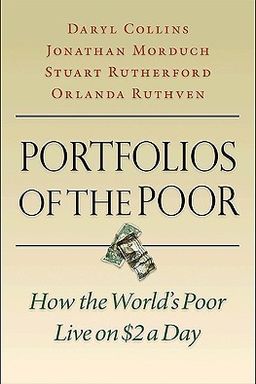
Imagine living on just two dollars per day. How would you make sure your family eats, your kids go to school, and there’s money for emergencies? Portfolios of the Poor: How the World’s Poor Live on $2 a Day by Daryl Collins, Jonathan Morduch, Stuart Rutherford, and Orlanda Ruthven shatters the myth that the poor live purely hand-to-mouth. Instead, it shows that managing money—however little—is both a daily challenge and an astonishing act of creativity.
The authors argue that poor households, far from being “financially excluded,” are active money managers who deftly juggle savings, loans, and informal credit systems. What truly distinguishes their lives isn’t just low income—it’s the irregularity and unpredictability of that income. Dollars trickle in, stop suddenly, or arrive in lump sums. To survive, the poor must make uneven cash flows stretch across everyday needs, risks, and future hopes.
The Financial Diaries: Seeing Daily Survival in Numbers
To uncover how this works, the authors invented “financial diaries”—a rigorous and intimate method that tracked more than 250 low-income households in Bangladesh, India, and South Africa for a full year. By visiting families twice a month and tracking every rupee, rand, or taka earned, saved, borrowed, or spent, they discovered a world of constant financial motion. Poor families rarely consume their entire income; instead, they push and pull cash through complex portfolios of savings, loans, and credit relationships.
In one notable case, Hamid and Khadeja, a couple living in a Dhaka slum on $0.78 per person per day, managed six financial instruments simultaneously—life insurance savings, cash stashed at home, loans to relatives, and microfinance debts. Despite limited income, their financial turnover over a year exceeded their annual earnings. These “financial flows” revealed that even the poorest constantly balance risk and opportunity like small business owners.
Beyond Hand-to-Mouth: The Triple Whammy
At the heart of poverty lies what the authors call the triple whammy: low incomes, irregular payments, and weak financial tools. Poor households don’t just earn little—they earn it unpredictably, often relying on casual work, self-employment, or temporary jobs. The state offers little safety net, and informal tools like moneylenders or community savings clubs are unreliable. Managing under these conditions demands constant vigilance, or as one diary participant put it, “These things are important—they keep you awake at night.”
For richer people, financial life involves investing wealth or minimizing taxes. For the poor, it’s about ensuring there’s enough money for food tomorrow and medicine next week. In this light, financial management isn’t an optional skill—it’s survival itself.
Why Better Financial Tools Could Transform Lives
The authors contend that the poverty problem isn’t just about aid or income—it’s about the reliability of financial access. If poor households had trustworthy tools to save, borrow, or insure themselves, their chances to improve life would rise dramatically. This insight reframes global development debates: while organizations focus on charity or globalization, the book insists that empowerment begins with access to practical, reliable financial services.
Microfinance, exemplified by Muhammad Yunus’s Grameen Bank, has already begun this transformation. By proving that the poor can repay loans responsibly, microfinance redefined them as “bankable.” But the book warns that progress remains incomplete—most microfinance institutions still emphasize loans for business while ignoring everyday cash-flow needs, savings disciplines, and insurance options. True financial inclusion must, therefore, go beyond lending and embrace savings, flexibility, and reliability.
Why This Matters to You
Whether you’re a policymaker, entrepreneur, or global citizen, the takeaway is clear: poverty isn’t only lack of money—it’s lack of control over money. Think of how your own financial stability depends on predictability, savings, and trusted institutions. Now imagine none of those are secure. Understanding the portfolios of the poor helps us design systems that make money management possible for everyone—no matter how little they earn. As the authors remind us, even at two dollars a day, the ingenuity of financial survival is universal.