
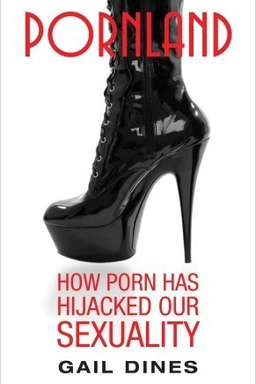
Pornland cover

Pornland

by Gail Dines

Pornland takes you on a thought-provoking journey through the world of modern pornography, examining its historical evolution, societal impact, and the commodification of women. It challenges perceptions of intimacy and offers insights into the complex relationship between porn and mainstream media, inviting readers to reflect on how this influences personal relationships and societal attitudes.

How Porn Became the New Sexual Script

What happens when a multi-billion-dollar industry rewrites what it means to be sexual—and we don't even notice? In Pornland: How Porn Has Hijacked Our Sexuality, sociologist and feminist scholar Gail Dines argues that pornography has transformed from a fringe subculture into the central teacher of modern sexuality. Through her two decades of research, lecturing, and interviews, she reveals that porn isn’t just entertainment—it’s a powerful cultural force that has industrialized sex, trained generations into violent scripts of desire, and reshaped how men and women imagine intimacy.

Dines contends that the porn industry now works like any other capitalist enterprise—its main goal is profit, and its key method is desensitization. As porn becomes more extreme, consumers demand harder and more violent content to feel aroused. Meanwhile, these images seep into mainstream culture until they feel natural, from music videos to fashion. The result? A society where porn’s vision of gender—men as dominant, unemotional studs and women as eager, degraded sluts—has become the default sexual script for young people.

The Industrialization of Sex

Dines begins with the “industrialization of sex,” showing how porn evolved from niche magazines in the 1950s into a global corporate powerhouse. This transformation wasn’t driven by artistic freedom or sexual liberation, but by corporations like Playboy, Penthouse, and Hustler that discovered sex sells—and sells best when it’s extreme. These magazines normalized soft-core porn for middle-class men, paving the way for the flood of online hardcore porn that now defines sexuality for millions. The digital revolution turned pornography into an industrial commodity: mass-produced, algorithmically optimized, and instantly available to anyone with a smartphone.

Porn as Culture, Not Just a Product

One of Dines’s most striking insights is that porn has stopped being about individual pleasure—it’s now a cultural story. Every society tells stories to define love, gender, and desire; in the past, myths and media shaped those narratives. Today, pornography tells the new sexual mythologies. These myths are remarkably consistent: women love everything men want, pain equals pleasure, and intimacy is replaced with domination. Dines uses vivid examples from popular gonzo sites, where women are choked, slapped, or ejaculated on while proclaiming enjoyment. The power of these stories isn’t just in arousal—it’s in repetition. When millions of boys watch the same script daily, those stories become normalized truths about sex.

The Mainstreaming of Porn

Dines traces how porn escaped its seedy image and entered mainstream life. She cites examples like Howard Stern's radio show, the hit show The Girls Next Door, and even college campuses inviting porn stars as guest speakers. Companies like Vivid Entertainment and Girls Gone Wild rebranded porn as something hip, adventurous, and empowering. Simultaneously, pop culture—from reality TV to magazines like Cosmopolitan—borrowed porn’s visual style and language, blurring the boundary between sexual empowerment and sexual exploitation. For many young women, Dines argues, “freedom” has been co-opted into performing pornified femininity—waxed, toned, and perpetually available.

The Personal Toll

Dines’s research extends beyond institutions to the deeply personal. She describes speaking at college campuses where young men candidly admit feeling trapped by porn addiction and unable to connect with real partners. Many confess they can only climax by replaying porn scenes in their heads. Meanwhile, women report pressure to perform porn acts—like anal sex or facial ejaculations—even if they feel uncomfortable. For Dines, these stories expose porn’s ultimate achievement: it has colonized both imagination and intimacy. “Porn does not just reflect sexuality—it creates it,” she writes. And because most contemporary porn eroticizes cruelty, it turns empathy into the enemy of arousal.

Why It Matters

The broader stakes go beyond individual relationships. Dines compares the porn industry to fast food or tobacco—powerful markets that externalize their social costs. Just as McDonald’s sells convenience while undermining health, porn sells sexual freedom while commodifying human connection. Its wider impact, she warns, is cultural desensitization: to violence, to exploitation, and to emotional intimacy. By exposing these dynamics, Dines calls for what she terms “a collective wresting back of sexuality” from corporate pornographers. Her thesis is radical but hopeful: we can unlearn porn’s stories and replace them with an ethics of equality, empathy, and authentic eroticism. This vision frames every chapter of Pornland, from the history of Playboy’s empire to the rise of gonzo, the grooming of men, and the resistance emerging in response.


The Playboy Blueprint: How Porn Sold Respectability

Gail Dines argues that pornography’s modern dominance began not with the Internet but with Hugh Hefner’s Playboy empire. In the 1950s and 60s, Hefner transformed porn from a backroom indulgence into an aspirational lifestyle for middle-class men. Through clever branding, he created a paradox: a magazine selling naked women as the centerpiece of a moral vision of sophistication, intellect, and consumer luxury. This shift didn’t just market a magazine—it redefined masculinity and prepared the culture to accept the mainstreaming of sexual commodification.

From the Bedroom to the Boardroom

Before Playboy, pornography was hidden—circulated through underground channels labeled obscene. Hefner built an empire by rebranding porn as high culture. He put jazz, fiction, cocktails, and philosophy alongside his nude pictorials, inviting readers to believe that consuming women was part of being sophisticated. The Playboy man wasn’t a creep—he was stylish, urbane, and free from domestic drudgery. Dines notes how this redefinition of manhood offered liberation from marriage and family life, presenting the bachelor as the new masculine hero. Yet behind the modern apartment and whiskey glass was the same old message: women existed for male pleasure.

Selling Sex as Lifestyle

Playboy functioned as both porn and advertisement. Articles advised readers on what to buy—cars, clothes, furniture—linking consumption to sexual success. Dines calls this the sexualization of consumption: desire and materialism became mutually reinforcing. To be sexually desirable, men had to be good consumers. This ideology not only normalized commodification but created the logic through which porn would later thrive online. If buying things makes you desirable, why not consume sex itself?

When Hefner insisted that Playboy was “about lifestyle, not families,” he challenged 1950s conformity but also weaponized that rebellion against women. His magazine built its identity on hating wives. Articles derided women as gold-diggers or nagging mothers, echoing the misogyny of that era’s bestsellers like Philip Wylie’s Generation of Vipers. Freed from domesticity, men could now purchase their freedom—along with the latest stereo and a Playmate.

Soft-Core Paves the Way for Hardcore

Dines shows that Playboy’s apparent “tastefulness” opened the cultural floodgates. What started as coy centerfolds became a slippery slope toward the explicit competition of Penthouse and then Hustler. By the 1970s, a magazine war over pubic hair and penetration had normalized ever more explicit imagery, grooming audiences for the Internet era’s gonzo brutality. “Playboy made porn safe for the suburbs,” Dines writes, “and once the suburbs accepted it, there were no more borders to cross.”

In that sense, Playboy wasn’t just a brand—it was a set of blueprints. It sold an image of freedom that equated masculinity with consumption and female objectification with sophistication. The cultural DNA it built—glamorous, sexist, corporate—became the foundation of the 21st-century porn economy. (Cultural critics like Barbara Ehrenreich and Michael Kimmel have made similar arguments: Hefner liberated men only from responsibility, not from misogyny.)


Pop Culture Goes Hardcore

If Playboy glamorized soft-core fantasy, the next chapter in Dines’s story shows how corporations made porn’s cruelty mainstream. She calls this phase the pop-cultural hijacking: when music videos, reality TV, fashion, and celebrity culture began recycling porn aesthetics and attitudes. The mainstream didn’t just imitate porn’s visuals—it absorbed its values, teaching audiences that being “empowered” meant performing for the male gaze.

The Girls Gone Wild Effect

One of Dines’s most revealing case studies is Joe Francis’s Girls Gone Wild. Marketed as light-hearted fun, the franchise filmed drunk college women flashing for the camera. But Dines demonstrates how behind this “party vibe” lay calculated predation. The company partnered with hardcore porn distributors, paid women little or nothing, and exploited alcohol-induced vulnerability. Yet media outlets like Access Hollywood treated Francis as a pop-culture mogul, while some young women saw participation as empowering. Dines points out the cruel irony: the women felt adventurous, but their choices were being orchestrated by a multimillion-dollar porn brand. It was, she says, the perfect illusion of consent in a culture that had already normalized exploitation.

Celebrity Pornification

Porn culture’s merger with celebrity culture turned performers like Jenna Jameson into household names. Jameson wrote a bestselling autobiography, starred in mainstream ads, and became the poster child for “sex-positive feminism.” Yet Dines unpacks the hidden cost of that success: Jameson’s childhood abuse, exploitation, and trauma, details she herself revealed in How to Make Love Like a Porn Star. The media erased that pain, celebrating her wealth instead. Jameson’s public life became a marketing campaign for the porn industry, reinforcing the myth that commodifying yourself sexually equals empowerment.

Corporate Synergy and Porn Chic

Studio giants like Vivid Entertainment refined this hybrid model, producing glossy films that looked like Hollywood thrillers. Porn performers appeared on Howard Stern and Maxim covers; fashion brands borrowed their imagery; music videos showcased the same scripts of female submissiveness. Dines describes this convergence as a market strategy: every arm of the entertainment industry—from cable channels to apparel—profited from blurring the line between porn and pop. Porn thus became invisible not by hiding, but by being everywhere.

The Cost of the New “Empowerment”

Dines argues that young women were told this sexualization was freedom. Magazines like Cosmopolitan encouraged readers to watch porn to “spice up” their sex lives, while reality shows rewarded exhibitionism. But these new norms left women with impossible expectations: to be constantly hot, available, and performative. Many of Dines’s female students admitted that they felt pressured to act like porn stars even when uncomfortable. Pop culture, she concludes, didn’t liberate sex; it repackaged subservience as choice. The pornographers had successfully rebranded patriarchy for a postfeminist age.


Porn Meets Wall Street: The Corporate Machine Behind Desire

Porn isn’t seedy backroom business anymore—it’s a polished corporate empire. In one of her most eye-opening chapters, Dines traces how porn became a central node of global capitalism. By the mid-2000s, the industry was worth nearly $100 billion globally, its supply chain spanning websites, hotels, cable networks, banks, and software companies. Porn didn’t just ride the wave of new technology—it drove it.

Porn as Tech Pioneer

Dines reveals that the innovations we take for granted—online payments, streaming video, pop-up ads, even data compression—were perfected by pornographers hungry for speed and privacy. When broadband arrived, porn sites became the testing ground for high-performance media. As historian Jonathan Coopersmith also observed, pornography often leads the adoption curve for every new technology, setting patterns later used by Netflix, YouTube, and gaming companies.

Follow the Money

Behind the moral debates lies a staggering financial web. Dines exposes how mainstream corporations quietly profit from porn. Cable giants like Comcast and Time Warner earn hundreds of millions from adult pay-per-view. Hotel chains such as Marriott and Hilton offer on-demand porn. Even credit card companies and real estate agents pocket a share. Bank loans, private equity, and venture capital keep porn’s digital backbone humming. “Porn,” Dines writes, “is not underground—it’s embedded in the economy.”

Rebranding Exploitation as Business

The industry’s lobbyists, through groups like the Free Speech Coalition, frame porn as a First Amendment issue while deflecting attention from labor abuses, disease risks, and coercion of performers. PR firms now specialize in getting porn producers into mainstream media, turning exploitive moguls into “visionary entrepreneurs.” Dines compares this strategy to Big Tobacco’s rebranding campaign in the 1960s: both industries relied on corporate power and public relations to mask harm behind slogans of freedom.

By uncovering this corporate ecosystem, Dines challenges readers to see porn not as a private vice but as a political economy. Every time you open your browser or turn on cable, she warns, you enter a marketplace built on the commodification of human intimacy. The message: porn isn’t an accident of capitalism—it’s capitalism stripped bare.


Grooming Men for Gonzo

How does a teenage boy transform from a curious viewer into a regular consumer of violent porn? Dines calls this process “grooming for gonzo”—a cultural socialization that teaches men to equate dominance with desire and cruelty with connection. She argues that porn doesn’t invent these tendencies; it exploits them, taking cues from a culture that already prizes aggression, emotional detachment, and power over empathy.

The Making of a Porn-Ready Masculinity

From childhood, boys are conditioned to fear vulnerability. They learn early that “being a man” means never being feminine—never crying, nurturing, or expressing tenderness. Dines draws on psychologist James Gilligan’s research on shame and anger to show that this emotional repression primes boys for porn’s worldview: real men don’t feel, they conquer. She connects toy aisles divided by guns and glitter, superhero movies filled with vengeance, and games like Grand Theft Auto—where players can pay, use, and kill prostitutes—as training grounds for the porn mindset. Empathy, she writes, is the first casualty of masculine socialization.

From Curiosity to Callousness

Pre-Internet generations might have sneaked a peek at Playboy; today’s boys have HD access to violent gonzo scenes by age eleven. Dines shares stories from college lectures where young men describe their habitual use and subsequent numbness. At first, hardcore porn felt shocking, then it became routine. To stay aroused, they sought more extreme acts—choking, degradation, multiple penetration. As one student told her, “I don’t even think about the women anymore; I just think about the act.” In modern porn, boredom fuels escalation, and escalation fuels dehumanization.

Desensitization and Disconnection

Through hundreds of interviews, Dines found that heavy porn users often feel both entitled and empty. They expect real partners to mimic porn’s scripts but struggle with intimacy when those expectations fail. Many confess feeling anxious, dissatisfied, even addicted. In one chilling quote, Dines summarizes their struggle: “Porn teaches men how to masturbate into a woman.” The more they watch, the less they see women as subjects—and the less capable they become of authentic sexual connection. Porn, she concludes, grooms not monsters but emotionally detached men whose capacity for compassion has been systematically eroded.


Porn’s Leaky Images: When Fantasy Shapes Reality

Dines challenges the popular defense that “porn is just fantasy.” Drawing on decades of media research, she explains that repeated exposure to consistent messages gradually shapes reality. Just as advertising makes us crave products we know are unhealthy, porn makes us internalize scripts we know are false. Its power lies not in one video but in the accumulation of identical stories where women love degradation and men are emotionless machines.

The Psychology of Habitual Viewing

Citing laboratory and field research by scholars like Dolf Zillmann, Dines shows that heavy porn consumption increases tolerance for sexual aggression and diminishes empathy for victims. Men begin to believe that women secretly enjoy violence or that rape myths are true. Even soft-core imagery, she notes, fosters expectations of women as perpetually available. When these beliefs collide with real intimacy, frustration or contempt often follows. Porn’s “fantasy,” then, is actually a subtle training program in objectification.

Stories from the Lecture Hall

In university talks, Dines observes two patterns: hostility from men who resist criticism of their porn use, and deep remorse from those who recognize its impact. Some confess porn-based erectile issues; others describe pushing partners into acts they had seen online. Women report feeling pressured to perform “porn sex” or risk losing partners. Both genders acknowledge an undercurrent of anxiety: intimacy now competes with digital spectacle. For many students, pornography isn’t fantasy—it’s their first and most influential education about sex.

From Desensitization to Addiction

The most haunting testimonies come from self-identified porn addicts who spend hours daily online, neglecting work, relationships, and self-worth. Dines likens this cycle to drug dependency: dopamine spikes from novelty lead to tolerance and eventual numbness. Clinicians confirm a surge in porn-related addictions and desensitization disorders. As one therapist told her, “They’re not aroused by partners anymore—only pixels.” The irony, Dines concludes, is that an industry promising unlimited pleasure often breeds loneliness and despair. Fantasy, once a refuge from reality, now dictates it.


Growing Up Female in a Porn Culture

How do girls come of age in a world where their bodies are treated as public displays? Dines devotes a major section of Pornland to this question, revealing how pop culture teaches girls to value hotness over humanity. Even those who’ve never watched porn live in its shadow. Everywhere—from Instagram to the mall—they encounter the pornified ideal: hairless, tanned, toned, and perpetually available. She calls this the era of the Stepford Slut, where conformity masquerades as empowerment.

The New Performance of Femininity

Drawing from classroom discussions, Dines recounts young women describing pressure to wax, pose, and behave like porn stars. Some even confessed to using the “unshaved trick”—not grooming before parties so they could resist hookup sex without admitting disinterest. This, Dines notes, shows how limited women’s choices have become: “They believe saying no is impossible, so they use their bodies as excuses.” Media once demanded domestic perfection; now it demands sexual readiness. Either way, women’s bodies remain their currency.

The Mirage of Choice

Postfeminist rhetoric insists women freely choose hypersexual self-presentation. But Dines, echoing thinkers like Angela McRobbie and Ariel Levy, argues this “choice” is marketed compliance. Just as 1950s housewives “chose” suburbia under societal pressure, modern women are coerced by an economy that profits from their objectification. Magazines like Cosmopolitan teach readers to please men through endless “sex moves” while disguising subservience as sophistication. The result, says Dines, is that empowerment has been conflated with performance—agency reduced to acting sexy on cue.

The Cost to Body and Mind

Hypersexualized media breeds body anxiety, eating disorders, and depression. Dines references feminist philosopher Susan Bordo, showing that constant self-surveillance—monitoring weight, hair, and tone—turns women into both jailer and prisoner. Many girls internalize the male gaze so deeply they police themselves, believing their worth hinges on appearance. In this environment, authentic intimacy is replaced by performance, pleasure by perfectionism. Dines’s takeaway is stark: even those who reject porn are living inside its logic. To be female today, she writes, is to navigate a pornographic culture disguised as empowerment.


Racy Sex, Sexy Racism

While many assume porn’s harm is gendered, Dines shows its damage is also racialized. Chapter seven, “Racy Sex, Sexy Racism,” unpacks how pornography recycles colonial stereotypes, fusing racial caricature with sexual degradation. In porn, whiteness equals purity and control, while people of color are hypersexualized objects used to stage fantasies of domination and submission.

The Racial Hierarchy of Porn

Dines reveals that the industry’s structure mirrors social hierarchies: white women dominate high-paying contracts with studios like Vivid, while women of color are relegated to low-budget “gonzo” scenes requiring the harshest acts. Black, Asian, and Latina performers are depicted through racist tropes—the submissive Asian “geisha,” the loud “ghetto ho,” the exotic Latina temptress. These performances aren’t accidents; they’re marketing strategies catering to white male fantasies.

When Misogyny Meets Racism

The most disturbing fusion appears in interracial porn, where black men and white women enact fear-laden myths of racial transgression. Movie titles like “White Slut on Black Snake” echo the racist panic dating back to The Birth of a Nation. For white viewers, Dines argues, these scenes offer the thrill of racial taboo and revenge. Drawing parallels to old minstrel shows, she calls interracial porn a “peepshow into the white imagination,” where both black men and white women are dehumanized for entertainment.

The Globalization of Exploitation

Porn’s racism is global. Dines highlights websites like “Asian Street Hookers,” which mimic sex tourism by portraying poor Southeast Asian women as willing playthings for Western viewers. These images eroticize inequality itself: the contrast between rich and poor, white and nonwhite, colonizer and colonized. In doing so, porn transforms historical oppression into sexual fetish. By linking racial hierarchies to desire, Dines concludes, pornography sustains both misogyny and white supremacy under the disguise of fantasy.


Children and the Final Taboo

In perhaps her most disturbing section, Dines exposes pornography’s newest frontier: the sexualization of children. While real child porn remains illegal, the industry stays one step ahead through pseudo-child pornography (PCP)—films using adult women styled as underage girls. Dines categorizes this as “the final taboo being rebranded as titillation.”

How Innocence Became Fetish

These films feature adult performers in braces, pigtails, and school uniforms, paired with much older men billed as teachers or fathers. Titles like First Time with Daddy or Defloration.com promise “real virgins” losing innocence. Dines argues that this genre doesn’t just depict childlike sex—it trains viewers to eroticize vulnerability and power imbalance. By normalizing “barely legal,” it chips away at cultural taboos protecting minors.

The Pipeline to Real Abuse

Citing research on desensitization, Dines links PCP consumption to escalating appetite for illegal child porn. In interviews with imprisoned offenders, she found many began with teen genres before moving to real abuse content. The mechanisms are familiar: tolerance, curiosity, and grooming. Porn not only blurs fantasy and reality for consumers—it provides grooming scripts for abusers themselves. Its narratives teach perpetrators how to coerce compliance while maintaining the illusion of consent.

The Cultural Collateral Damage

Beyond criminal extremes, Dines warns that every “childified” image reshapes cultural norms. From Calvin Klein ads featuring preteen models to fashion lines selling thong underwear for children, pop culture reflects pornography’s invasion of childhood. She quotes one offender admitting, “The culture did a lot of the grooming for me.” This chilling insight captures her thesis: when society eroticizes youth, it endangers innocence itself. The final taboo, she concludes, is not being broken in hidden rooms—it’s being normalized in broad daylight.


Fighting Back: Reclaiming Sexuality

Rather than ending in despair, Dines closes Pornland with a call to action. She insists that the solution isn’t prudishness but collective resistance—a movement to reclaim sexuality from corporate colonization. This resistance, she argues, must be both personal and political.

From Individual Awareness to Collective Change

Dines acknowledges small acts of rebellion: parents teaching media literacy, women refusing to date heavy porn users, teachers discussing consent, and men choosing empathy over domination. But she stresses that change requires organized activism. She co-founded Stop Porn Culture (SPC), a network creating educational programs and slide shows that reveal the realities behind porn’s imagery. These programs travel to colleges, schools, and communities, sparking debates and empowering young audiences to question industry narratives.

An Alternative Vision of Desire

Dines doesn’t advocate repression—she advocates redefinition. A healthy sexuality, she writes, must be rooted in reciprocity, respect, and authenticity. True eroticism thrives on connection, not domination. In this, she echoes other feminist thinkers like bell hooks and Robert Jensen: love and equality are not the enemies of desire—they’re its deepest expressions. Porn’s stories may be powerful, but they’re not inevitable. We can write new ones.

Why Hope Matters

Dines ends by reframing the fight against porn as part of a broader feminist struggle for social and economic justice. Pornography, she insists, is both symptom and engine of inequality; dismantling it requires confronting capitalism’s commodification of everything, from labor to love. Her message to readers is direct: you can unlearn porn’s script. Start by noticing how it shapes your assumptions, then commit to imagining intimacy beyond power. Change begins not in censorship, but in consciousness.

Dig Deeper

Get personalized prompts to apply these lessons to your life and deepen your understanding.

Go Deeper

Get the Full Experience

Download Insight Books for AI-powered reflections, quizzes, and more.