
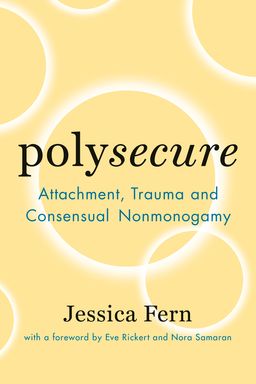
Polysecure cover

Polysecure

by Jessica Fern

Polysecure merges attachment theory with consensual nonmonogamy, offering a fresh perspective on relationship dynamics. Discover how understanding your attachment style can lead to healthier habits and emotional resilience in complex romantic scenarios.

Building Security in Love Beyond Monogamy

How do you build a sense of safety in love when you share your heart with more than one person? In Polysecure, Jessica Fern argues that the very human need for security, stability, and connection doesn’t go away when people choose nonmonogamy—it just expresses itself differently. Fern contends that attachment theory, which has long been thought to apply only to monogamous couples, can and must be reimagined to serve the diverse ways people love today.

In a culture steeped in mononormativity—the belief that monogamy is the only healthy way to love—nonmonogamous people are often left without frameworks for emotional safety. Polysecure fills that gap. Fern blends her background as a psychotherapist, conflict-resolution specialist, and polyamorous woman to translate attachment theory for people in consensually nonmonogamous (CNM) relationships. She offers a roadmap for developing what she calls polysecure attachment: the ability to feel safe, grounded, and loved both within oneself and within multiple relationships.

Why Attachment Matters in Any Form of Love

Fern begins by showing that attachment needs—the desire for closeness, reliability, and comfort—are hardwired into the human nervous system. From infancy, humans survive through connection. We carry those patterns into adulthood: turning to partners as safe havens in distress and secure bases from which we explore the world. Classic attachment theorists such as John Bowlby and Mary Ainsworth rooted these ideas in studying children and their parents, but Fern extends the model to adult romantic life, arguing that “secure functioning” can flourish just as well in open relationships as in monogamous ones.

However, because nearly all attachment research assumes dyadic (two-person) partnerships, nonmonogamous people often feel pathologized or invisible. Mainstream literature implies that security depends on exclusivity—an assumption Fern dismantles. Secure attachment, she argues, is not about limiting love to one person but about how consistently partners show up for one another. Safety grows from emotional presence, responsiveness, honesty, and trust, not monogamy itself.

Healing Trauma and Expanding Connection

A central thread in Fern’s argument is the healing of trauma. From her own early life shaped by poverty, abuse, and neglect, she came to see how unresolved attachment wounds ripple through adult relationships. Many of her clients—monogamous and polyamorous alike—grapple with attachment insecurity: fear of abandonment, avoidance of vulnerability, or chaos born of unresolved trauma. Nonmonogamous structures, she explains, don’t create these wounds but can reveal them. When the safety net of exclusivity is removed, many find themselves confronting the raw, unmet needs beneath jealousy or anxiety. Yet this confrontation, painful as it may be, can also become a catalyst for growth and healing.

To navigate these emotions, Fern equips readers with the nested model of attachment and trauma, which examines security and insecurity at multiple levels—self, relationships, home, community, society, and the global context. This model reminds you that insecurity is not solely personal. It can emerge from systemic forces like patriarchal gender norms, racism, or economic inequality. Recognizing this broader nesting helps people approach healing not as self-blame but as a compassionate reorientation to the environments that shaped them.

The Nonmonogamous Application

In Part Two of the book, Fern applies these ideas directly to consensual nonmonogamy. She clarifies different CNM forms—polyamory, open relationships, swinging, solo polyamory, relationship anarchy—and the motivations behind them: sexual variety, philosophical conviction, or a felt orientation toward loving many. Despite differences in structure, all forms involve some degree of intrinsic insecurity, since no one partner can meet every need. The challenge, then, is to generate securely coordinated relationships rather than relying on rules or hierarchies for safety.

Fern critiques how traditional therapy and self-help often encourage people to find “the one” as their emotional anchor, but in polyamory, there are multiple secure attachments. Drawing on research by attachment scholars such as Mario Mikulincer and Phillip Shaver, she points out that adults can form several secure bonds simultaneously—much as children attach to multiple caregivers. The goal is not to reduce anxiety by restricting partners but by building reliable, emotionally available connections across relationships and by cultivating what Fern calls secure attachment with the self.

The HEARTS Framework

The final section introduces Fern’s practical framework for becoming polysecure, summarized by the acronym HEARTS: Here (be present with your partner); Expressed delight (actively celebrate your love and appreciation); Attunement (listen and empathize deeply); Rituals and routines (create predictable patterns of connection); Turning toward after conflict (repair ruptures); and Secure attachment with self (develop inner security). These aren’t abstract ideals—they’re embodied practices. For example, “Here” might mean silencing your phone on date night; “Expressed Delight” could be telling your partner why you cherish them even when they have other lovers.

Each component strengthens the emotional muscles required to love securely across multiple relationships. The last step, “Secure Attachment with Self,” emphasizes self-soothing, mindfulness, and self-compassion. It’s a reminder that you are your own constant attachment figure—an insight resonant with thinkers like Brené Brown or Dan Siegel, who also link self-acceptance to relational health.

Why It Matters Now

Fern’s vision of polysecurity arrives at a cultural turning point. As more people experiment with open relationships, traditional safety structures no longer suffice. By grounding nonmonogamy in attachment theory rather than rebellion or novelty, Fern reframes it as an evolution of love itself: a model where emotional maturity and ethical interdependence replace exclusivity as the foundation of fidelity. Polysecure doesn’t mean drama-free—it means secure through the drama.

Ultimately, Polysecure argues that the capacity to love multiple people is an extension of our capacity to trust. Whether you practice monogamy or not, Fern’s insights challenge you to ask: What lets me feel safe in love? And how can I build that safety without shrinking the size of my heart?


Understanding Attachment Theory

Attachment theory is the cornerstone of Jessica Fern’s argument. Developed by John Bowlby and expanded by Mary Ainsworth, this theory posits that humans are biologically wired to seek connection. Fern reintroduces this framework, explaining how the experiences you had with your caregivers—whether they were loving, inconsistent, distant, or frightening—write the emotional code you bring into adult relationships.

The Four Adult Attachment Styles

Fern outlines four attachment styles: Secure (comfortable with trust and independence), Anxious/Preoccupied (craving closeness but fearing abandonment), Avoidant/Dismissive (valuing independence to the point of emotional distance), and Fearful/Avoidant (Disorganized) (desiring love but fearing intimacy). These aren’t rigid identities, she reminds you—they’re adaptive patterns formed to survive early relational ecosystems and can change through healing, therapy, and self-awareness.

For instance, someone with an anxious attachment might hyper-focus on a partner’s behavior, sending late-night texts for reassurance. A dismissive partner, meanwhile, might retreat into work or logic when intimacy deepens. The fearful-avoidant person oscillates, wanting contact then fleeing it. In contrast, securely attached individuals trust both their own resilience and their partner’s reliability—they can give and receive love without clinging or shutting down.

From Childhood Blueprints to Adult Dynamics

Fern uses vivid childhood examples: a baby whose cries are met with warmth learns that needs get met and internalizes safety; a child ignored or criticized learns to suppress their desires. “Dependency,” Fern writes, “is not a weakness but a fact of life.” Adults who deny that need usually fall into avoidant detachment, while those who overcompensate become anxiously dependent. Both are protective strategies that once made sense—but now restrict connection.

She also argues that attachment styles exist on two underlying dimensions: anxiety (fear of abandonment) and avoidance (discomfort with closeness). Understanding where you fall on these axes is more useful than boxing yourself into a category. For example, being low in both anxiety and avoidance indicates secure attachment; high anxiety but low avoidance reflects preoccupation. This dimensional approach offers room for nuance and growth.

Reframing Insecurity as Healthy Desire

In an essential reframing, Fern insists that insecure behaviors are not pathology—they’re expressions of universal drives for autonomy (independence) and connection (closeness). Even clinginess or withdrawal signal the same hopeful wish: to feel seen without losing oneself. By cultivating awareness of these drives, you can balance them consciously, learning when to pull closer or loosen your grip. Secure functioning, she notes, doesn’t mean never feeling scared; it means having reliable ways to soothe those fears, alone or together.

Understanding these patterns—especially in nonmonogamous contexts—helps partners distinguish between genuine incompatibility and old wounds being activated. The point is not to eliminate attachment needs but to meet them skillfully, even when multiple love bonds are at play.


Trauma and the Nested Model of Attachment

Jessica Fern expands the conversation beyond individual psychology. She introduces the Nested Model of Attachment and Trauma, a layered view that situates your attachment experiences within six dimensions: self, relationships, home, community, society, and the global collective. Healing, she argues, doesn’t only happen in therapy—it also involves understanding the systems that wounded you in the first place.

Trauma as Broken Connection

Fern defines trauma not by the event itself but by its impact on connection. Whether it’s childhood neglect, a breakup, or systemic discrimination, trauma fragments your sense of trust in others and in yourself. It can come from “big” shocks like violence or “small” chronic stressors like living in poverty or enduring microaggressions. Repeated stress keeps the body’s fight–flight–freeze systems stuck on high alert, leaving you unable to fully relax into love.

Six Interlocking Levels

At the self level, you experience inner fragmentation: anxiety, self-blame, or numbness. The relationship level covers your family, friends, and lovers—where attachment ruptures or repairs occur. The home level looks at stability: moving homes, housing insecurity, or unsafe domestic environments all shape your sense of safety. At the community level, inclusion or rejection from schools, workplaces, and spiritual groups molds belonging. The societal level encompasses structural inequalities—racism, sexism, classism—that define whose attachments are protected or punished. Finally, the global/collective level touches climate change and cultural trauma, reminding us that our relationship to Earth itself mirrors attachment: many of us are dismissively detached from our planet.

These layers operate simultaneously. For example, Fern describes how a client’s anxiety around partners leaving wasn’t just personal—it stemmed from childhood instability (home level) and economic scarcity (societal level). Healing meant addressing both the psychological triggers and the material conditions of insecurity.

Relational Healing as Resistance

By acknowledging nested dimensions, Fern reframes healing as both personal and political. Building secure relationships in a culture that profits from disconnection—through consumerism or mononormative ideals—is a radical act. If trauma fractures connection, nurturance rewires it. This is where Fern aligns with thinkers like Thomas Hübl on collective trauma and Brené Brown on vulnerability: repairing attachment isn’t just self-care—it’s social transformation.

This panoramic view allows polyamorous people—often stigmatized or legally unprotected—to understand their struggles within context. Feeling unsafe in love might not mean you’re broken; it might mean you’ve been living in a world that punishes authenticity. Recognizing this widens compassion and helps you approach healing as connection restored, not pathology fixed.


Consensual Nonmonogamy and Security

In Part Two, Fern explores consensual nonmonogamy (CNM) with clarity and compassion, emphasizing that multiplicity by itself isn’t unstable—what matters is the quality of emotional attachment. Still, CNM differs fundamentally from monogamy in that its structure is inherently less secure. Instead of relying on exclusivity to ensure closeness, CNM requires partners to create security through relational practices.

Why People Choose CNM

Fern identifies three main motivations: sexual diversity (the desire for variety or exploratory freedom), philosophical conviction (a belief in autonomy and honesty), and identity orientation (a sense that loving many is who one truly is). These reasons highlight how nonmonogamy can express authenticity rather than avoidance. Still, partners often differ in their motivations, leading to mismatched expectations. Knowing your “why,” Fern insists, anchors you when jealousy or insecurity surface.

She lays out types of CNM—from swinging and open marriages (sex-focused, emotionally bounded) to polyamory (emotionally expansive, potentially romantic with several partners) and relationship anarchy (rejecting hierarchies altogether). None is superior; the key is transparency and agreement. For instance, a hierarchical couple who name each other primaries can still behave ethically if they treat secondaries with respect and clarity.

Attachment Challenges in CNM

Fern’s therapy clients revealed predictable patterns. When monogamous couples “opened up,” latent insecurities often erupted—panic attacks, jealousy, or feelings of abandonment. Some discovered that monogamy had functioned as a security blanket masking deeper attachment wounds. Once exclusivity vanished, old fears resurfaced. CNM didn’t cause these issues; it merely illuminated them.

Fern describes four common disruptions: individual attachment insecurity (old wounds re-activated), relationship-level insecurity (hidden fractures exposed), structural insecurity (CNM lacks social protections marriage provides), and overextension (too many partners to maintain true attunement). Understanding where instability originates allows partners to differentiate between fixer-upper relationships and their own growth edges.

Security Through Practice, Not Structure

Fern critiques approaches that promise security through hierarchy (“my primary relationship comes first”) or rules (“you can’t fall in love”). Such strategies outsource safety to rigid structure instead of cultivating emotional resilience. True security, she argues, arises from how you relate—through presence, empathy, and reliability—not from titles. Her point echoes Esther Perel’s insight in Mating in Captivity: intimacy thrives when we balance freedom with responsibility.

Fern’s central reassurance: it’s entirely possible to have multiple secure attachments. Just as a child can love several caregivers, adult hearts can bond safely with more than one partner. The task is to replace scarcity models of love—where affection for one implies loss for another—with models of abundance grounded in communication and consent.


The HEARTS Framework for Polysecure Relationships

Fern’s practical innovation is the HEARTS model, six guiding principles for cultivating security in multiple partnerships. This framework makes abstract attachment theory actionable for daily life.

H – Here

Being here means offering your undivided attention and physical or emotional presence. In an age of constant distraction, real availability is rare. Putting away devices during a date or listening without formulating a response signals, “You matter right now.” Presence also includes reliability: returning calls, doing what you said you’d do. Without this, reassurance becomes impossible.

E – Expressed Delight

Secure bonds grow through felt appreciation. Expressed delight is showing your partner why they’re unique and cherished—eye contact, a warm smile, or explicitly saying, “I love the way you speak your truth.” In polyamory, where comparison anxiety runs high, such affirmations sustain confidence. Fern references Diane Poole Heller’s concept of the “beam gleam,” the affectionate gaze that conveys warmth without words.

A – Attunement

Attunement is emotional resonance: feeling with your partner, not just for them. It means listening beneath words, noticing tone and body language, and showing understanding even amid disagreement. For poly folks, this includes empathizing when your partner is excited about another lover—an act that requires security and maturity rather than competition.

R – Rituals and Routines

Predictable touchpoints—daily check-ins, post-date texts, shared meals—anchor connections amid polyamory’s complexity. Rituals offer rhythm where hierarchy once did. Fern suggests celebrating milestones (anniversaries, trips) or small rituals like the phrase couples share before parting. They help stabilize the nervous system, reaffirming belonging even between separations.

T – Turning Toward After Conflict

No relationship avoids rupture. What distinguishes secure ones is repair. Fern, echoing John Gottman’s research, notes that happy couples aren’t those without fights but those quick to make amends. Turning toward means pausing defensiveness, owning your impact, and seeking reconnection rather than victory. It’s the emotional equivalent of “we’re on the same team.”

S – Secure Attachment with Self

The final pillar sustains all the others. Nonmonogamy magnifies emotional triggers; without inner stability, you risk spiraling. Self-security arises through compassion and mindfulness—meeting your own needs so you don’t demand others to fill infinite holes. Practices like meditation, journaling, or breathwork build this inner safe haven. As Fern puts it, “You are your own primary partner.”

By practicing HEARTS, you nurture relational ecosystems where love multiplies instead of fragments. It’s less about managing partners than mastering presence, gratitude, and repair—the emotional currencies of secure connection.


Healing and Self-Security

In the final chapters, Fern emphasizes that all attachment work ultimately comes home to the self. You can’t outsource emotional regulation. Even if your partners practice perfect HEARTS behavior, you must learn to be your own secure base and safe haven. This internal reparenting—what researchers call earned secure attachment—is essential for lasting peace.

Making Sense of Your Story

Psychiatrist Dan Siegel’s research, which Fern cites, shows that the main predictor of whether someone becomes a secure parent is not whether they were securely attached as children but whether they’ve made coherent sense of their own histories. Processing your past—naming old hurts, expressing grief, recognizing the survival strategies you adopted—restores internal integration. Without this coherence, painful memories continue driving reactions unconsciously.

Self-Compassion and Inner Parts

Fern draws on Internal Family Systems (Richard Schwartz) to encourage dialogue with inner parts: the critic, the shamed child, the protector. Instead of suppressing them, she asks you to understand their positive intention—to keep you safe. Over time you can translate their harsh messages into care. This quiets shame and builds confidence. As Brené Brown notes, “We can’t shame ourselves into growth.”

Self-attunement complements this healing. By observing your own internal state—breath, posture, emotions—you develop the ability to self-regulate instead of over-relying on reassurance from partners. Fern even classifies regulation types: auto (distracting), external (through others), and interactive (mutual). Healthy self-regulation combines self-care with openness to co-regulation, balancing autonomy and connection.

Rituals for Self-Alignment

Daily practices—a morning check-in, gratitude journal, or mindfulness walk—become rituals of self-alignment. These routines, much like the HEARTS “R” for couples, provide structure for inner safety. Fern also invites you to visualize your “secure self,” a version of you living your values and boundaries with ease. Each choice that aligns with that self rewires the nervous system toward confidence.

Healing, Fern assures, is nonlinear. Sometimes you need solitude first; other times, secure relationships open the door inward. Either way, self-security is both the starting point and the outcome of polysecure living. When you can meet your own heart gently, every relationship—romantic, platonic, or communal—becomes a place of freedom rather than fear.


Redefining Love and Security

In closing, Fern reframes what love itself means in the polysecure model. Love is not proven by exclusivity, sacrifice, or constant harmony—it’s demonstrated through secure functioning: mutual care, honesty, and emotional presence. The measure of a relationship isn’t its structure but its safety. This marks a shift from “who we love” to “how we love.”

By integrating attachment theory with nonmonogamy, Fern offers a vision of relational ethics grounded in psychology rather than morality. Her work suggests that love’s expansiveness need not compromise security; it can deepen it. Each partner, meeting others and themselves with consistency and compassion, becomes part of a network of secure bases. The ripple effect extends beyond romance—to families, friendships, and communities learning collective care.

“Secure,” Fern writes, “doesn’t mean never threatened—it means resilient.” That resilience, cultivated through self-awareness and mutual attunement, might be the evolutionary stage of human love: not less committed, but more conscious. For anyone exploring the frontiers of connection, Polysecure offers both map and compass—a guide for loving boldly without losing your grounding.

Dig Deeper

Get personalized prompts to apply these lessons to your life and deepen your understanding.

Go Deeper

Get the Full Experience

Download Insight Books for AI-powered reflections, quizzes, and more.