
Idea 1
Human Tribalism and Modern Blindness
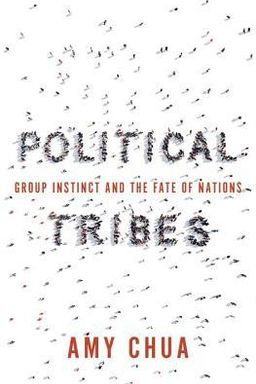
Why do nations repeatedly misunderstand conflicts abroad and divisions at home? Amy Chua’s central argument is that humans are tribal animals first and ideological beings second. Beneath flags and political systems, loyalties to kin, religion, ethnicity, and local culture shape behavior more deeply than universal ideals ever can. You belong to your group before you belong to humanity—and that ancient instinct, while natural, often blinds societies that claim universalism.
The Tribal Instinct
Chua begins by showing that tribalism is biological and automatic. Experiments with children who are randomly divided into teams reveal instant in-group favoritism. fMRI studies find reward centers activate when one’s group succeeds and fear responses intensify when outsiders appear. These tendencies explain how solidarity and sacrifice coexist with exclusion and hatred. You naturally seek belonging through thick identities—including race, religion, and clan—because they offer safety and meaning.
America’s Double Vision
As a super-group, the United States was founded on an inclusive civic identity rather than blood. Its greatness lies in combining plural ethnic identities under shared ideals—freedom and equality—but that very success creates blindness. American policymakers view politics abroad through ideological frames (democracy vs. authoritarianism, capitalism vs. communism) and ignore that most peoples organize through tribes. Woodrow Wilson’s 1915 insistence that “you cannot think of yourselves in groups” summarizes this paradox: America preaches universalism while managing intense internal hierarchies.
Ideology’s Weakness and Tribal Reality
Liberal ideals such as free markets and democracy are noble but psychologically thin when compared to tribal solidarity. As Chua explains, voting itself can become tribal revenge when majorities use ballots to punish minorities. Global interventions that ignore this—Vietnam, Iraq, Afghanistan—fail because they treat citizens as rational individuals instead of members of ethnic networks with long grievances. Even terrorism follows the same logic: ordinary people become violent not from madness but from group humiliation and desire for belonging.
The Book’s Progression
From this foundation, Chua moves through vivid cases—Vietnam’s ethnic Chinese minority (Hoa), the Sunni-Shia divide in Iraq, Pashtun tribal politics in Afghanistan, Venezuela’s “pigmentocracy,” and ultimately America’s own domestic tribes. Each case proves the same law: when political power, markets, and inequality align along group lines, democracy can produce revenge instead of reconciliation. The closing chapters ask whether America can sustain its super-group identity amid demographic change, identity politics, and elite-populist polarization.
The Moral Challenge
Chua’s final argument isn’t to abolish tribes but to master them. You cannot erase identity, but you can enlarge it. America’s survival depends on renewing a plural civic identity that respects subgroups while tying them to a common national story. Healing requires acknowledging historical injustice, nurturing contact across lines, and protecting democratic institutions that reward cooperation. The project is cultural as much as political: from Lin-Manuel Miranda’s Hamilton to local bridge-building efforts, America must continuously remind itself that diversity within unity—not universal ideology alone—is what holds a super-group together.
Core premise
“Humans are tribal animals. When we forget that truth, we misread both foreign nations and our own democracy.”
You leave the book seeing global conflict and American polarization through a single lens: tribal instinct operating inside institutions built for rational universalism. The question Chua leaves you with is simple but haunting—can the world’s most successful super-group stay unified when its own tribes no longer trust the shared dream?