
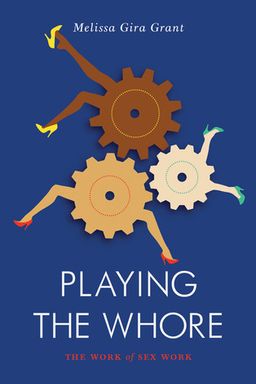
Playing the Whore cover

Playing the Whore

by Melissa Gira Grant

Playing The Whore dispels myths surrounding sex work, revealing how societal attitudes and legislation often harm rather than protect sex workers. Melissa Gira Grant advocates for a change in perspectives, emphasizing the need for global decriminalization and the recognition of sex work as legitimate employment to ensure safety and rights for all involved.

The Politics and Power of Sex Work

Why do we treat sex workers so differently from other workers? In Playing the Whore: The Work of Sex Work, Melissa Gira Grant dismantles the myths, moral panics, and social structures that define our perceptions of sex work. She argues that the persistent criminalization and stigmatization of sex workers reveal deeper contradictions about gender, labor, and control. This isn’t just a book about prostitution—it’s a radical examination of who holds power over women’s bodies, and why.

Grant’s central contention is that prostitution is not inherently violent or morally corrupt but is made dangerous through laws, policing, and stigma. The real violence comes from society’s insistence on punishing those who sell sex while excusing, or even celebrating, those who buy, legislate, or rescue. These harms are justified through what she calls the “prostitute imaginary”—a collective cultural fantasy that reduces sex workers to symbols of vice or victimhood rather than acknowledging them as workers with agency.

Violence as a Tool of Control

Grant opens the book with chilling examples of police stings and viral videos made in the name of law enforcement. The spectacle of these arrests—filmed, uploaded, and consumed—turns punishment into entertainment. They serve as warnings: even if you aren’t caught today, you’re always being surveilled. Through these examples, Grant shows that police violence is not incidental but central to how societies maintain control over sex workers. She documents patterns of abuse from New York to India to China, revealing a global system of acceptable violence against those labeled “prostitutes.”

Her question isn’t simply why prostitution is illegal, but how much violence against prostitutes is considered acceptable—and by whom. Policing sex work, she argues, enacts a form of gender discipline, punishing certain women to protect others deemed “worth saving.” This reveals how feminist ideals can be co-opted by state power, producing what sociologist Elizabeth Bernstein calls “carceral feminism,” where liberation is pursued through incarceration.

Work, Not Vice

One of Grant’s most transformative ideas is the shift from seeing prostitution as a state of moral degradation to recognizing sex work as labor. The term “sex work,” coined by activist Carol Leigh in the late 1970s, reframed selling sexual services as economic activity, not pathology. This idea is revolutionary because it was defined by the workers themselves, not by outsiders. Grant traces the historical evolution of this identity from victimized “fallen women” to organized laborers demanding rights, noting that the act of naming oneself is itself a political act.

She reminds us that every labor system includes exploitation, but focusing on exploitation alone obscures the structures that make sex work unsafe: criminalization, police harassment, discrimination, and economic precarity. Sex workers don’t need rescuing, Grant argues—they need labor rights, safety, and respect.

The Myths That Govern Our Imagination

The “prostitute imaginary” is the social script that determines how we talk about, picture, and treat sex workers. It’s made up of cultural fantasies—the victimized girl, the dangerous temptress, the disposable woman—and underpins both moral panic and rescue campaigns. These stories, amplified by media, police, and even some feminists, turn sex work into a stage for society’s anxieties about women’s sexuality, autonomy, and respectability.

Grant insists that as long as we see the sex worker through the eyes of others—be it the cop, the customer, or the savior—we perpetuate this imaginary. The solution begins with listening to sex workers themselves, not as symbols but as subjects with varied experiences, motivations, and choices.

A Movement of Resistance

Throughout the book, Grant chronicles the evolution of sex worker activism, from Margo St. James’s COYOTE movement and the 1975 church occupation in Lyon to contemporary groups like the Red Umbrella Project and Sex Workers Outreach Project–USA. Each chapter explores how sex workers have fought back against police violence, stigma, and exclusion from feminist discourse. This movement reframes sex work as a site of political resistance and solidarity—a struggle not only for rights but for visibility and dignity.

As Grant asserts, when prostitutes win, all women win. The fight for sex workers’ rights is inseparable from the broader fight against gender inequality, surveillance, and state control. By examining the intersections of labor, gender, and justice, Playing the Whore demands that we rethink what liberation truly means—and who gets to define it.

If you’ve ever judged, pitied, or ignored the people society calls “fallen,” Grant’s work asks you to look again. The book insists that sex work is not a moral crisis but a mirror reflecting our discomfort with women’s autonomy—and a call to confront the systems that police, exploit, and silence them.


The Prostitute Imaginary

Grant’s concept of the prostitute imaginary is central to how she unlocks the cultural and psychological machinery that drives stigma. It’s the set of collective narratives through which society imagines the prostitute—not as a person, but as a symbol of corruption, pity, or danger. This imaginary is reinforced by art, media, law, and activism alike. Through it, policy and public perception converge to create the prostitute as a social character deserving control, rescue, or punishment.

Fantasy and Fear in Public Discourse

The imaginary thrives on contradiction. One moment, the prostitute is a tragic victim stripped of agency; the next, she’s a cunning seductress undermining moral order. Both are fantasies that justify intervention. Cultural products—from Colette’s literature to police-produced videos—magnify these tropes. Grant notes that the obsessive consumption of arrest footage or celebrity scandals feeds the public fascination with controlling deviant femininity. Even supposed advocates rely on this imagery to frame sex work as inherently dirty or dangerous.

Policing and Perception

In Chapter 1, Grant shows how policing acts as the ultimate stage for the prostitute imaginary. When the camera records a woman’s arrest during a sting, it crystallizes the fantasy: she becomes a prostitute precisely because she’s seen as one. This produces what Grant calls the “carceral eye”—a gaze that surveils and disciplines, making criminalization not merely a legal process but a cultural performance.

Through examples from Fargo, New York, and China’s public humiliation parades, Grant exposes how the state weaponizes visibility. Sex workers are forced to perform degradation while the audience, including us, is conditioned to see this spectacle as justice.

Breaking the Frame

Defying the imaginary requires rejecting its power to define truth. Grant challenges readers to stop evaluating sex workers through moral debates—whether they’re victims or empowered—and instead ask who benefits from this narrative. The imaginary normalizes police abuse, policy violence, and exclusion from feminist solidarity. Only by dismantling the myths of absolute degradation can society imagine prostitution beyond the dichotomy of sin and salvation.

Ultimately, the prostitute imaginary isn’t about sex workers at all—it’s about how other people use them to project their moral anxieties. To see through it is to recognize that every cultural script about “saving” women is also a story about controlling them.


Carceral Feminism and State Power

Grant’s critique of what sociologist Elizabeth Bernstein calls “carceral feminism” is one of the book’s most provocative arguments. Carceral feminism refers to a strand of feminist activism that seeks gender justice through the expansion of law enforcement and punishment. In this model, the police and courts become protectors of women, even as they perpetuate violence against marginalized groups—including sex workers themselves.

When Feminism and Policing Collide

Grant provides a stark picture of how feminist campaigns against prostitution often align with police-driven moral crusades. In cities like New York, feminist prosecutors proudly advertise arrests of “johns” while quietly detaining women for the same offenses. Nassau County District Attorney Kathleen Rice’s publicity stunts are emblematic: she posed beside a board of men’s mugshots to show progress in eradicating demand, omitting the arrested women from view. This is feminism turned punitive—a feminism that finds justice in handcuffs.

Law as a Weapon of Compassion

Even attempts to “rescue” women through mandated services or rehabilitation mimic prison conditions: locked doors, monitored phones, and isolation from community. Grant shows how these programs reproduce the same control mechanisms as the jails they claim to replace. The supposed compassion of carceral feminism thus echoes the logic of surveillance—it’s concern expressed through coercion.

Beyond Arrest as Liberation

Grant’s pointed question to Yale law students—whether her opposition or support of prostitution would change their view of police violence—cuts to the heart of this paradox. The feminist impulse to “save” prostitutes becomes inseparable from the state’s appetite for punishment. Instead of securing protection, these alliances deepen inequality and criminalization. The irony is painful: the very systems claimed to liberate women perpetuate oppression.

Carceral feminism reveals how even noble intentions can serve patriarchal control. Grant’s remedy is solidarity through listening and structural change—not through expanding police powers, but dismantling them.


Sex Work as Labor

One of Grant’s most enduring lessons is simple but radical: sex work is work. She traces this claim through history, showing how workers themselves redefined prostitution from moral transgression to economic labor. Through this lens, questions of legality or morality give way to familiar issues of workers’ rights—wages, safety, dignity, and autonomy.

From “Fallen Woman” to Worker

Before the term “sex work” emerged, women were labeled fallen, immoral, or diseased. Carol Leigh’s intervention at a 1978 San Francisco feminist conference changed that course. By suggesting the term “sex work,” Leigh reframed women not as passive victims but as active providers of service—an act that situated sex within labor rather than vice. Grant highlights this as one of feminism’s most radical linguistic turns: women naming their work against oppression instead of hoping to be absolved from it.

Workplace Realities

Grant describes everyday practices in sex work—from dungeon shift meetings and client notes to online ads and negotiation scripts—to illustrate how structured and conventional this labor can be. These are workplaces with schedules, commissions, and occupational hazards, just like any service job. Ironically, criminalization makes safety protocols illegal: in New York, condoms were used as evidence of prostitution until 2012. The system punishes the very measures sex workers use to protect themselves.

A Political Economy of Intimacy

Grant and sociologist Elizabeth Bernstein describe sex work as part of today’s “convergence economy,” where intimacy, leisure, and service blend together. From massages to therapy, the service industry demands emotional performance. Sex work fits within this structure—it’s not an anomaly but an intensification of labor trends that require workers to sell care, emotion, and authenticity alongside product.

When you see sex work through this lens, the moral debate fades and the labor debate sharpens. The relevant question becomes not whether selling sex is “right,” but how we protect the people doing it.


Breaking Stigma and Building Solidarity

Grant’s exploration of stigma is deeply feminist and intersectional. She introduces the concept of the “whore stigma,” borrowed from Gail Pheterson, as a social mechanism that polices women’s sexuality and imposes hierarchy among them. Whore stigma isn’t limited to sex workers—it affects all women by defining which kinds of femininity deserve protection and which deserve punishment.

The Anatomy of Whore Stigma

Whore stigma, according to Pheterson and echoed by Grant, attaches to “illicit femaleness”—women who transgress boundaries of respectability, race, class, or desire. This stigma manifests in subtle ways: being shamed for dressing provocatively, dismissed for being outspoken, or denied credibility due to sexuality. Sex workers experience its most extreme form, but its shadow touches all women.

Grant argues that overcoming stigma requires recognizing shared vulnerability, not superiority. When “respectable” women distance themselves from sex workers to affirm their own virtue, the system of oppression remains intact. Solidarity, she insists, begins where respectability ends.

From Slut-Shaming to Solidarity

Grant contrasts the sex workers’ marches in Las Vegas and London with later movements like SlutWalk. While SlutWalk focused on resisting victim-blaming, it often centered white and middle-class women. Sex workers had done similar protests decades earlier, wearing “slutty” clothes not to reclaim insult but to defy exclusion. Their masked solidarity actions blurred the boundaries between prostitute and nonprostitute women, reminding feminists that liberation requires embracing those most stigmatized among them.

Reclaiming the Whore

Grant concludes by urging us to unearth the revolutionary potential of words like “whore.” Like “queer,” it’s not just a label but a site of resistance. To name oneself as a whore is to wrest power from stigma, to make visible the intersections of gender, race, and class that define oppression. Solidarity—real solidarity—means refusing the comfort of moral distance and demanding rights for all women, especially those most despised.

When you understand stigma not as shame but as structure, it becomes clear that fighting for sex workers’ liberation isn’t niche activism—it’s feminism at its most honest.


The Rescue Industry and Its Myth

In one of her most searing chapters, Grant dissects what anthropologist Laura Agustín calls the “rescue industry”—the network of NGOs, journalists, and missionaries who claim to save sex workers from exploitation. She exposes how rescue narratives often reproduce the same violence they claim to end, trading autonomy for moral approval and replacing empowerment with dependency.

Saving Without Listening

Grant’s portrait of Nicholas Kristof, the New York Times columnist, exemplifies this dynamic. Kristof “rescues” Cambodian women from brothels while live-tweeting their fear and trauma, presenting voyeurism as compassion. Yet his interventions align with state policies that criminalize sex work and enable police brutality. The spectacle of saving becomes its own economy, where emotional appeal replaces justice.

Aid as Violence

Grant’s reporting from Cambodia, and her recounting of organizations like Apne Aap and International Justice Mission, reveals how rescue programs often lock women in detention centers under the guise of rehabilitation. Under U.S. pressure, the Cambodian government detained sex workers in appalling conditions—denying them medicine, food, and freedom—in order to show compliance with “anti-trafficking” mandates. The result was state-sanctioned abuse masquerading as salvation.

A chilling banner from Cambodian sex workers summed up their defiance: “Don’t talk to me about sewing machines. Talk to me about workers’ rights.” This became the rallying cry against the global rescue industry’s hypocrisy.

Replacing Pity with Partnership

Grant advocates a radical shift—from treating sex workers as victims to recognizing them as activists and organizers. Rescue without consent is just another occupation. This critique forces NGOs and feminists alike to confront the question: Who is really being saved—and who is profiting from the saving?


The Sex Worker Movement

The book culminates in the story of the modern sex worker movement, tracing its lineage from the 1970s feminist upheavals to contemporary queer and labor activism. Grant presents this as one of the most vital, overlooked civil rights movements of our time—one driven by people fighting not only for their own dignity, but for a redefinition of freedom for all.

Roots of Resistance

Grant recounts the formation of COYOTE, Margo St. James’s landmark organization, and the 1975 occupation of Lyon’s Saint-Nizier Church, where prostitutes protested police repression. These events marked sex workers’ first collective assertion of rights. Their demands—freedom from police violence and labor recognition—laid the foundation for activism across continents.

Intersectional Liberation

The movement’s strength lies in its intersections: feminist, queer, racial, and labor struggles converge. Grant highlights Sylvia Rivera and Marsha P. Johnson, trans activists who linked sex worker rights to fights against police brutality and poverty. In recent years, groups like Sex Workers Outreach Project–USA and the Red Umbrella Project have reframed advocacy around harm reduction and anti-criminalization rather than moral acceptance. Their slogan—“Nothing about us without us”—captures Grant’s core demand for representation.

From Survival to Solidarity

Sex work funded movements when other jobs shut them out. It still does. Grant shares stories of activists who used their earnings to support AIDS work, queer organizing, or anti-police initiatives. This collapse between survival and activism reveals the deep connection between economic justice and sexual autonomy.

Why It Matters

Grant closes with a manifesto for solidarity: supporting sex workers isn’t about changing hearts or saving souls—it’s about dismantling systems that harm them. Legal reform, labor protection, and social recognition must be led by sex workers themselves. When they win, all women win. And when society embraces this truth, we redefine what liberation truly means.

Dig Deeper

Get personalized prompts to apply these lessons to your life and deepen your understanding.

Go Deeper

Get the Full Experience

Download Insight Books for AI-powered reflections, quizzes, and more.