
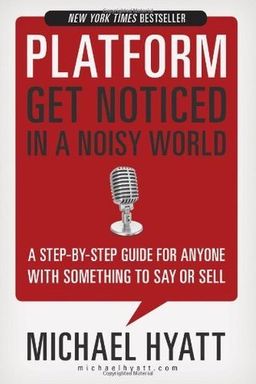
Platform cover

Platform

by Michael Hyatt

Michael Hyatt''s ''Platform'' is your guide to standing out in a noisy digital world. Learn to craft irresistible products, master social media, and build a loyal tribe that propels your career and monetizes your passion.

Build a Platform that Gets You Noticed

Have you ever felt invisible while trying to promote your best work, wondering why great ideas get lost in the noise? In Platform: Get Noticed in a Noisy World, Michael Hyatt reveals why simply having a fantastic product, message, or skill isn’t enough anymore—and how anyone can build a powerful platform to stand out, connect, and influence.

Hyatt contends that success today requires two essential ingredients: a compelling product and a significant platform. The product is what you’re offering—your book, service, art, or cause. The platform is the who—the people, networks, and channels that spread your message. In an increasingly distracted world of endless voices, winning attention means deliberately crafting both.

The Purpose of a Platform

Hyatt begins with a modern interpretation of Shakespeare’s idea that “All the world’s a stage.” He argues that everyone—author, entrepreneur, artist, or leader—is standing on a stage, trying to attract an audience. But visibility alone isn’t influence; it’s the connection that matters. A platform gives you visibility (raising you above the crowd), amplification (so your voice carries), and connection (so you engage authentically with followers). Without this three-part foundation, you risk speaking to an empty room.

Why Platforms Matter More than Ever

In an age of constant media and overpowering competition, Hyatt sees platforms as the new equalizer. You don’t need celebrity status or massive budgets; anyone can reach thousands through social media and digital tools. Yet that democratization also means attention is scarce. Hyatt calls attention “a finite resource,” fragmented among thousands of competing sources—from apps and podcasts to books and Twitter streams. To succeed, you need intentionality—a clear strategy for cutting through the noise.

From Craft to Connection

The book argues that mastering your craft isn’t the endgame but the starting line. Many creators wrongly assume a beautiful product will “stand on its own.” Hyatt debunks this myth with the story of an author whose agents loved her book but refused to take it on until she had thousands of social media followers. “A good book does not stand on its own anymore,” he declares. It’s no longer just about what you write, compose, or build—it’s about who knows you.

The New Success Equation

To thrive, Hyatt insists, you must combine two forces: a compelling product × a significant platform. Neglect either, and success falters. The product must deliver real “wow”—a transformative experience that surprises and delights. The platform must distribute that wow widely and consistently. It’s a balance between craft and communication, depth and reach. (In essence, Hyatt updates David Ogilvy’s classic maxim that “great marketing only makes a bad product fail faster” for the digital era.)

Taking the Stage

The book is structured around building that stage—from crafting an irresistible product, to assembling branding tools, to expanding your reach through social media and beyond. Hyatt breaks the process into five parts: Start with Wow, Prepare to Launch, Build Your Home Base, Expand Your Reach, and Engage Your Tribe. He walks readers from naming their offering to defending their brand online. The underlying philosophy: your platform is not a pile of technology—it’s a living, breathing network of people who believe in your message.

Why It Matters to You

Whether you’re an entrepreneur wanting customers, a creative longing for fans, or a leader needing influence, your platform is your launchpad. Hyatt bridges timeless human principles—trust, generosity, clarity—with digital power. He reminds you that the “stage” no longer belongs to gatekeepers; it belongs to whoever leads with authenticity and value. The opportunity to be heard and respected is wider than ever—but it demands courageous intentionality.

In Hyatt’s words, “You don’t have to wait to be picked. You can pick yourself.” In other words, the new stage of success is self-created—and that is both liberating and demanding.

Throughout the chapters ahead, Hyatt transforms platform-building from an overwhelming buzzword into a human process: crafting something remarkable, sharing it consistently, and nurturing a tribe of true believers. The result isn’t fame for fame’s sake—it’s influence built on trust. If you’ve ever dreamed of being heard or seen in a crowded world, Hyatt’s message is simple but empowering: build a platform so remarkable that the lights naturally turn toward you.


Start with Wow

Before you worry about followers or websites, Hyatt insists that success begins with one thing: wow. A wow product is more than good—it’s unforgettable. As he puts it, “Good is not good enough.” If your offering doesn’t spark delight, astonishment, or curiosity, your platform will amplify mediocrity, not greatness. The first part of the book teaches how to design products and experiences that exceed expectations—whether that product is a book, service, or message.

Surprise and Delight

Drawing on examples like Apple’s first iPhone and the social mission of TOMS Shoes, Hyatt breaks down ten elements of a wow experience—from surprise and anticipation to transcendence and evangelism. Every wow moment, he says, emerges where logic meets emotion. When Blake Mycoskie launched TOMS, for instance, he didn’t just sell shoes; he sold a story—a one-for-one promise that connected every buyer to a child in need. That emotional resonance created evangelists, not customers.

Removing the Obstacles

Hyatt identifies five common roadblocks that keep creators from greatness: time pressure, limited resources, lack of experience, committee compromises, and fear. The greatest enemy, he warns, is fear—fear of rejection, loss, or conflict. Greatness demands courage: “If you are honest, fear is the primary obstacle.” His advice echoes Steven Pressfield’s Do the Work—you must resist mediocrity with conviction and protect your vision from dilution.

Exceed Market Expectations

Hyatt uses the story of the disastrous musical Spider-Man: Turn Off the Dark as a cautionary tale. With its massive budget and famous creators, audiences expected magic—but the show failed spectacularly because it didn’t meet or surpass expectations. The lesson: wow happens only when customers say, “I’ve never experienced anything like this.” Hyatt encourages readers to map their user experiences—from lobby visits to product packaging—and reinvent every touchpoint to exceed expectations.

Refuse to Settle

Hyatt’s own snorkeling story in Maui becomes a metaphor for drift—the quiet slide from excellence to average. Most organizations drift from their original “big vision” into compromise. To counter this, he offers six ways to stay true: take a stand for greatness, reconnect with your vision, remind yourself what’s at stake, listen to intuition, speak up, and be stubborn. Courage, not consensus, fuels wow experiences. (As in Seth Godin’s Tribes, innovators must lead, not ask for permission.)

“You may be the original dream’s last best chance of staying alive.” Hyatt urges you not to dilute your message just to please others—it’s your willingness to fight for wow that defines your influence.

To start with wow is to anchor your entire platform in excellence. Hyatt reminds you that marketing magnifies truth: if your product is mediocre, fame only exposes weakness. But if it’s extraordinary, a platform transforms word-of-mouth into momentum, turning customers into an eager tribe that shares your message far and wide.


Prepare to Launch

Once you’ve created something great, you need a plan for putting it into the world. Hyatt’s second major principle—Prepare to Launch—is about personal responsibility, team-building, and brand clarity. Many creators hope someone else will “babysit their French fries,” as he quips from Yolanda Allen’s story, but Hyatt insists you must own your marketing: no one cares more, knows more, or has more skin in the game than you.

Define Your Goals

Hyatt, echoing Dave Ramsey’s vision-setting discipline, encourages you to write down your platform goals. This step clarifies your purpose, motivates action, filters opportunities, helps you overcome resistance, and creates milestones to celebrate progress. In other words, goals transform vague ambition into strategic decision-making. “Life is hard when you aren’t seeing progress,” Hyatt warns—write your goals so you can measure it.

Think Bigger

In a chapter inspired by David Schwartz’s classic The Magic of Thinking Big, Hyatt describes seven steps to envision outcomes beyond what seems “realistic.” He tells readers to imagine possibilities, write dreams down, connect with what’s at stake, outline what must be true, act on what they can control, set deadlines, and review daily. When you think big, you break the self-imposed constraint that keeps you small. (“Don’t listen to that mocking voice that says ‘be more realistic.’”)

Craft Your Elevator Pitch

Hyatt uses Aileen Pincus’s story of a young web designer to illustrate poor first impressions: talent means nothing if clarity is missing. To craft your pitch, include four components: product name, problem solved, proposed solution, and benefit offered. You must be able to explain your product in thirty seconds—or even eight seconds online. For entertainment products, adjust the formula to focus on the main character, conflict, and story significance. Clarity connects your audience to your message instantly.

Set Up Branding Tools

Before the spotlight hits, Hyatt walks you through five essential brand tools: professional email address, signature, business card, website, and social media profiles. Each is a “personal branding touchpoint.” For example, an outdated AOL email screams “stuck in the ’90s.” Every element—fonts, colors, logos—should be consistent. Your digital presence must look deliberate and current. Branding, Hyatt insists, is not vanity; it’s credibility.

Assemble Your Pit Crew

Using the metaphor of a race car, Hyatt reminds you to surround yourself with a team. That includes administrative help (virtual assistant, bookkeeper, attorney), management or personal managers, representation (agents), collaborators (coaches, editors, producers), and publishers. Your pit crew optimizes your performance while you stay focused on racing—the creating and connecting that only you can do. Success, he writes, is a team sport.

When you prepare to launch, you set the groundwork for visibility and trust. It’s not glamorous—it’s methodical. But by taking responsibility, defining goals, and assembling support, you prepare your platform to lift off smoothly when it’s time to step into the public spotlight.


Build Your Home Base

Your home base is where your audience gathers—your digital headquarters. Hyatt calls it the single most important branding tool you’ll ever create. In his framework, your home base works alongside social “embassies” (like Twitter and Facebook) and “outposts” (where you simply listen). Together they form your online ecosystem: owned space, borrowed space, and monitored space.

Understand the Model

A home base is something you own—a blog or website you control. An embassy is a place where you participate, like social media platforms. An outpost is where you listen, using tools like Google Alerts. If you’re serious about building a platform, Hyatt says, start with your home base. It’s your headquarters for everything else.

Start a Blog (or Restart One)

For Hyatt, blogging is the heart of your platform—it’s where your best thinking lives. He offers step-by-step guidance: choose a theme, select a service (WordPress preferred), set it up, write your first post, and commit to consistency. Most blogs fail because creators quit too early. Hyatt recalls how his first post welcomed employees when he was a CEO—it was a way to connect transparently. Blogging builds your reputation one post at a time.

Write Engaging Content

To make blogging easier, Hyatt shares his five-part template: lead paragraph, relevant image, personal story, main body (often with numbered points), and a discussion question. Posts should be short (around 500 words), scannable, and conversational. Use short sentences, simple words, and internal links. The goal: communicate, not impress.

Ideas and Speed

He also solves writer’s block with an arsenal of thirteen idea starters—from personal stories and historical events to quotes, guides, and resource lists. Hyatt keeps a running list in Evernote. He then explains how to write faster: start the night before, think during downtime, go offline to avoid distractions, use background music, set timers, outline before writing, and resist premature editing.

Avoid Common Mistakes

Hyatt warns against ten traffic killers: posting too infrequently, writing long or boring posts, weak headlines or first paragraphs, off-brand topics, and neglecting engagement. “Don’t make your blog all about you,” he says—readers care about their own problems, not your autobiographical musings. The fix is empathy: write as if speaking directly to what readers need.

When you build your home base well—with consistent writing, strong structure, and authentic voice—it becomes the gravitational center of your platform. All other visibility efforts echo and amplify what starts here, in the place you own and control.


Expand Your Reach

Once your home base is solid, it’s time to amplify your message. Hyatt calls this stage expanding your reach—turning your platform into a powerful network of influence. He begins by announcing that traditional marketing is dead. In an age of social sharing, tribe-building is the new form of marketing: connection replaces persuasion, generosity replaces advertising.

Tribe Building Is the New Marketing

Borrowing from Seth Godin’s Tribes, Hyatt defines a tribe as “a group of people connected to one another, connected to a leader, and connected to an idea.” Whether you’re Apple, Dave Ramsey, or Evernote, tribes grow from shared interest and communication. To lead a tribe: discover your passion, volunteer to lead, give generously, and create communication channels among members.

Understanding What’s Not Important

Hyatt cautions creators against prioritizing slick websites or “cool” designs over substance. Using Marketing Grader, he shows how flashy sites often score poorly on engagement and traffic. The real power lies in clarity and relevance. “Having a young and hip image does not necessarily correlate with more traffic,” he writes—it’s about value, not glamor.

Generate More Traffic

Practicality reigns here: Hyatt details ten proven methods, including writing shareable content, keeping consistent schedules, owning your domain, optimizing SEO, engaging via comments, and writing guest posts. He even cites his own analytics: switching to WordPress increased traffic by 338%. Blogging frequency and quality matter more than gimmicks.

Build Your Subscriber List

Instead of chasing clicks, Hyatt urges focusing on loyal subscribers—the multiplier effect of fans who recruit others. He grew his own email list from 2,700 to 50,000 in nine months by offering value, tools like MailChimp, branded templates, incentives (like his free e-book), and reminder sign-ups. Subscribers are your most valuable asset: they’ve given permission to hear from you.

Stop Losing Readers

In a humorous “Dear Blogger” note, Hyatt lists six habits that make readers unsubscribe—boring titles, infrequent posts, excessive length, lack of focus, and ignoring conversation. The key to retention: be intentional, consistent, and responsive.

“Meet expectations, then exceed them,” Hyatt reminds—because your reach grows when readers feel valued, heard, and inspired.

Expanding your reach is less about numbers and more about influence. When your message consistently adds value, audiences amplify it for you. Once they trust you, your tribe becomes your megaphone.


Engage Your Tribe

Hyatt’s final principle—Engage Your Tribe—is about transforming followers into advocates. Your success depends not just on building a big audience but keeping it engaged, civil, and loyal. In the digital age, that means listening, responding, and defending your brand with humility and speed.

Drive Conversations

Hyatt urges all bloggers to end posts with questions, use threaded comments, and reply consistently. Engagement grows when readers feel part of a meaningful dialogue. He cautions against overreacting to criticism: disagreement can actually strengthen credibility. To maintain quality, he designs an official comments policy outlining expectations and civility rules—hosting your blog like a respectful dinner party.

Practice Generosity Online

Social media, Hyatt insists, is relational—not transactional. You must apply the 20-to-1 Rule: for every promotional message, give twenty helpful or inspiring contributions. He cites Chris Brogan’s generosity in sharing reviews and helpful advice—behavior that builds trust and leads naturally to sales. Digital generosity makes your followers your promoters.

Monitor and Defend Your Brand

Hyatt tells striking stories of companies like U-Haul losing thousands overnight after ignoring Twitter complaints. In contrast, brands like Apple and Marriott excelled because they listened and responded quickly. His seven rules for defending a brand: build presence before crisis, monitor conversations, respond fast, admit mistakes fully, understand customer lifetime value, empower employees to fix problems, and exceed expectations. Every interaction is either a deposit or a withdrawal in your “brand account.”

Don’t Feed the Trolls

Criticism, Hyatt says, comes in three types: true friends, honest critics, and unhealthy trolls. Respond to the first two respectfully and ignore the third. He shares how online negativity once knocked him off balance until he learned the power of discernment—distinguishing between helpful pushback and malicious noise. “Resistance only makes trolls stronger,” he advises.

Monetize Without Selling Out

Finally, Hyatt demystifies monetization. “Art and money aren’t enemies,” he writes. He outlines ethical ways to earn from blogging: selling ads, affiliate promotions, and your own products. Integrity is the compass—promote what fits your brand and helps your readers. You can make a living while making a difference.

Engaging your tribe means nurturing trust over time. Hyatt closes with a metaphor from Tony Robbins’s fire walk: stepping barefoot onto hot coals to conquer fear. Building a platform is similar—terrifying but transformative. The first step is the hardest, yet once you take it, momentum carries you across to influence and impact. Courage and consistency make ordinary leaders unforgettable.

Dig Deeper

Get personalized prompts to apply these lessons to your life and deepen your understanding.

Go Deeper

Get the Full Experience

Download Insight Books for AI-powered reflections, quizzes, and more.