
Idea 1
The Language of Pitch-Perfect Communication
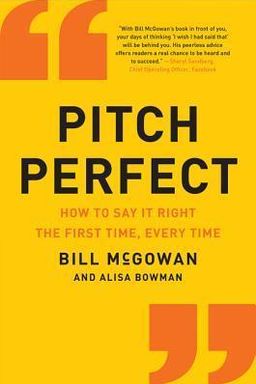
When was the last time you lost someone’s attention midway through a conversation—or walked out of a meeting wishing you’d said things differently? In Pitch Perfect, Emmy-winning television correspondent Bill McGowan argues that success today depends less on what you do and more on how you communicate. To be heard, respected, and remembered, you must learn to say it right the first time, every time.
McGowan contends that communication is your most valuable life skill—the modern currency of influence. Whether you’re pitching investors, interviewing for a job, or talking to your teenager, the words you use and the way you use them can shape your outcomes. He dismisses old speaking clichés (“Imagine your audience in their underwear”) and introduces a fresh, practical framework called the Seven Principles of Persuasion, each designed to make your ideas stick and your confidence soar.
Why Communication Matters More Than Ever
In the digital era, most people spend more time typing than talking. Emails, texts, and tweets dominate our interactions, while our spoken communication muscles atrophy. McGowan warns that this shift leads to misunderstandings, missed opportunities, and professional stagnation. A well-written text might convey information—but only speech can carry emotion, conviction, and authenticity. If you want to persuade people and forge genuine human connection, you must learn to master verbal communication.
The author discovered firsthand how communication can make or break careers when training executives from companies like Facebook, AirBnB, and Estee Lauder. He found that clarity, brevity, and enthusiasm—not jargon or status—determine who rises up the corporate ladder. Studies he cites reinforce this, showing that good communication ranks alongside gravitas and polished appearance as the key ingredients of leadership.
When Saying It Right Changes Everything
McGowan opens the book with a gripping anecdote about his own “Pitch-Perfect moment.” On his first day working with Facebook, he accidentally traveled to the wrong city, arriving nearly an hour late to train Sheryl Sandberg and Mark Zuckerberg. Instead of panicking, he applied one of his principles—own the mistake, then pivot positively. His calm, sincere apology (“Thoroughly inexcusable; I’m sorry—but once I get there, we are going to have an amazing day”) turned a potential career disaster into lasting success. His firm has since become a fixture at Facebook.
Moments like these, McGowan says, happen constantly. They are the crossroads where outcomes depend entirely on how skillfully you communicate. He calls them Pitch-Perfect moments—the high-stakes junctures that determine promotions, deals, relationships, and reputations. Instead of winging these moments and hoping for luck, he teaches readers to approach them like professional communicators—strategically, confidently, and creatively.
The Seven Principles of Persuasion
Throughout the book, McGowan unpacks seven principles that form the backbone of stellar speaking. Each principle is both memorable and vivid, using analogies drawn from everyday life and pop culture:
- The Headline Principle – Start with your best material; don’t bury the lead.
- The Scorsese Principle – Tell stories visually, like a film director shaping emotional imagery.
- The Pasta-Sauce Principle – Boil down ideas; concentrate flavor by eliminating filler.
- The No-Tailgating Principle – Slow down, give your brain space, and avoid verbal collisions and filler words.
- The Conviction Principle – Exude confidence through posture, tone, and certainty of purpose.
- The Curiosity Principle – Great communicators listen more; they show genuine, expressive interest.
- The Draper Principle – Inspired by Mad Men’s Don Draper, steer the conversation strategically—if you don’t like what’s being said, change the topic.
Each principle comes alive through examples from television, business, and McGowan’s coaching experiences. The “Scorsese” and “Curiosity” chapters, for instance, blend storytelling and empathy—the twin pillars of human engagement—while “Pasta-Sauce” and “No-Tailgating” emphasize clarity and pacing as tools for persuasion. Together, they form an interconnected system: concise thinking, confident delivery, and curious listening reinforce one another.
Why It Matters Beyond Work
McGowan insists these skills aren’t limited to boardrooms or broadcast studios. They transform how we connect with family and friends, too—from toasting at weddings to comforting someone during grief. He traces common conversational disasters—rambling, nervous filler, defensive tone—to the same lack of awareness that undermines professional success. Whether at home or at work, being Pitch Perfect means paying attention: to words, tone, curiosity, and timing.
Ultimately, the book argues that the art of eloquence is not innate but trainable. As McGowan says, “There’s no eloquence school you graduate from.” Everyone can learn to master conversational timing, curiosity, and conviction. His method blends psychology, media craft, and practice—much like Dale Carnegie’s How to Win Friends and Influence People scaled for the multimedia age. The payoff? More influence, empathy, and composure in every interaction.
Core Idea
To communicate well is to lead well. Being Pitch Perfect means moving from self-consciousness to self-control, from noise to nuance, and from passive talk to purposeful conversation.
In short, McGowan gives you a playbook for navigating modern conversations with the clarity of a journalist, the flair of a film director, and the curiosity of a lifelong learner. His message is simple: stop winging it, start directing it, and you’ll change how people listen to you forever.