
Idea 1
Endowment Management as Mission Stewardship
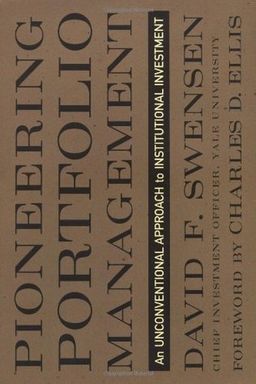
How can an institution turn a pile of money into enduring excellence? In Pioneering Portfolio Management, David Swensen argues that endowments are not mere investment funds—they are instruments of mission. He treats the endowment as institutional infrastructure that secures independence, stability, and excellence. To steward such funds wisely, you must integrate purpose, spending, and investment policy, always aligning financial decisions with long-term academic goals. Swensen’s framework turns endowment management into an ethical craft grounded in intergenerational equity.
The Three Purposes of Endowment
Endowments exist to protect independence, provide stability, and subsidize a margin of excellence. Independence means freedom from political or donor control—Yale’s liberation from Connecticut’s legislature in 1871 illustrates how capital autonomy supports academic governance. Stability allows smooth operations across cycles; Stanford’s temporary 1993 payout increase bridged deficits, though at cost to long-term value. Excellence is the aspirational edge—large endowments enable superior research and faculty hiring. These purposes intertwine: independence without stability risks fragility, and excellence without financial discipline is unsustainable.
Fiduciary Duty and Intergenerational Equity
Endowment stewards are trustees of both present and future beneficiaries. James Tobin’s principle—protecting the future against the claims of the present—underpins every policy. Swensen insists that payout and investment rules must maintain purchasing power while providing reliable budget support. Over-spending impoverishes future scholars; over-hoarding fails current students. The equilibrium lies in thoughtful spending formulas and disciplined investment risk.
From Mission to Mechanism
Swensen transforms abstract mission into practical mechanics. Each policy layer—spending, asset allocation, risk management—flows from purpose. The 80/20 smoothing rule for spending exemplifies this philosophy: Yale’s approach provides stability without sacrificing responsiveness. The endowment’s structure becomes a translation device between market volatility and academic continuity.
The Broader Significance
Swensen’s framework reshaped global institutional investing. His insights echo in the global shift toward diversified endowment-style portfolios—Harvard, Stanford, and nonprofit foundations followed the model. At heart lies a moral principle: perpetual institutions must invest as perpetual owners. Financial management is not separate from mission; it is mission executed through disciplined capital stewardship.
Core takeaway
Endowment management is not about maximizing returns—it is about maximizing institutional freedom and excellence. When purpose anchors every financial decision, investment strategy becomes a moral extension of mission.
Swensen’s philosophy integrates economics, governance, and ethics. He teaches you to judge success not by performance ranks but by whether the endowment sustains independence, stability, and distinction for generations to come.