
Idea 1
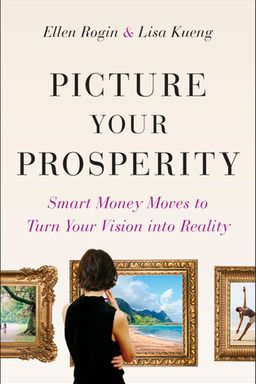
Picture Your Prosperity: Designing a Vision for a Richer Life
What if prosperity wasn’t about how much money you have—but about how intentionally you live your life? In Picture Your Prosperity, financial experts Ellen Rogin and Lisa Kueng argue that true prosperity is a holistic combination of wealth, purpose, generosity, gratitude, and joy. The book invites you to shift from a mindset of scarcity to one of abundance by literally picturing what prosperity looks like for you and then designing your financial and personal life to support that vision.
Unlike traditional financial advice that focuses purely on numbers, spreadsheets, and spreadsheets of investment options, this book blends financial strategy with neuroscience and psychology. Rogin and Kueng contend that prosperity isn’t a cold accumulation of wealth—it’s a warm, living practice that connects your money to your meaning. Their approach combines left-brain financial planning with right-brain visualization, belief reprogramming, and gratitude techniques. You’ll learn how to create a “Prosperity Picture” that maps out your dreams, recondition your brain to notice opportunities that align with those visions, and build the supportive habits and systems that sustain them over a lifetime.
The Prosperity Picture: A New Way to Think About Money
At the heart of the book lies the Prosperity Picture—a visual, collage-style map that helps you translate your values and dreams into something you can touch, see, and revisit every day. Like a vision board engineered for financial success, the Prosperity Picture helps you prime your brain’s Reticular Activating System (RAS), the neural filter that decides what you notice and what you ignore. When you repeatedly visualize the life you want, your brain literally tunes itself to notice opportunities to create it. This is why athletes imagine their wins before they compete; the same principle works for your career, your retirement goals, or your dream home.
Rogin and Kueng blend brain science with practical application. Through visualization, you imprint your goals into your subconscious, making it statistically more likely that you’ll act on opportunities you might have previously missed. Combined with financial planning, visualization becomes a high-leverage habit—one that bridges imagination and execution.
Beyond Money: Redefining Prosperity
The authors redefine prosperity as well-being, not wealth in isolation. They open by asking readers what prosperity means to them, noting that answers span from peace and time freedom to travel, generosity, and joy. This shift—from pursuing money to cultivating holistic abundance—undercuts one of society’s most persistent myths: that financial success alone guarantees happiness. Instead, prosperity is about purpose and alignment. When you spend money consciously, invest in what you love, and channel your wealth toward meaningful causes, you experience what they call a “Prosperity Zone”—a mental state where financial and emotional well-being converge.
The Psychology of Wealth and the Science of Belief
To help you reach and stay in this Prosperity Zone, the authors explore how subconscious money beliefs shape reality. Drawing on research from Dr. Bruce Lipton (The Biology of Belief) and cognitive psychology, Rogin and Kueng reveal that most of our financial behaviors come from subconscious programming formed before age six. These hidden narratives—from “money is scarce” to “I’m not good with finances”—govern adult decisions until you consciously reframe them. Throughout the book, exercises like “cancel/clear” and “Truth Talk” show you how to replace fear-based financial thoughts with expansive, empowering ones. In this sense, Picture Your Prosperity functions as much as a tool for rewiring your habits as for organizing your budget.
From Vision to Action: The Seven Steps to Prosperity
Rogin and Kueng build the book around a seven-step journey. You begin by defining your vision (Step One) and move through practical financial planning, emotional intelligence, relationship-building, generosity, resilience, and legacy. They advocate integrating hard financial planning—like saving, investing, and managing risk—with soft skills—like gratitude, belief, and giving. By weaving both, the book helps you “picture” your prosperity and then make it tangible.
Key takeaways include: creating clear visuals for your goals, setting up structured savings systems (“financial flowerpots”), maintaining a gratitude practice to reduce financial anxiety, and becoming an “Abundance Activist®” who uses wealth as a force for good. They also emphasize community and accountability—through “Prosperity Circles” or partnerships—to sustain the transformation. Over time, this process turns prosperity into a practice rather than a destination.
Why It Matters
At its core, the book argues that personal wealth is inseparable from collective well-being. Rogin and Kueng champion the idea of women as global changemakers, pointing to research from economists like Muhammad Yunus and Nicholas Kristof showing that when women have financial power, families and communities thrive. With trillions of dollars soon to be controlled by women, they see financial literacy not just as self-empowerment but as a pathway to save the world—literally. Combining neuroscience, positive psychology, financial planning, and social purpose, Picture Your Prosperity positions money as both an energy flow and an ethical tool. When you align your financial life with your highest vision, prosperity isn’t just possible—it’s inevitable.
Taken together, the book’s message is profound yet practical: You can create the life you imagine by first picturing it, then infusing your finances with purpose, positivity, and momentum. Prosperity starts in the mind but manifests through consistent financial action. And when you live from that sense of abundance—both emotional and material—you don’t just change your life; you change the world around you.