
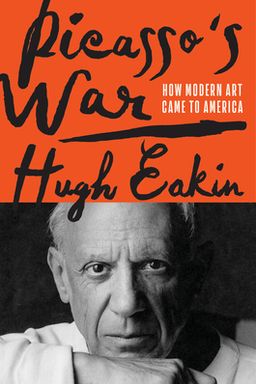
Picasso''s War cover

Picasso''s War

by Hugh Eakin

Picasso''s War reveals the dramatic saga of modern art''s rise in America. Follow the passionate advocates who battled ridicule and cultural barriers to transform the nation into a vibrant hub for avant-garde artists.

Building Modernism: From Rebels to Institutions

How does radical art become a nation’s norm? This book tells you that the history of modern art’s rise in America is not a story of artists alone, but of networks—lawyers, dealers, journalists, and museum founders who wove a fragile web of diplomacy, commerce, and persuasion. The narrative begins with John Quinn’s lone crusade for living art, moves through the shock of the 1913 Armory Show, the dealer battles of Paris and Moscow, and culminates in Alfred Barr’s institutional triumph at the Museum of Modern Art. What unites these stories is the idea that cultural power emerges when collectors, curators, and publics align around modernism’s cause.

From Private Crusaders to Public Culture

In 1900, America’s taste was provincial. Museums clung to Old Masters, and new art was often dismissed as madness or indecency. Into this vacuum stepped John Quinn, a corporate lawyer who used his legal craft to defend artists and publications against censorship, import barriers, and social hostility. His advocacy for 'living art'—art emitting energy like 'radium'—foreshadowed how modernism would spread: via law, publicity, and personal conviction. He fought tariff laws that taxed contemporary art, defended radical literature in court, and spent his fortune acquiring works no American institution would touch. Through Quinn, you grasp that patronage and policy together can remake a culture’s taste.

The Armory Show: Shock as Strategy

The 1913 Armory Show was the explosion Quinn and his circle engineered to confront America with European modernism. It showed the public Duchamp’s Nude Descending a Staircase, Matisse’s Blue Nude, and Brancusi’s Mlle Pogany, provoking ridicule, riots, and revelation. It dramatized the gap between cultural supply and demand—between what artists made and what audiences could accept. Yet the uproar created new believers: critics like Jeanne Robert Foster and collectors such as Lillie Bliss, who later transformed the American art landscape. (Note: the Armory Show was not an instant victory but a long-term strategic disruption.)

Markets, Wars, and Dealers

Behind every movement is an economy. Dealers like Kahnweiler, Vollard, and Rosenberg created different models for selling radical art: private contracts, exhibitions-as-spectacle, and auctions that turned paintings into international commodities. World War I rearranged those markets through confiscation and death, dispersing collections and scattering works across borders. The seizure of Kahnweiler’s inventory—hundreds of Picassos and Braques—shows how quickly politics can undo decades of aesthetic investment. The war also turned Cubism into camouflage, converting avant-garde design into a military tool and altering how modern art was perceived.

Institutional Revolution

The dispersal of Quinn’s holdings after his death taught a lesson: without permanent institutions, visionary collections vanish. That insight drove the founding of the Museum of Modern Art in 1929 by Lillie Bliss, Abby Rockefeller, and Mary Sullivan. Alfred H. Barr Jr., their young Harvard-trained director, crafted a new model—a museum both scholarly and experimental. He invented the 'white cube' gallery space, borrowed masterpieces for teaching exhibitions, and treated modernism as a coherent historical narrative. MoMA’s early years, born in the Great Depression, defined how nations can institutionalize once-rejected art.

The Struggle for Picasso and the Politics of Culture

Quinn had died before Picasso became a household name, but Barr continued his mission under new constraints: dealer monopolies, trustee caution, and the artist’s own private crises. The 1930s saw Rosenberg and Bignou control Picasso’s availability, while Barr’s efforts to organize exhibitions collapsed amid market intrigue and personal scandals. Yet Barr persisted, mounting a Van Gogh retrospective in 1935 to cultivate empathy for modern art and later securing Les Demoiselles d’Avignon for MoMA through daring financial tactics. His vision of the museum as a 'torpedo'—its nose aimed at the present, its tail preserving the past—became the defining metaphor for modern curatorship.

Modernism and Survival

As Nazism overtook Europe, Barr’s mission turned urgent. He witnessed the censorship of Schlemmer, Klee, and others, and understood that cultural institutions could vanish overnight. By 1939, as war began, MoMA mounted its great Picasso retrospective—a rescue effort as much as an exhibition. Over 360 works crossed the Atlantic, including Guernica. Paradoxically, war made America the new safe harbor of modernism. The European avant-garde’s exile became the foundation for America’s artistic identity, and Barr’s MoMA became its temple.

From Fragile Idealism to Durable Infrastructure

By the early 1940s, modern art had found institutional legitimacy, but at a cost. Barr’s dismissal in 1943 revealed the tensions between curatorial vision and trustee restraint. Yet the system he built endured: a museum that educates, collects strategically, and renews itself through constant engagement with the present. The book’s arc—from Quinn’s lonely legal crusade to Barr’s global museum—shows that cultural revolutions depend on organization as much as inspiration. You come away seeing that aesthetic progress needs its own infrastructure: networks, patrons, and institutions sturdy enough to survive wars, markets, and human frailty.


John Quinn’s Cultural Crusade

John Quinn’s life encapsulates the heroic phase of American modernism—when advocacy was a personal vocation. Trained as a Wall Street lawyer and born to Irish immigrants, Quinn used his dual identity to fight cultural conservatism and legal rigidity. His motto was simple: a great culture must protect its living artists. To that end, he defended controversial publications like The Little Review against censorship, argued before Congress to repeal art tariffs, and quietly amassed one of the most adventurous private collections of the twentieth century.

Law as Cultural Weapon

When politicians sought to impose a tariff on imported art by living artists (a policy favoring Old Masters), Quinn mobilized an army of allies—college presidents, museum directors, and Congressmen—to brief committees and reverse the law. His success legalized the import of avant-garde paintings, transforming the American market overnight. This fusion of legal action and cultural ambition reveals a crucial pattern: systemic reform, not only collecting, accelerates aesthetic change.

From Collecting to Nation-Building

Quinn’s purchases were not mere indulgences. They were strategic acquisitions meant to awaken America’s visual sensibility. He assisted with the 1913 Armory Show, supported experimental magazines, financed the Abbey Theatre tour, and introduced the poetry of Yeats and the art of Picasso and Rousseau to New York audiences. His 1924 acquisition of Rousseau’s Sleeping Gypsy—arranged through the diplomat-broker Henri-Pierre Roché—was both aesthetic climax and symbolic victory. It demonstrated that modern art’s future lay not in Parisian salons but in transatlantic alliances of vision and courage.

Failure as Legacy

When Quinn died in 1924, his collection was dispersed for lack of institutional support. That dispersal, though tragic, seeded the next wave of cultural infrastructure. His protégés—including Bliss and Rockefeller—absorbed the lesson: genius must be housed, not merely admired. Quinn’s career teaches you that modernism’s advance requires hybrid intelligence—legal precision, moral conviction, and relentless networking—to bend both policy and perception.


The Armory Show and Its Aftermath

The 1913 Armory Show stands as the lightning strike that illuminated a provincial America. Conceived by the Association of American Painters and Sculptors with Quinn’s backing, it transformed an armory into a laboratory of perception. Over 1300 works introduced Cubism, Fauvism, and Futurism to the public. Reactions ranged from outrage to epiphany—proof that cultural translation begins with shock.

Scandal as Education

Newspapers mocked Duchamp’s Nude Descending a Staircase as mechanical absurdity, and students in Chicago burned effigies of Matisse. Yet the uproar did what polite lectures could not: it forced Americans to confront modern form. Jeanne Robert Foster’s perceptive essays and Arthur Davies’s organizational genius reframed the show as a civic encounter with change. Shock became pedagogy.

Seeds of Institutional Change

Out of mockery grew commitment. A handful of converts—Bliss, Foster, and others—recognized that avant-garde art required durable support structures. Their realization led to new collecting habits, transatlantic dealer relations, and ultimately institutional foundations like MoMA. The Armory Show thus marks the birth of modern American cultural strategy: provoke, endure derision, and convert curiosity into loyalty.

Public Policy Meets Taste

Quinn’s simultaneous legislative fight against art tariffs reminds you that aesthetic battles are always political. He didn’t seek to win arguments with critics; he sought to change the framework within which art circulated. The Armory Show and its legal companion effort together show how modernism entered America through both spectacle and statute, setting patterns still visible in cultural reforms today.


Markets, Dealers, and Modernism’s Economy

Modern art’s meaning changed because its market changed. Dealers were not passive middlemen but architects of visibility. Kahnweiler’s secretive contracts with Picasso and Braque built exclusivity; Rosenberg’s glamorous salons domesticated the avant-garde for elite buyers; Vollard and auction houses generated speculative cycles that validated art as an asset class. Each model carried risks: Kahnweiler’s empire vanished under wartime seizures, while Rosenberg’s public brilliance left him exposed to scandal and exile.

The Russian and German Connection

Collectors like Sergei Shchukin in Moscow bought en masse, turning their homes into museums of Matisse and Picasso. These concentrated purchases made cities, not individuals, centers of gravity. (Note: this eastward axis foreshadowed the later migration of art capital to America after both revolutions and wars displaced Europe’s patrons.) The modern canon we inherit today owes as much to these buying patterns as to artistic innovation.

War and Redistribution

World War I converted art into collateral damage. Kahnweiler’s confiscated stock—hundreds of Cubist works—entered unpredictable circulation. Meanwhile, artists fought and died, or turned their methods into camouflage for the front lines. The connection between Cubist fragmentation and military concealment is a startling example of how aesthetics mutate under pressure. The war didn’t end modernism; it fractured and globalized it.

Cultural Diffusion and Control

By tracing dealer strategies, you understand that artistic legitimacy often follows market logic. Authority accrues not just from genius but from distribution capacity. Kahnweiler’s exclusivity created scarcity value; Rosenberg’s spectacle created social prestige. Both formed feedback loops with critics and collectors. The lesson: modernism spread through a choreography of scarcity, display, and persuasion—a pattern every subsequent cultural movement repeats.


People, Networks, and Informal Diplomacy

Behind institutional stories lies what the book calls informal diplomacy—the interpersonal web that carries art across borders. Jeanne Robert Foster and Henri-Pierre Roché illustrate this hidden infrastructure. Foster wrote and mediated; Roché negotiated discreet sales between artists and collectors. Through them, the narrative recovers the gendered and clandestine labor that kept modernism alive.

Jeanne Robert Foster’s Quiet Power

Foster used journalism to legitimize radical art and nursed Quinn through his final illness. Her insights published after the Armory Show articulated what viewers felt but couldn’t name. She modeled the critic as translator, not gatekeeper—a role that endures in today’s curatorial practice.

Henri-Pierre Roché’s Secret Deals

Roché’s network—connecting Picasso, Duchamp, Brancusi, Kahnweiler, and Quinn—enabled vital transactions outside public institutions. He arranged the sale of Rousseau’s Sleeping Gypsy, coordinated Man Ray photographs for discreet offers, and mediated quarrels among dealers. His methods blurred commerce and friendship but kept avant-garde art in circulation when markets were unstable.

Women Founders and the Social Network

The same informal diplomacy reappeared with MoMA’s founders. Bliss, Rockefeller, and Sullivan leveraged their social intelligence to institutionalize what Quinn had built privately. These women demonstrate how networks of trust—not academic credentials—often drive cultural transformation. Informal actors build the pathways formal institutions later claim.


Founding MoMA and Barr’s Vision

The founding of the Museum of Modern Art in 1929 marks modernism’s institutional phase. Its three founders—Lillie Bliss, Abby Rockefeller, and Mary Sullivan—translated private conviction into public infrastructure. They recruited Alfred H. Barr Jr., a Harvard scholar who believed modern art deserved the same historical and pedagogical treatment as classical masters. Barr’s museum was to be both temple and classroom.

Pedagogy by Design

Barr replaced ornate décor with white walls and chronological hangs. His approach treated modern art as an evolving system: every exhibition was an argument. The 1931 Matisse show and later thematic installations taught the public how to read abstraction, not merely look at it. The crisis timing—amid the stock market crash—proved that ideas could outlast capital.

The Torpedo Museum

In 1933 Barr formulated his 'torpedo' metaphor: a collection’s nose should seek the newest art while its tail holds historical ballast. His 1936 exhibition Cubism and Abstract Art visualized this philosophy with a flowchart mapping trajectories from Cézanne to contemporary abstraction. Barr thus created the prototype of the modern art museum as an evolving organism rather than a static archive.

Institutional Survival

MoMA survived economic collapse and became the epicenter of modernism’s American permanence. Its founders demonstrated that institutional design—funding structures, loan systems, educational programming—can rescue cultural movements from the mortality that claimed Quinn’s collection. Modernism, once ephemeral, gained a permanent home.


Barr’s Campaigns: Van Gogh, Dealers, and Picasso

Alfred Barr’s curatorial battles in the 1930s dramatize the politics of access. Dealers, artists, and trustees constantly reshaped his strategies. His most brilliant maneuver came not with a new artist but with a familiar martyr: Van Gogh. The 1935 Van Gogh retrospective toured nationwide, using biography and emotion to make modernism sympathetic to general audiences. It drew nearly a million visitors and funded the museum’s future ambitions.

Lessons from Van Gogh

Barr leveraged Irving Stone’s popular novel Lust for Life and the pathos of Van Gogh’s letters to create the first true American 'blockbuster.' It wasn’t nostalgia—it was strategy: use emotion to build audience literacy for abstraction. That mass appeal would later fertilize acceptance for Picasso.

Dealer Politics and Matisse Pivot

When negotiations for a Picasso show failed due to Rosenberg’s control and the artist’s reluctance, Barr pivoted to Matisse. The resulting 1931 retrospective outclassed commercial counterparts and demonstrated curatorial independence amid dealer monopolies. Barr’s political acumen—mapping loyalties, anticipating rival exhibitions—became a model for museum diplomacy.

From Private Crisis to Public Triumph

Picasso’s own life—legal battles with Olga, affair with Marie-Thérèse, and later awakening with Guernica—further delayed collaboration. Yet by 1939, as Europe went to war, MoMA and Barr staged a historic 360-work Picasso retrospective. War turned risk into opportunity: collectors lent works for safekeeping, and America finally claimed Picasso as its modern icon. Barr’s persistence aligned personal genius, global crisis, and national curiosity into a single transformative moment.


War, Nazism, and the American Ascent

Totalitarianism didn’t just persecute art—it reprogrammed the global map of culture. Alfred and Marga Barr’s 1933 visit to Germany exposed the imminent purge of modernism: exhibits shuttered, curators dismissed, and modern architecture banned. Carl Jung’s essay linking Picasso to mental illness symbolized a wider attempt to pathologize innovation. The Nazi campaign against 'degenerate art' forced a critical migration of works and ideas to safer grounds, accelerating America’s rise as modernism’s new capital.

Seizure and Rescue

Barr and MoMA responded by quietly purchasing works at the 1939 Lucerne auction of confiscated paintings, ensuring they weren’t destroyed. These interventions turned curating into moral action: to collect meant to rescue. Dealers like Rosenberg fled, some losing stock to occupation; museums recalibrated to become cultural shelters.

America’s Accidental Inheritance

As Europe imploded, America inherited its avant-garde. Artists emigrated or sent works abroad; patrons reconstituted exile collections in New York. The 1939 MoMA Picasso show—mounted as ships sank and borders closed—embodied a paradox: destruction abroad enabled consolidation at home. Barr understood that stewardship required urgency and risk, not neutrality.

Legacy Under Pressure

The war years proved modernism’s resilience. Art could survive only when defended by committed infrastructures willing to act across borders and beyond comfort zones. MoMA’s success under siege turned it from a museum into a moral institution, guardian of what totalitarianism sought to erase. In that transformation, modern art became not just an aesthetic project but a testament to freedom.


Curators, Trustees, and Institutional Power

As modernism matured, its internal struggles moved from ideology to governance. Alfred Barr’s later years at MoMA reveal the friction between visionary curation and cautious administration. Trustees like Stephen Clark balanced artistic daring against financial restraint, often vetoing Barr’s proposals. The resulting power plays expose a truth every institution learns: ideas alone do not sustain museums—politics does.

Balancing Risk and Survival

During the Depression, MoMA’s finances were tenuous. Trustees rejected several acquisition plans; yet Barr, citing cultural duty, maneuvered around constraints. His most audacious act was purchasing Les Demoiselles d’Avignon in 1937 by trading a Degas from Lillie Bliss’s bequest and leveraging a dealer’s partial donation. It was part sleight-of-hand, part visionary accounting—proof that pragmatism under pressure could secure the future.

The Price of Vision

Success couldn’t save Barr from institutional politics. In 1943 the board dismissed him as director, citing management issues. But the real cause was structural fatigue: tensions between avant-garde ambition and donor diplomacy. Barr’s exit underscored that cultural progress always tests governance limits; yet his legacy made the museum’s modern mission irreversible.

Enduring Lesson

Barr’s story shows that sustaining innovation demands not just imagination but negotiation. Visionary individuals ignite revolutions; institutions make them last. The balance between daring and discipline defines whether modernism remains alive or ossifies into history—a dilemma that every cultural leader still faces.

Dig Deeper

Get personalized prompts to apply these lessons to your life and deepen your understanding.

Go Deeper

Get the Full Experience

Download Insight Books for AI-powered reflections, quizzes, and more.