
Idea 1
Markets That Create Manipulation
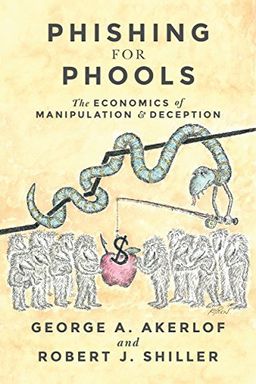
George Akerlof and Robert Shiller argue that modern capitalism, while enormously productive, inevitably produces phishing equilibria — steady states in which profit-seeking sellers systematically exploit human weaknesses. Competitive markets, they claim, maximize not just efficient outcomes but efficient manipulation. When consumers or voters are predictably biased, entrepreneurs supply products, contracts, and messages tuned to those biases. Free choice remains, but so does free deception.
The phrase “phishing for phools” captures more than scams. It describes entire systems that operate effectively not because they serve our true long-term interests, but because they cater profitably to momentary impulses and false beliefs. Slot machines and subprime bundles, donut kiosks and campaign ads — all emerge from the same logic: find the profitable weakness and design around it.
The Two Kinds of Phools
The authors divide victims into two broad types: psychological phools and informational phools. Psychological phools succumb to emotion or cognitive bias — gamblers in the slot-machine “zone,” overeaters drawn by scent, or savers who sign gym memberships they hardly use. Informational phools act on misleading or selective data — investors who rely on inflated bond ratings or selective corporate disclosures. In practice, you often become both at once.
Mechanisms of Phishing Equilibrium
A phishing equilibrium forms naturally in any competitive market with exploitable human tendencies. If deception pays, someone will do it — and competitors will copy it until manipulation becomes normalized. You then live in a marketplace crowded not only with genuinely useful goods but with tempting traps. From Cinnabon’s scent placement to AIG’s credit-default swaps, sellers innovate to capture moments of weakness.
Akerlof and Shiller connect this insight to Adam Smith’s invisible hand. In ordinary equilibrium analysis, markets allocate toward efficiency. In phishing equilibrium, the invisible hand allocates toward profitable deceit. The system adapts endlessly: when regulation or awareness closes one exploit, others arise elsewhere.
Stories, Focus, and National Narratives
Instead of listing hundreds of biases, the authors highlight one unifying factor: stories. You act from the narratives you tell yourself — about who you are, what success means, which risks are worth taking. Phishers alter those stories or refocus your attention. Advertising pioneers like Claude Hopkins and David Ogilvy perfected this as professional craft: “reason-why” ads morphed into identity creation, so products became symbols of lifestyle or trust. Politics adopted the same craft; campaigns now graft emotional imagery onto complex policies to win votes.
At the national scale, stories shape ideology and governance. The Old Story of the reform era trusted institutions to protect citizens — food safety, Social Security, regulation of speculation. The New Story of market primacy, emerging since the 1980s, claims government is the problem. That New Story itself functions as a phish, encouraging deregulation even when markets predictably produce manipulation.
Why It Matters
Seeing phishing equilibrium changes how you interpret everyday life — from buying food to reading news to voting. It means recognizing that harm often comes not from one villain but from a structure of incentives. Firms and politicians respond rationally to irrational consumers. Real reform therefore requires changing incentives, not just punishing bad actors. If regulators, journalists, and citizens fail to see the equilibrium, deception remains stable and profitable.
Core Takeaway
Markets create wealth by discovering value — and deception by discovering vulnerability. You are free to choose, free to phish, and free to be phished. Understanding that equilibrium isn’t cynicism; it’s realism, and the first step toward designing institutions and habits that protect the better versions of yourself.