
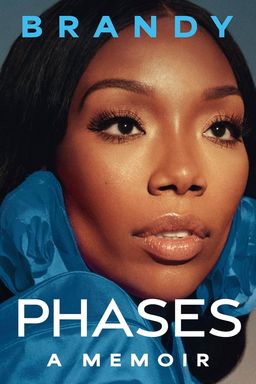
Phases cover

Phases

by Brandy With Gerrick Kennedy

The actress and Grammy Award-winning musician shares some of her early struggles and her rise to fame.

Reframing Whitney: Shame, Genius, Repair

How do you learn to hear Whitney Houston again without flinching at the headlines? In Didn't We Almost Have It All: In Defense of Whitney Houston, Gerrick Kennedy argues that you must reframe Whitney not as a tabloid spectacle but as a human artist shaped by family, church, race, gender, homophobia, and a ravenous media economy. He contends that the culture projected shame onto Whitney—about drugs, voice, love, and image—and then consumed the fallout as entertainment. The book asks you to share that shame, recognize your own role as a media consumer, and repair your memory by returning to the work with context and compassion.

Kennedy’s method is simple and radical: go back to the music and performances—The Bodyguard, The Preacher’s Wife, Waiting to Exhale, My Love Is Your Love; the Super Bowl anthem; the live medleys—and separate the art from gossip. In doing so, you hear a disciplined, gospel-rooted technician whose sound was forged in Newark’s churches, honed by her mother Cissy Houston’s exacting standards, and elevated by a career-long dance with the pop machine. You also see a person navigating the costs of enforced secrecy, particularly in her intimate relationship with Robyn Crawford, and the corrosive effects of trauma, addiction, and public scorn.

The case for reframing

Kennedy asks you to recognize shame as the book’s throughline. Whitney carried private shame (over substance use, sexuality, decline), while the public hurled its own onto her, often couched as moral concern. Viral clips from her 2009 tour, the Diane Sawyer “Crack is wack” soundbite, and reality TV moments from Being Bobby Brown became collective shorthand that eclipsed the artist’s full story. By reframing Whitney through memory and care, you are invited to recover the joy she gave you without denying her struggles. (Note: this recuperative stance echoes recent empathetic reevaluations of stars like Michael Jackson, Amy Winehouse, and Britney Spears, but Kennedy centers shame as the primary social mechanism.)

Structures that shaped the star

The book maps the forces that produced Whitney’s image and reception: the gospel lineage carried by Cissy Houston and the Drinkard family; the migration story from Georgia to Newark and East Orange; the entertainment industry’s racial gatekeeping (MTV’s early barriers, radio format segregation); the gendered double standard that policed “authentic” Blackness; and an AIDS-era, church-informed homophobia that made openly queer love a career risk. Within that maze, Clive Davis’s crossover calculus both catapulted and constrained her—polishing her sound and look for pop while making her a target of “not Black enough” taunts (remember the Soul Train boos and the “Whitey Houston” slur).

Return to the work

Kennedy’s antidote to spectacle is study. He replays the tapes: the crystalline early studio takes where Whitney reportedly nailed parts in one go; the improvisational risk of her live shows; the six-second melismatic swell in “I Will Always Love You”; the gospel grandeur she brings to “The Star-Spangled Banner.” He traces her artistic pivots—Waiting to Exhale’s sisterhood project and My Love Is Your Love’s hip-hop/R&B reinvention with Missy Elliott, Rodney “Darkchild” Jerkins, Wyclef Jean, and Lauryn Hill—which rebut the lazy narrative of uninterrupted decline. Even in later years, he hears flashes of interpretive intelligence and churchy grit, asking you to stop measuring her worth only by the highest notes she once reached.

Intimacy, secrecy, and cost

At the heart of Whitney’s human story sits Robyn Crawford. Kennedy foregrounds their summer-of-1980 bond—friends, lovers, co-dreamers—and the painful moment Whitney gifts Robyn a Bible as they choose survival over openness after the Arista deal. It’s a portrait of constrained love within a gospel family and a homophobic industry, and a key to understanding Whitney’s isolation and the family tensions that shadowed her. Decades later, Robyn’s memoir A Song for You confirms what rumor long deformed—a reminder that erasure can last a lifetime.

Trauma, tabloids, and the aftermath

Kennedy does not shy away from pain: alleged childhood sexual abuse (as reported in Kevin Macdonald’s Whitney), addiction’s grip, and the ruthless tabloid economy that sold her breakdown in photos and headlines. He considers comebacks (I Look to You), the limits of a voice weathered by life, and a death staged in tragic, almost theatrical irony the night of Clive Davis’s pre-Grammy gala. In the posthumous rush—remixes like Kygo’s “Higher Love,” the Rock & Roll Hall of Fame induction, hologram tours—he asks you to interrogate whether we’ve learned to care for artists or merely learned to monetize their ghosts.

A human project

“I wanted to be able to rejoice in all that she was.” Kennedy’s aim is not to sanitize Whitney, but to see her whole—genius, wounds, and all—and to invite you to do the ethical work of remembering with empathy.

By the end, you hold multiple truths at once: Whitney as a disciplined, church-trained virtuoso; Whitney as a Black woman navigated by and navigating the pop machine; Whitney as a person who loved, hid, endured trauma, and still made culture-defining art. That simultaneity—joy beside sorrow, art beside system—is the book’s core gift, and your path to hearing her anew.


Gospel Roots, Studio Discipline

To understand Whitney Houston’s voice, you start where she started: in church, under Cissy Houston’s watchful ear. Kennedy pulls back the curtain on a lineage that runs from the Drinkard Singers to the Sweet Inspirations, from New Hope Baptist in Newark to Atlantic studios with Aretha Franklin. What you hear when Whitney sings—the breath that seems to go on forever, the precise melismas, the sanctified ache—wasn’t a miracle without a map. It was a craft, handed down mother to daughter, pew to stage, reinforced by repetition and reverence.

Cissy’s mantra: Heart. Mind. Guts.

Cissy drilled technique as ethos: sing with heart (feeling), mind (musicianship), and guts (courage). She taught Whitney to breathe from the diaphragm, blend chest and head voice without a seam, and command four-part harmony. In studio lore, Whitney’s one-take magic didn’t come from nowhere; it came from years of learning to hear and hold a part, to serve the song. Little Whitney sat in on sessions with Aretha, absorbing phrasing, timing, and the art of lifting secular material with a sacred sensibility. (Note: this gospel-to-pop pipeline parallels Motown’s finishing school approach, but Whitney’s path stayed closer to church technique than choreography.)

Gospel techniques in pop settings

Gospel is more than repertoire; it’s a performance philosophy. Whitney carried call-and-response into arenas, making a stadium feel like a sanctuary. She used improvised runs to escalate emotion, stretched single syllables into dramatic arcs, and shaded dynamics to move a crowd. Listen to “The Star-Spangled Banner”: she turns a civic hymn into a testimony, opening space with breath and placed vowels. In “I Will Always Love You,” the six-second melismatic swell is a masterclass in vowel control—one sound, many pitches, a floodgate of feeling.

Live risk, studio rigor

Kennedy separates two Whitney realities. In the studio, she’s a technician—efficient, exacting, able to deliver the definitive take quickly (think Bodyguard sessions with David Foster). Onstage, she’s a risk-taker. She rarely sings the same line twice, treating verses like living things. That tension feeds the legend of her live moments: the Rhythm & Blues Foundation medleys, charity performances, and the anthem. You feel church not just in her sound but in her spontaneity—the willingness to follow the spirit of the room.

Decline in context

Whitney’s later rasp, narrowed top, and inconsistent touring form a painful chapter. Kennedy names causes without cruelty: relentless touring, chain-smoking, substance use, and normal aging. He asks you to compare the framing of other artists’ evolutions—Joni Mitchell’s deepening, Bob Dylan’s gravel—as accepted artistry, while Whitney’s changes were treated as collapse. Even then, listen closely to her 2010 gospel medleys or Sparkle sessions with the Underdogs; the technique is weathered but the interpretive intelligence remains.

Trace sound to source

Hearing Whitney means hearing the church—discipline, devotion, and the conviction that a voice is a vessel. Once you trace that lineage, the “miracle” of her sound becomes a story of community craft.

For you, the practice is this: when you revisit the catalog, listen for Cissy’s fingerprints and the Drinkards’ echoes. Notice how gospel techniques animate pop arrangements—the lifted consonant here, the sustained vowel there, the breath before the emotional leap. It turns passive nostalgia into active listening and rescues Whitney’s voice from the flattening effect of memes and myths.


Newark, Migration, and Home

Whitney Houston’s sound carries a geography. Kennedy roots her story in the Great Migration, the move from Early County, Georgia, to Newark, New Jersey, and the post-1967 shift to East Orange. When you understand the cityscapes and church basements that formed her, you hear “home” differently in her songs—less as a cliché, more as a map of aspiration and survival. Place, in Whitney’s case, is not backdrop; it’s a shaping force.

From Jim Crow soil to industrial promise

Nitcholas Drinkard’s move north bent the family’s arc away from the daily violence of the Jim Crow South toward Newark’s promise of work and community. They landed in the Third Ward, crowded tenements and crowded pews, where St. Luke’s and then New Hope Baptist offered sanctuary and a stage. Church functioned as both social safety net and talent incubator. For young Whitney, that meant a childhood where faith, family, and musicianship intertwined—where Sunday service could be a rehearsal for a lifetime.

1967 and the fracture

The 1967 Newark uprising—the rumor of police brutality, five nights of unrest, lives lost and buildings burned—rearranged the city and the Houston family’s path. In its aftermath, the family chased safety and stability to East Orange, a Cape Cod home and better schools, trying to catch the Black middle-class dream. That move represents a familiar migration within a migration: out of redlined cores into fragile suburban promise. Whitney’s schooling at Mount Saint Dominic and her continued ties to New Hope reflect that hybrid identity—urban roots alongside aspirational polish.

How place imprints performance

Kennedy suggests that Newark’s story—industrial decline, white flight, aggressive policing, redevelopment—shaped Whitney’s emotional palette. Songs of yearning, faith, and belonging carry an extra charge when you hear them as products of displacement and hope. Even her “All-American” image, so prized by MTV-era pop, has Newark in its bones: a Black woman from a city scarred by neglect and reborn by community effort, carrying both grit and grace onto global stages.

The American dream, complicated

Whitney’s rise embodied a dream—suburban home, crossover stardom, universal appeal—but it came with the contradictions baked into Black upward mobility. The very polish that made her the “prom queen of pop” became grounds for accusations of inauthenticity. Her anthem performance could unite a nation even as that nation’s symbols carried anti-Black histories. Place teaches you to read those contradictions not as personal failings, but as structural legacies traveling with her.

Place matters

“Home” in Whitney’s catalog is spiritual compass and social memory. Hearing Newark—church benches, riot smoke, East Orange lawns—lets you feel what her voice is reaching for.

For you, the lesson is practical: when evaluating any artist, ask what geographies and migrations shaped them. With Whitney, that lens reframes the sweetness in her tone and the steel beneath it. It turns biography into interpretive context and adds depth to familiar records, revealing a singer who carried a city’s contradictions and a family’s hopes in every line.


Race, Image, and Pop Machinery

Whitney Houston’s ascent was engineered and contested within a racialized industry. Kennedy details how Clive Davis’s crossover strategy—carefully sequenced singles, image control, and mainstream grooming—made Whitney a global star while exposing her to authenticity policing. You see how radio formats, MTV’s early gatekeeping, and press narratives coded her success as not quite Black enough, then later coded her edginess as too Black. It’s a double bind many Black women face: cross over and risk betrayal, stay home and risk invisibility.

Clive’s calculus and the crossover lane

Clive Davis knew Whitney had the instrument for pop domination. He orchestrated TV debuts (Merv Griffin), chose songs for Black radio first (“You Give Good Love”), then launched pop smashes. Simultaneously, he smoothed sonic and visual markers that might limit crossover appeal—repertoire choices over overt gospel, immaculate styling, even mid-Atlantic polish in interviews. That Motown-like strategy (Berry Gordy is the reference point) bought access to MTV’s newly opening doors post-Thriller, but it also narrowed the acceptable versions of Whitney for mainstream consumption.

Authenticity traps and gendered scrutiny

From the Soul Train boos in 1989 to Reverend Al Sharpton’s “Whitey Houston” slur, Whitney endured a cultural demand to perform a specific Blackness. Trey Ellis’s “cultural mulatto” framing labeled artists like Whitney as assimilated hybrids—praise or pejorative, depending on the reader. Kennedy shows how gender amplified the scrutiny. While Prince and Michael could shapeshift with less penalty, Whitney, Mariah Carey, Beyoncé, and Rihanna were endlessly judged for being too pop, too polished, too much. The pressure to be “real” and “global” simultaneously is a knot with no elegant exit.

Format segregation and its afterlives

The industry’s architecture—pop vs. urban radio, genre boxes—forces Black artists into strategic compromises. Whitney’s pop sheen guaranteed chart dominance but stoked suspicion among some Black critics and listeners. Though streaming and playlists blur lines today, Kennedy argues the cultural policing remains; see how white artists freely borrow Black aesthetics with minimal penalty (Post Malone, Justin Bieber), while Black women are still asked to prove their roots. Whitney’s career becomes a case study of structure over individual choice: her image was not just personal taste; it was industrial design.

Rewriting the narrative from within

Importantly, Whitney later steered into R&B and hip-hop textures—Waiting to Exhale’s sisterly R&B and My Love Is Your Love’s modern production—reclaiming a communal Black audience without abandoning pop reach. Those moves rebut the idea that she was only an industry projection. They reveal a curious, adaptive artist willing to risk a new sound to be truer to how Black music was evolving in the 1990s.

Double-consciousness on stage

W.E.B. Du Bois’s insight—measuring one’s soul by a world that looks on—helps you understand Whitney’s simultaneous performance for Black and white audiences. It wasn’t duplicity; it was survival in a segregated marketplace.

For you, this chapter is a diagnostic tool. When you assess an artist’s authenticity, ask which structures are shaping your expectations. With Whitney, seeing the machine clarifies both her triumphs and the unfairness of the metrics used against her. It also honors the savvy it took to navigate a narrow path to unprecedented visibility.


Hidden Love, Open Cost

You can’t tell Whitney Houston’s story without telling Robyn Crawford’s. Kennedy brings their relationship out of rumor and into focus: two teenagers in East Orange, 1980, sunbathing, scheming about the future, falling deeply in love. That intimacy became a sanctuary and a secret. When Whitney signed with Arista, she handed Robyn a Bible and asked to end the physical relationship—an act framed by faith and fear. What follows is a study in how a homophobic industry, a conservative church culture, and family dynamics can force private love into silence with lifelong consequences.

Silence as survival

The 1980s were not hospitable to openly queer Black women in pop. The AIDS crisis fueled moral panic; the Black church policed sexuality; the industry packaged “all-American” femininity for mass appeal. Whitney and Robyn’s choice to hide was a calculus of survival—career, family peace, public safety. For fifteen years, Robyn remained beside Whitney as friend, confidante, and executive assistant, while tabloid whispers painted her as an opportunist or enabler. Family tensions mounted; Gary Houston’s denunciations (as seen in documentaries) hardened a narrative that erased what Robyn had been.

Erasure and its toll

Kennedy tracks how authorized narratives minimized Robyn’s role and intimacy. Whitney deflected on-camera (the nervy laugh with Katie Couric in 1996), sometimes leaning on stereotypes to neutralize questions. Meanwhile, Robyn kept silent for decades, honoring a pact until she finally told her story in A Song for You. The cost of that silence—emotional strain, isolation, compounded shame—is part of Whitney’s vulnerability, one strand in the web that later entangled addiction and despair. (Note: queer Hollywood histories show similar patterns of enforced secrecy, but the added weight here is a gospel lineage deeply invested in propriety.)

Reading the art through the life

Kennedy resists tidy cause-and-effect between closeting and every career turn, but he invites you to hear how constrained love can seep into performance. The longing in “I Have Nothing,” the ache in “Why Does It Hurt So Bad?,” the solidarity in Waiting to Exhale’s sisterhood—these aren’t confessions, but they carry the textures of a woman who knew about hidden rooms in the heart. Understanding Robyn doesn’t reduce the art; it deepens its stakes.

The stakes of secrecy

“There was no safe route to openness.” That’s the book’s sober refrain, a reminder that private choices were made inside hostile systems, not moral vacuums.

For you, this story is a mirror. If you’ve hidden parts of yourself to keep a job, a family, a friendship, you recognize the trade. Kennedy doesn’t judge the secrecy; he judges the world that demanded it. And he asks you to extend that grace to Whitney—to let her be a woman who loved bravely, even if she could not live that love openly.


Anthem, Patriotism, Contradiction

You have seen the footage: Whitney in white at Super Bowl XXV, arms wide, smile bright, voice climbing into a collective rapture. Kennedy uses that anthem to explore a paradox: a Black woman transforms a fraught national hymn into unity, even as the hymn’s author, Francis Scott Key, supported slavery and persecuted abolitionists. Whitney’s two minutes in Tampa are both apex performance and x-ray of America’s contradictions—how Black artists are asked to carry national feeling while their communities still demand justice.

Musical alchemy

Whitney’s arrangement reshaped “The Star-Spangled Banner” into a gospel-tinged surge. She opened space with breath, leaned into rhythmic elasticity, and turned a stiff ritual into testimony. In a moment shadowed by the Gulf War, she became a vessel for country-sized pride. The performance set the benchmark for every anthem after, a standard few could approach. (Parenthetical note: Marvin Gaye’s 1983 NBA performance similarly reimagined the anthem as soul; Whitney extended that tradition into gospel exaltation.)

History under the hymn

Kennedy insists you hold the song’s origins alongside the feeling it evokes. Key’s third verse mocks escaping slaves—“No refuge could save…”—a stain that lingers even when only the first verse is sung. That a Black artist could sanctify this song into national catharsis is “one of the Blackest things Whitney ever did,” not because she shed Blackness, but because she used it to expand who gets to feel American.

Performance and protest

The book frames Colin Kaepernick’s kneel as the other side of the same coin: interrogating a symbol whose history is contested. The fury he faced—traitor, unpatriotic—contrasts starkly with the adoration Whitney earned using the same song. It’s a vivid case of selective patriotism: Black uplift welcomed, Black dissent punished. After 9/11, Whitney’s recording soared back up the charts, proof that her version had become the nation’s emotional shorthand, even as the nation struggled with race and war.

A patriotic paradox

Whitney’s anthem both heals and exposes. It shows how Black artistry can redeem a symbol and how redemption doesn’t erase the symbol’s roots.

For you, the lesson is to hold contradiction with honesty. You can feel pride at Whitney’s triumph and still demand that national symbols face historical truth. You can celebrate a performance that made millions feel seen, and also honor those who use the anthem to protest what remains unseen.


Sisterhood and Reinvention

Whitney Houston did not stay frozen as the prom-queen balladeer. Kennedy shows how she used two pivotal projects—Waiting to Exhale and My Love Is Your Love—to re-center Black sisterhood and reinvent her sound for a new era. The first gave her a grounded, “regular woman” role and an all-Black-female soundtrack that reset cultural expectations. The second plugged her voice into late-’90s R&B and hip-hop textures, proving she could evolve without surrendering her gospel core.

Waiting to Exhale: a women’s chorus

Terry McMillan’s story of four Black women found cinematic life under Forest Whitaker. As Savannah, Whitney dialed down diva glow for lived-in vulnerability, even as personal struggles (an overdose during filming) shadowed the set. Kenny “Babyface” Edmonds then curated a soundtrack that functioned as a communal statement: Aretha Franklin, Patti LaBelle, Chaka Khan, Mary J. Blige, TLC, Brandy, Faith Evans—and Whitney—singing about love, rage, and resilience. Whitney’s “Exhale (Shoop Shoop)” debuted at number one, while “Why Does It Hurt So Bad?” revealed quiet ache and restraint, a different register of truth than her arena anthems.

A bridge for a generation

The film and its soundtrack helped normalize complex Black women onscreen and on radio. They also opened space for a cohort—Brandy, Monica, Aaliyah, Lauryn Hill—to explore hybrid sounds and frank narratives. Mary J. Blige’s hip-hop soul offered a gritty counterpoint to Whitney’s early polish; Exhale showed Whitney embracing that continuum rather than standing apart from it. Sisterhood here means more than friendship; it’s an artistic ecosystem where women amplify one another.

My Love Is Your Love: the sonic pivot

A few years later, Whitney turned decisively toward contemporary R&B. Collaborating with Rodney “Darkchild” Jerkins (“It’s Not Right but It’s Okay”), Wyclef Jean and Jerry Duplessis (“My Love Is Your Love”), Soulshock & Karlin (“Heartbreak Hotel”), Missy Elliott, and Lauryn Hill, she folded in stuttering beats, reggae sway, and church harmonies. The result was both modern and unmistakably Whitney—a seasoned voice delivering stories of betrayal, desire, and survival with new grit. Kennedy calls it her best, most personal work, a late-career peak that complicates simple decline narratives.

Reinvention as humility and curiosity

What made this reinvention land is Whitney’s willingness to learn from younger creators without posturing. She didn’t chase cool; she partnered with it, letting producers design fresh frames for her instrument. That humility yielded commercial success and critical warmth, reaffirming her relevance at a moment when R&B was rapidly morphing. (Note: the pivot aligned with the era of The Miseducation of Lauryn Hill and neo-soul’s rise, which rewarded hybrid honesty.)

A communal Whitney

These projects present Whitney not as a solitary diva, but as a node in a network—lifting and being lifted by other Black women’s voices.

For you, the takeaway is that reinvention thrives on collaboration. When you revisit these albums, listen for how community shifts the emotional temperature of her performances—and for how a superstar’s greatest act can be making room for others while renewing herself.


Trauma, Tabloids, and Afterlife

Whitney Houston’s final act is not a morality tale; it’s a trauma story entangled with a media economy built to monetize breakdowns. Kennedy threads alleged childhood sexual abuse (as reported in Kevin Macdonald’s Whitney) through the arc of addiction, family denial, and public exploitation. He then tracks the mechanics of comeback and the unsettling commerce of a posthumous career. If you want to honor Whitney, you must confront all of it—the wounds, the market, and your own appetite for spectacle.

Trauma’s long echo

Macdonald’s documentary gathered testimonies suggesting that Whitney and her brother Gary were abused by their cousin Dee Dee Warwick—allegations the family disputes. Mary Jones, Whitney’s assistant, recounted Whitney naming her abuse directly; Gary linked trauma to his drug use. Kennedy cites research showing strong correlations between childhood abuse and later addiction. In that light, Whitney’s teenage cocaine experimentation, magnified by fame’s pressure, reads less as moral failing and more as self-treatment turned dependence.

Family, intervention, and silence

Families can be lifelines or traps. Cissy Houston’s denial, the brothers’ own substance use, and institutional homophobia complicated interventions. Robyn Crawford tried to minimize drugs’ presence and appealed to Cissy; the responses were mixed, often ineffective. Shame thrives in secrecy; without trauma-informed care and consistent accountability, the cycle tightened. Whitney’s voice, body, and spirit bore the cost.

The tabloid economy of ruin

As struggles grew public, exploitation escalated. Tina Brown, Bobby Brown’s sister, sold photos of a drug-strewn bathroom to the National Enquirer in 2006; years later, Kanye West licensed the same image for Pusha T’s Daytona cover, turning private wreckage into pop commentary. Being Bobby Brown (2005) made dysfunction a reality-TV arc. The 2002 Diane Sawyer interview reduced a complex illness to a meme. Kennedy names the culprit plainly: “Whitney’s demise… was our entertainment.”

Comebacks and limits

Clive Davis’s machinery mounted I Look to You (2009), a number-one reminder of Whitney’s interpretive gifts. But the Nothing but Love tour met a YouTube era that punishes off nights. Sparkle offered a creative glint; then came Beverly Hilton, Grammy week, a poolside handstand, a dress laid out for Clive’s gala, and a bathtub. The party downstairs continued. The image is unforgettable not because it is lurid, but because it reveals an industry ritualized to move on while bodies are still warm.

Legacy and the business of memory

After death came recognition and repackaging: Rock & Roll Hall of Fame induction, Kygo’s “Higher Love” remix, hologram tours. Kennedy asks if digital resurrection is tribute or extraction. He doesn’t offer easy answers, but he urges you to measure homage by care: Are estates investing in healing narratives? Are we educating audiences about trauma and structures, or just selling pristine versions of songs that outlived the singer?

Choose empathy over voyeurism

If you want a different outcome for the next Whitney, consume differently: click less on ruin, more on context; demand support systems from labels; treat addiction as illness, not punchline.

For you, this final movement is a call to action. Remember Whitney whole, advocate for trauma-informed care in creative industries, and resist media that treats human collapse as a show. That is how you turn mourning into meaning.

Dig Deeper

Get personalized prompts to apply these lessons to your life and deepen your understanding.

Go Deeper

Get the Full Experience

Download Insight Books for AI-powered reflections, quizzes, and more.