
Idea 1
Personality Is the Power to Choose Who You Become
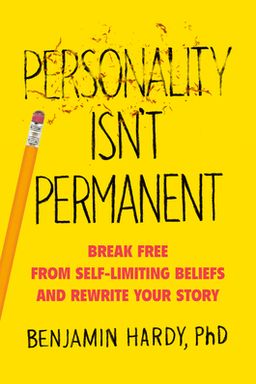
Have you ever felt trapped by labels like “introvert,” “Type A,” or “creative”? In Personality Isn’t Permanent, psychologist Benjamin Hardy argues that your personality is not a fixed set of traits but an adaptive system shaped by your goals, environment, and emotional development. He contends that the cultural obsession with discovering your “authentic self” or your “type” through personality tests is misleading—and often destructive. Instead, you can create your personality through intentional choices and purposeful change.
Hardy exposes five popular myths that keep people stuck: that personality can be classified into types, that it’s innate and fixed, that it comes from your past, that it must be discovered, and that it represents your true authentic self. Through engaging stories—such as Vanessa O’Brien shifting from corporate executive to record-breaking mountaineer, or his wife Lauren transforming trauma into strength—Hardy shows how identity is fluid, and how trauma, habits, and social roles continually shape who we are.
Why Our View of Personality Is Broken
Most people see personality as innate and unchanging—a belief reinforced by type-based tests like Myers-Briggs or the Color Code. These tests offer tidy answers but foster a fixed mindset: the idea that our traits are permanent. Hardy dismantles this by highlighting research showing that personality changes significantly over time and that life circumstances, goals, and emotions shape it far more than genetics or upbringing. Our obsession with finding our type or being “true to ourselves,” he argues, is really about avoiding the discomfort of growth.
The Book’s Core Idea: Design Yourself Around the Future, Not the Past
Hardy insists that personality should not be discovered—it should be decided. The person you will be a few years from now depends on your goals and what you expose yourself to. Instead of defining yourself by your past (“I’m not good at math” or “I’m shy”), define yourself by your future self—the person you want to be. He draws from research by Carol Dweck (growth mindset) and Viktor Frankl (freedom to choose one’s way), arguing that choice, not circumstance, shapes identity. When you choose courage, purpose, and new environments, you rebuild the psychological architecture that defines your personality.
Why Personality Change Matters
Hardy connects personality change to the desire for freedom and agency. Most people want to “find themselves,” but the truth is liberating: you’re not finished—you’re evolving. The book guides you through practical levers for transformation—examining trauma, narrative, subconscious, and environment—to help you become emotionally flexible and define your life through goals instead of labels. This flexibility, Hardy says, is the secret of constant growth.
How Trauma Shapes—and Can Transform—Personality
Trauma plays a central role in Hardy’s argument. Many people build lives around their pain, creating coping identities rather than true ones. Through heartbreaking examples—Rosalie, who abandoned her dream of illustrating children’s books after a single embarrassing art class; and Lauren Hardy, who rebuilt her life after abuse—the book teaches that pain isn’t just endured—it can be transformed. You aren’t broken by trauma; you’re defined by how you process it. Hardy shows that connecting with empathetic witnesses and reframing meaning turns emotional scars into sources of power.
The Path Toward Psychological Flexibility
Ultimately, personality is the output of your psychological flexibility—the ability to adapt, reframe, and choose deliberately rather than reactively. Trauma, fear, and rigid identities deform this flexibility. Healing happens through courage, journaling, reframing meaning, and surrounding yourself with empathetic witnesses who help you reinterpret your experiences. In Hardy’s view, emotional evolution is essential for growth: the less you cling to the past, the faster your future takes shape.
Across its chapters, Personality Isn’t Permanent unfolds as both science and story: a manifesto for rewriting your identity through purpose, imagination, and bold action. You’ll discover how goals create identity, how reframing trauma builds possibility, and how surrounding yourself with encouraging people ignites courage. Hardy’s message is simple but radical: your personality changes—and you can consciously choose what direction it goes. You are, and always will be, the artist of yourself.