
Idea 1
Turning Interruption into Permission
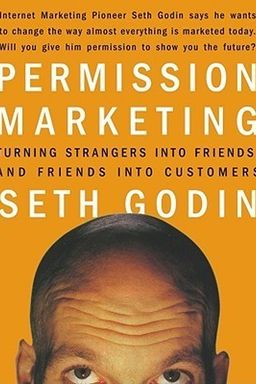
When was the last time you actually enjoyed being interrupted by an ad? Maybe never. In Permission Marketing, Seth Godin flips the logic of modern advertising by proposing that successful marketing in the digital age depends not on louder interruptions, but on gaining consent. He calls this approach “permission marketing,” a radical idea in 1999 and still transformative today. Instead of buying attention, Godin argues, you must first earn it—by offering value, trust, and choice. People must volunteer to hear from you.
The Attention Economy and Its Crisis
Godin begins by describing an “attention crisis.” In the twentieth century, attention was relatively cheap—few media outlets meant everyone shared the same cultural references. But in today’s fragmented world of cable channels, mailbox promotions, and endless scrolling, people are drowning in marketing messages. With more than 3,000 marketing messages hitting each of us daily, our attention—the one thing we can’t manufacture or replenish—has become scarce. Time and focus, not technology or capital, are the ultimate resources. (This idea parallels Herbert Simon’s earlier warning that “a wealth of information creates a poverty of attention.”)
Traditional advertising, or what Godin calls “Interruption Marketing,” depends on distracting people in the middle of what they’re doing: interrupting a show, a commute, or a conversation. It’s a costly arms race. The more cluttered the environment, the louder and more expensive the interruptions have to be—and the less effective they become. That’s why advertisers spend more yet get less. Godin distills their dilemma into a Catch-22: The more they spend, the less it works—and because it works less, they have to spend more.
Enter Permission: A New Kind of Marketing Contract
Permission Marketing reverses this equation. Instead of commanding attention through noise, you invite participation through relevance. Consumers willingly grant you permission to market to them in exchange for something valuable—information, entertainment, discounts, or a better experience. The goal is to turn “strangers into friends, and friends into customers.”
Godin captures this shift through a dating metaphor. Traditional advertisers are like people who walk into a singles bar and propose marriage to everyone they meet. Permission marketers, on the other hand, are those who date—courting trust over time. They follow a five-step rhythm: offer an incentive to get attention, teach over time, reinforce the incentive, raise the level of permission, and finally leverage that trust for mutual profit. Marketing becomes a relationship, not a one-night stand.
Why the Internet Changed Everything
This concept thrived in the age of the Web. The Internet, Godin emphasizes, is the greatest direct marketing platform ever invented because it removes the friction of communication. Email is free, testing is instant, and feedback loops are immediate. But the Web also punishes irrelevance—users can delete spam faster than you can send it. Only permission-based communication stands a chance of survival. “Free stamps,” as Godin calls email, let you build massive customer dialogues at almost no cost—if, and only if, your messages are anticipated, personal, and relevant.
In this sense, digital marketing didn’t kill advertising—it restored its intimacy. Instead of broadcasting to mass audiences, marketers could once again mimic the corner grocer who knew you by name and recommended the right product. The irony, Godin observes, is that technology enables a return to the personal touch of preindustrial commerce. Permission Marketing bridges that ancient human connection with modern scale.
Why This Matters
For entrepreneurs, professionals, and organizations, Godin’s thesis has huge implications: the most valuable asset your business owns isn’t your product or even your brand—it’s the permission your customers grant you to talk to them. When trust and relevance replace interruption and volume, marketing transforms from a cost into an investment. Godin’s book remains a foundation for today’s opt-in culture: from email subscribers to YouTube followers, every successful marketer now practices his philosophy, even if they don’t realize it. Whether you’re building a company or a personal brand, you must first earn the right to speak—and that, Godin insists, is the future of persuasion.