
Idea 1
Harnessing Hormonal Rhythms for Power and Clarity
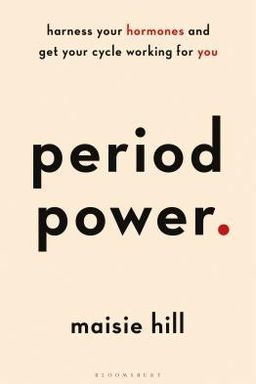
What if the hormonal ups and downs you’ve experienced all your life weren’t obstacles—but a navigational map? In her book, Maisie Hill reframes the menstrual cycle not as a nuisance, but as a biologically intelligent rhythm that can help you plan your work, relationships, fertility, and self-care with precision. She argues that when you understand how your hormones behave and how they shape mood, energy, sleep and sexuality, you can live with rather than against them.
Her central proposition, called The Cycle Strategy, is simple: treat your month as four seasons—Winter (menstruation), Spring (follicular), Summer (ovulation) and Autumn (luteal). Each phase represents a distinct physiological and psychological mode. Winter invites rest and review; Spring stimulates growth and experimentation; Summer bursts with sociability and confidence; Autumn offers clarity, boundaries and editing power. When you learn to track these seasons, you’ll gain advance warning for emotional lows and peak productivity opportunities alike.
From physiology to self-awareness
Hill builds her argument on a blend of anatomy and hormonal literacy. She teaches you the function of reproductive organs and explains how key hormones—follicle-stimulating hormone (FSH), luteinising hormone (LH), oestrogen, progesterone and testosterone—interact through feedback loops. These interactions create predictable changes in energy, libido, sleep and mood. Knowing the biology helps you interpret symptoms and respond wisely instead of panicking. Hill compares your hormones to a “concert orchestra”: when stress, thyroid imbalance or contraceptive hormones disrupt the harmony, the music changes. But once you understand the players, you can restore rhythm rather than blaming yourself.
Tracking as empowerment
Tracking is not about control; it’s about awareness. Hill recommends starting with one word per day about how you feel. Over time this forms recognizable behavioural patterns. For deeper insight, she guides you through monitoring basal body temperature (BBT) and cervical fluid—the core of the sympto-thermal method that can clarify fertility windows or confirm ovulation. You gain practical body literacy: you’ll recognize when you’re fertile, when you’re experiencing hormonal dips, and when transitioning between phases.
Transition days—roughly days 6, 12, 20 and 28 in a 28-day cycle—often explain mood fluctuations and fatigue. Instead of seeing these as faults, Hill helps you treat them as normal hormonal shifts needing different kinds of care, just as weather patterns change with seasons. Clients like Catarina, Sandra and Azizah illustrate this variety: one needs solitude at the onset of Winter; another finds her Spring energy overwhelming and must set boundaries. Humor and compassion replace self-blame.
Strategic living
When you know your seasons, planning becomes intuitive. Schedule big social or creative launches in Summer; conduct deep edits or serious decisions in Autumn; rest deliberately in Winter. Hill’s method blends productivity science with biology—reducing friction by aligning tasks with your hormonal profile. The result is an adaptable system that scales from daily life to major career planning.
Beyond menstruation
Hill extends this seasonal metaphor to non-cycling individuals: menopause, hormonal contraception, pregnancy, or postpartum. You can substitute the lunar cycle—a parallel rhythm of rest and renewal—using new moon for Winter and full moon for Summer. This preserves cyclical living even when physical menstruation pauses. Pregnancy itself becomes an extended four-season process ending in the fourth trimester, a postpartum Winter that demands rest and recovery.
The broader mission
Ultimately, the book joins a wider movement for menstrual activism. Hill links personal tracking to public health, campaigning against stigma, period poverty and undereducation. She positions self-tracking not only as personal empowerment but as data that reinforces legitimate medical and social change. You become both participant and advocate—normalizing conversations about hormonal health, informed choice around contraception, and clinical respect for pain.
Key takeaway
Your hormones are not enemies. They are navigational tools. Learn their rhythm, live by their pattern, and both physical and emotional resilience emerge from the same place: understanding how your body speaks and responding instead of resisting.