
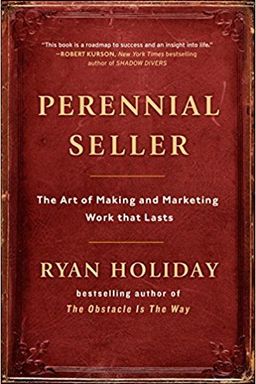
Perennial Seller cover

Perennial Seller

by Ryan Holiday

Perennial Seller by Ryan Holiday reveals the secrets to creating enduring work that captivates audiences year after year. Learn how to blend creativity with business strategies, ensuring your projects thrive in the market and leave a lasting impact. Discover how to sustain success through relentless effort and smart marketing.

Creating Work that Lasts Beyond Trends

Why do some creative works fade immediately while others endure for decades or even centuries? In Perennial Seller, Ryan Holiday argues that lasting success—the kind that transcends time, trends, and hype—emerges not from luck or aggressive marketing, but from timeless dedication to craft, thoughtful positioning, and long-term commitment to quality. He observes that while most creators chase instant recognition, the real rewards belong to those who build for permanence.

Holiday defines a perennial seller as a product—be it a book, business, film, or song—that continues to sell and inspire long after its release. Rather than seeking short-term attention, these creators aim for enduring relevance. Drawing from examples like The Shawshank Redemption, Iron Maiden, and writers such as Cyril Connolly and Robert Greene, Holiday unpacks what it truly takes to build a modern classic. His conclusion? The formula for longevity blends creative excellence, clear positioning, authentic marketing, and a lasting platform.

The Myth of Instant Success

Holiday begins by dismantling the pervasive myth of overnight success. Most people, he notes, mistake virality for significance. But just because something is famous now doesn’t mean it will matter ten years from now. Using Cyril Connolly’s question—“How does an author create something that lasts for ten years?”—as inspiration, Holiday reframes creative ambition: it’s not enough to get attention; you must create something worth attention.

To illustrate, he cites classic examples like The Shawshank Redemption, which underperformed at release yet became one of the most beloved films of all time; or the heavy metal band Iron Maiden, who built a loyal fan base that keeps them thriving decades after their prime radio days. These stories reveal that the secret to enduring work lies not in hype, but in building something timeless and connecting deeply with people who will sustain it.

The Four-Part Framework

Holiday structures his method around four interconnected stages—Creation, Positioning, Marketing, and Platform. Each represents a critical phase of creating perennial work:

  • The Creative Process focuses on producing meaningful, masterful work. Holiday insists that you can’t market mediocrity into longevity. The creative phase is where most of your effort must go.
  • Positioning is how you prepare the product for the world—understanding the audience, refining the packaging, and articulating your message so that it resonates beyond initial release.
  • Marketing amplifies your creation’s reach. The goal isn’t hype—it’s generating genuine word of mouth so your work spreads organically and sustains itself over time.
  • Platform ensures you have a direct, durable connection to your audience. A true career depends on cultivating trust and community, not chasing attention for every new launch.

At every step, Holiday stresses that timeless creators—whether they’re Bruce Springsteen crafting Born to Run or Tim Ferriss carefully marketing The 4-Hour Workweek—take the long view. They measure success not by today’s numbers, but by decades of cultural relevance and continued impact.

Why Perennial Thinking Matters

Holiday’s message couldn’t be more relevant in an age of disposable content and fleeting attention. Today’s creators measure worth in likes, launches, and viral peaks—but the real value lies in sustained influence. The Lindy Effect, which Holiday borrows from economist Nassim Taleb, states that the longer something lasts, the more likely it is to continue lasting. This principle applies to books, music, brands, and ideas alike. For you, that means building with patience and conviction, not quick wins.

At its core, Perennial Seller urges you to shift your focus from success to significance—from selling now to mattering forever. Every decision—from the first draft of your idea to the way you package and share it—should serve the goal of creating something that endures. If you can think long-term, commit to your craft, and serve an audience authentically, your work, like Iron Maiden’s albums or The Great Gatsby, can outlive your career.

Perennial success isn’t about luck—it’s about discipline. Great work, thoughtfully positioned and relentlessly supported, becomes timeless.


Mastering the Creative Process

Holiday begins with the most counterintuitive insight of all: marketing doesn’t matter if your product isn’t great. The myth of “80% marketing, 20% creation,” he argues, poisons creativity. A true perennial seller begins with uncompromising craftsmanship—a work so good it markets itself.

Commitment to Great Work

Creating something that lasts starts with a mindset of total commitment. Holiday cites Phil Libin of Evernote: “People thinking about things other than making the best product never make the best product.” Whether it’s Robert Greene writing The 48 Laws of Power or James Cameron taking fifteen years to make Avatar, enduring greatness takes obsession. It’s not optional work—it’s necessity driven by purpose and need.

Ideas Are Cheap—Execution Is Everything

Everyone has ideas. Few endure the grind of making them real. Holiday recalls filmmaker Casey Neistat telling a fan, “I don’t want to hear your idea. The idea is the easy part.” Similarly, Sarah Silverman reminds aspiring writers that “writers write.” The path to lasting art is paved by sweat, editing, and sacrifice—not brainstorming sessions.

Purpose and Sacrifice

You can’t sustain a long creative journey without purpose. George Orwell described writing as “a horrible, exhausting struggle—like a long bout with some painful illness.” Holiday agrees: great creators are driven by something deeper than fame or money. It may be a truth that needs to be said, a problem worth solving, or simply the inability to do anything else. As Holiday puts it, “Do it only if you can’t not do it.”

This creative calling demands sacrifice—time, ego, comfort. From Elon Musk describing entrepreneurship as “eating glass,” to Bruce Springsteen spending endless hours refining Born to Run, Holiday reminds us that endurance is the price of greatness. Most people quit before their art matures; perennial creators persist through the pain.

Slow and Steady

The creative process is not a sprint but a marathon. Matthew Weiner carried the pilot for Mad Men for seven years before production began. James Cameron developed Avatar over a decade until the technology caught up with his vision. Like the building of the Sagrada Família, lasting art takes time, revision, and repeated failure. The question is not “How fast?” but “How well?”

Holiday’s mantra is simple: hope isn’t a strategy. Greatness is planned, disciplined, and deliberate. Your work might take years to create—but if it lasts decades, that’s a trade well worth making.


From Idea to Impact: Positioning for Longevity

Once you’ve made something great, how you position it determines whether anyone will care. Holiday reframes positioning not as shallow branding but as a creative continuation—knowing your audience, articulating your purpose, and shaping how people encounter your work. Many brilliant creations fail, not because they aren’t good, but because no one understands what they are.

Defining Purpose and Audience

Every creator must answer two deceptively simple questions: Who is this for? and What does it do? Many dream of universality—“my work is for everyone”—but that’s fatal. By trying to appeal to all, you reach none. Holiday advises creators to pick a lane and commit, just as Lin-Manuel Miranda did when he wrote Hamilton for lovers of hip-hop and theater alike. His clear niche became a wide phenomenon.

Holiday also introduces the idea of creating for need, not vanity. Craig Newmark founded Craigslist simply to help people connect with local opportunities. By solving a problem for others, he built something timeless. Works that endure often address enduring human challenges, whether emotional (like love or loss) or practical (like WD-40 solving “rust and friction”).

Clarity and Simplicity

Holiday recommends the “One Sentence, One Paragraph, One Page” exercise. If you can’t explain what your work is and why it matters in a single sentence, how will anyone else? This discipline forces clarity of vision. Think of The 4-Hour Workweek—the title alone tells you what it is and what benefit it delivers. Clarity increases memorability, which increases longevity.

Packaging and the Pitch

Even great work needs thoughtful presentation. Titles, visuals, and positioning send unconscious signals: J.D. Salinger’s Catcher in the Rye exploded when repackaged with a pulp-inspired cover appealing to its readers’ emotions. Steve Jobs famously spent $100,000 on a simple logo for NeXT—because details matter. Holiday urges you to obsess over packaging as much as content: the cover, tagline, or logo can make your work resonate across decades.

Positioning isn’t an afterthought—it’s how your creation communicates its meaning to the world. Every enduring work tells people exactly what it is, who it’s for, and why it matters.


Marketing that Creates Word of Mouth

Holiday’s philosophy of marketing is both practical and liberating: you are the chief marketer of your work. No one will care about it more than you. He warns against waiting for miracles—publicists, influencers, or publishing houses won’t make your product thrive. Enduring success comes from building meaningful relationships, generating word of mouth, and playing the long game.

The Rule: Nobody Cares—Until You Make Them

This brutal truth, Holiday says, must guide your strategy. People are busy; your job is to make them care. Whether through captivating storytelling, genuine connection, or giving something of value, you must earn their attention. Herb Cohen’s line—“A masterpiece with a moron to sell it is worthless”—reminds us that marketing is part of the craft, not a chore to delegate.

The Power of Free and Early Evangelists

Holiday dismantles the fear of giving things away. Free builds audiences. Paulo Coelho freely uploaded his books to piracy sites and tripled his sales. Pretty Lights gave away music online, then filled stadiums. The lesson: generosity fuels discoverability. Getting your creation into the right hands—through samples, free content, or previews—builds the foundation for viral momentum.

Word of Mouth: The Only Marketing That Lasts

Data supports Holiday’s claim: according to McKinsey, 20–50% of all purchases happen through word-of-mouth influence, and powerful recommendations convert fifty times better than ads. Legendary products—from Star Wars to The 48 Laws of Power—grow because they ignite conversations. You can’t buy that authenticity; you spark it by delighting your earliest fans.

Launch and Longevity

A great launch creates momentum, but the key is sustainability. James Altucher’s Choose Yourself succeeded because every marketing move—from podcast tours to giveaways—was designed to jump-start word of mouth. Holiday teaches you to think like Tim Ferriss: test channels, double down on what works, and ignore what doesn’t. Then shift from a launch mentality to a lifetime mentality: great work should continue selling itself for years.


Building Your Platform and Audience

Holiday defines a platform as your web of relationships, trust, tools, and audience that helps your work reach the world—not once, but continuously. Without it, even the best creation can fade. With it, you can survive downturns, build independence, and grow stronger over time. Your platform turns fleeting attention into a loyal audience.

Iron Maiden and the 1,000 True Fans

For Holiday, the ultimate model is Iron Maiden—a band with little mainstream exposure that built an empire through loyalty. Their ability to sell out stadiums after forty years comes from cultivating “true fans”—people who buy every album, ticket, and T-shirt. This mirrors Kevin Kelly’s “1,000 True Fans” principle: you need a devoted core audience, not millions of followers. Serve them deeply, and they’ll sustain you indefinitely.

Own Your Connection

Modern creators depend too heavily on fickle platforms like social media. Holiday insists that your primary focus should be collecting direct connections—especially email lists. Kevin Hart built his fan network by collecting emails at every comedy show, city by city, until he had millions of reachable fans. If Twitter vanished tomorrow, he’d still have control of his audience. That control is your creative insurance policy.

Relationships Over Reach

True influence grows from generosity, not self-promotion. Tim Ferriss built his network by helping others long before he asked for favors. When he launched The 4-Hour Workweek, those authentic relationships formed his foundation of advocates. Holiday advises you to adopt this mindset: invest in real people, not metrics. Friends, collaborators, and early fans are the lifeblood of longevity.

Most crucially, stay focused on the only relationship that truly matters—the one with your fans. Lady Gaga calls her fans her “Little Monsters” and tells them, “I will die to protect your dreams because you protect mine.” That level of authenticity builds loyalty no algorithm can replicate.


Playing the Long Game

The final section of Perennial Seller brings everything full circle: even the best-made, best-marketed work will fail without patience. Whether you’re an artist, entrepreneur, or writer, your job doesn’t end at launch—it evolves. Holiday warns against obsession with short-term results or bestseller lists. True perennial success unfolds over years of persistence, reinvention, and continuous improvement.

Longevity as a Discipline

Holiday compares enduring careers to heavyweights like Churchill, who balanced politics and writing for a lifetime, or Stefan Zweig, whose literary platform kept his work alive even after exile. For you, this means constantly investing in your craft, your audience, and your product. Keep showing up, refining, and releasing new work—Woody Allen makes a film a year, Jerry Seinfeld sharpens his act nightly, and Robert Greene continues exploring timeless themes across books.

The Marathon Mindset

Success isn’t a sprint—it’s a career-long commitment. Hemingway’s A Farewell to Arms endured despite bad timing (it debuted the day of the 1929 market crash). Greene’s The Art of Seduction thrived despite 9/11. Short-term setbacks mean little in the long arc of relevance. As Kafka’s publisher once told him, “It is generally the best things that do not find their echo immediately.”

Luck Favors the Prepared

Holiday acknowledges luck’s role—Bruce Springsteen’s Born to Run and its accidental early single release turned out to be serendipitous—but preparation made the difference. You can’t control fortune, but you can control quality, persistence, and relationships. Work to “establish a base camp near the summit,” as coach Bill Walsh said—so when opportunity hits, you’re ready to climb higher.

Ultimately, Holiday leaves readers with a creed: make something timeless, care for it endlessly, and measure success in decades, not weeks. You may not create a masterpiece overnight, but with patience and discipline, your work—and your name—can leave a lasting mark on the world.

Dig Deeper

Get personalized prompts to apply these lessons to your life and deepen your understanding.

Go Deeper

Get the Full Experience

Download Insight Books for AI-powered reflections, quizzes, and more.