
Idea 1
Uncovering the Dark World of Digital Surveillance
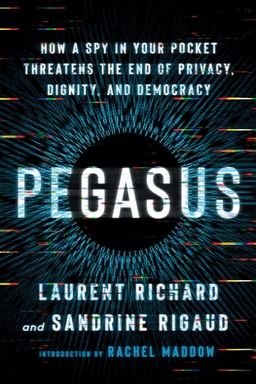
How secure do you think your smartphone really is? Could you imagine a world where the very device you depend on—your portal to work, family, and private thoughts—is quietly listening, transmitting, and reporting to someone you never authorized? In The Pegasus Project, investigative journalists Laurent Richard and Sandrine Rigaud open the door to that unsettling reality, revealing how modern governments and corporations use advanced spyware to undermine privacy, journalism, and democracy itself.
At its core, the book traces an extraordinary international investigation that began with a leaked list of 50,000 phone numbers—each allegedly selected as targets for Pegasus, a cyber-surveillance weapon developed by the Israeli company NSO Group. NSO claims Pegasus is sold only to governments for fighting crime and terrorism. But when Laurent and Sandrine examined the data, they discovered something far more sinister: many of the targeted users weren’t criminals at all. They were journalists, activists, political dissidents, and even heads of state.
Fear, secrecy, and the birth of an investigation
It all starts in 2020, in a nondescript Berlin apartment, where Forbidden Stories—a network devoted to continuing work of threatened reporters—meets with Amnesty International’s Security Lab. There, the journalists shut off their phones, put them in another room, and close the door. These precautions are not theatrical paranoia; they reflect the high stakes surrounding the information about Pegasus, which had already been used to monitor private communications across multiple countries. The tension is palpable—you can imagine yourself there, wondering whether your own phone might be compromised.
As the investigation unfolds, the themes of secrecy and risk weave through every decision. If this list was genuine, it would expose how deeply technology has penetrated personal privacy—and how easily it can be weaponized against those who challenge power. When the French investigators saw that even Emmanuel Macron, the sitting president of France, appeared to be a target, they realized how audacious and broad this spying operation had become.
The broader implications: freedom under surveillance
The book’s central claim is that digital surveillance doesn’t just threaten individuals—it undermines the foundations of democracy. If journalists and politicians cannot communicate freely, dissent gets silenced not with violence, but with invisible monitoring. This mirrors the warning of authors like Shoshana Zuboff in The Age of Surveillance Capitalism, who describes how data systems can reshape power dynamics and manipulate society for profit and control.
The Pegasus case exemplifies this disturbing evolution. NSO’s clients supposedly use spyware for legitimate law enforcement, yet evidence showed that countries like Morocco, Mexico, and India applied Pegasus to target dissenters. Laurent and Sandrine realize they are not just uncovering an espionage story—they are confronting a global pattern of digital authoritarianism hiding behind claims of security and public safety.
Bringing truth to light
Recognizing the magnitude of the task, the journalists form what becomes the Pegasus Project: a coordinated alliance of reporters and forensic analysts across continents. Each member works under strict secrecy and encryption, piecing together technical evidence from phones of suspected targets. It’s a race against time—every discovery could trigger backlash from powerful clients or cause sources to go silent.
The first breakthrough comes through Jorge Carrasco, director of Mexican publication Proceso. When he agrees to let investigators inspect his phone, they find a matching Pegasus signature corresponding to a suspicious message he had received years earlier. This moment validates their methodology and ignition for a sweeping expose that reverberates worldwide.
Why this matters to you
You may not be a journalist or politician—but the book reminds you that privacy and press freedom are not niche concerns. They are cornerstones of your society’s ability to think, question, and disagree freely. When surveillance tools fall into the wrong hands, every citizen becomes a potential data source. The Pegasus revelations underscore that digital vigilance isn’t about paranoia—it’s about protecting truth itself.
Core takeaway
As Richard and Rigaud reveal, confronting hidden surveillance is not just a technical challenge—it's a moral act of defending freedom. The Pegasus Project shows how a small group of dedicated individuals can shed light on global systems of secrecy and restore accountability in an era where data is the new weapon.