
Idea 1
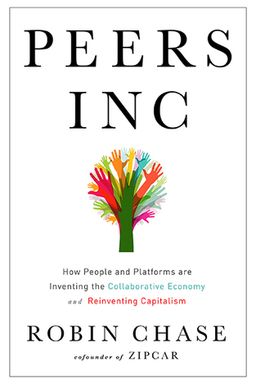
Peers Inc: How Collaboration Creates Abundance
What if the resources you need to build the next big business—or solve the planet’s biggest challenges—already exist, lying idle? In Peers Inc, Robin Chase, cofounder of Zipcar, argues that today’s greatest opportunities come not from owning more assets but from connecting excess capacity with willing participants. Her formula—excess capacity + a platform for participation + peers—reveals how corporations and individuals can co-create value on an unprecedented scale.
Chase calls this blend the Peers Inc model. The “Inc” provides the structure, standards, and investment to make participation safe and scalable. The “Peers” contribute creativity, local know-how, and diversity. Together, they convert underused resources into powerful engines of innovation and growth. Examples like Zipcar, Airbnb, BlaBlaCar, and Duolingo show how this pattern repeats across industries—from transport and housing to education and technology.
The Core Blueprint: Three Building Blocks
The first block, excess capacity, recognizes the hidden abundance all around you—cars parked 95% of the time, spare bedrooms, unused data, or idle computing cycles. The second block, a platform for participation, provides the system—software, billing, insurance, reputation tools—that lets strangers safely share those underused assets. The final block, peers, brings distributed creativity. Each peer customizes and adapts the system to local needs, supplying energy that corporations can’t match.
When these three elements join, they produce network effects that make organizations “learn fast, scale fast, and create abundance where scarcity seemed fixed.” Google Maps turning APIs into global mashups, reCAPTCHA using human input to digitize old text, and BlaBlaCar converting empty car seats into a pan-European ride network all illustrate how the same formula manifests differently.
The Three Miracles of Peers Inc
Chase defines three “miracles” that emerge when Peers Inc works smoothly. The first is defying physical limits: Airbnb and Uber scale across continents without building hotels or buying cars. The second is exponential learning: platforms like Duolingo analyze behavior across millions, accelerating collective learning. The third is instant access to expertise: government and corporations alike tap TopCoder, InnoCentive, or open data challenges to crowdsource solutions instantly. Together, these miracles represent a new physics of scale—speed without ownership.
Evolving Platforms and Power Balance
But platforms don’t automatically remain fair or inclusive. Chase outlines four growth stages—Controlled Kernel, Everybody-Welcome, Power Imbalance, and Power Parity. At first, founders must tightly steer the product (as Zipcar did). Then, they open participation and ride the wave of peer energy (Airbnb, BlaBlaCar). Success leads to tension when large actors dominate or peers lose voice (as happened on Lending Club and Airbnb). Sustainable balance, or power parity, depends on transparency, community governance, and data portability—lessons inspired by Nobel laureate Elinor Ostrom’s work on commons.
Platforms, Policy, and Society
Chase expands beyond business to policy. Governments, she argues, are natural builders of open platforms: GPS, the Internet, and Data.gov are successes that unleashed trillion-dollar ecosystems. But governments must also protect peers by preserving openness, regulating fairly, and ensuring portability of rights and data. Right-sized regulation should protect public safety without stifling participation—requiring large platforms to assume proportionate responsibility while safeguarding independent peers’ autonomy.
The same structure applies to broader social challenges. For climate change, the Peers Inc model enables rapid, distributed action: Global Forest Watch integrates NASA satellite data with citizen reports to track deforestation, while G-Auto and La Ruche Qui Dit Oui use peer networks for low-carbon mobility and local food systems. Similarly, the future of work hinges on portable benefits, fair classification, and new safety nets so freelancers and peers retain security without losing flexibility.
Essential takeaway
The heart of Peers Inc is this: let institutions do what they do best—scale and structure—and let peers do what people do best—adapt and innovate. The systems that thrive will balance both, democratizing growth, sustainability, and power in the twenty-first century.
(In the tradition of thinkers like Yochai Benkler and Clay Shirky, Chase’s argument reframes economic organization for the networked age. Her insight is that change is not about discarding institutions but rebuilding them for participation.)