
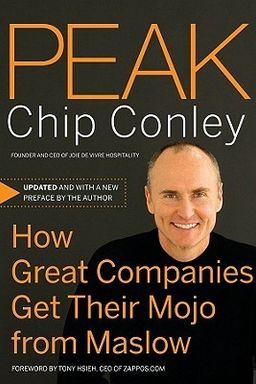
Peak cover

Peak

by Chip Conley

Peak by Chip Conley explores how Maslow''s psychological insights can revolutionize business success by focusing on relationships. Learn how to create a thriving company culture that values employees, delights customers, and engages investors, leading to sustainable growth and fulfillment.

Unlocking Peak Performance Through Human Motivation

What if your company’s greatest untapped competitive advantage wasn’t technology, strategy, or money—but people? In Peak: How Great Companies Get Their Mojo from Maslow, entrepreneur and hotelier Chip Conley contends that the secret to sustainable success lies in understanding and harnessing what truly motivates human beings. Drawing from Abraham Maslow’s Hierarchy of Needs, Conley transforms psychology’s most famous pyramid into an actionable business blueprint. Instead of focusing solely on profits and performance, Peak teaches leaders how to create environments where employees, customers, and investors can thrive and self-actualize.

Conley’s argument began during Joie de Vivre Hospitality’s crushing downturn after 9/11—a near-death experience for his boutique hotel company. Searching for answers in Maslow’s Toward a Psychology of Being, Conley realized that organizations, like individuals, have needs: survival, success, and transformation. At the base lie material necessities (paychecks and profits), but lasting greatness emerges only when relationships with employees, customers, and investors focus on fulfillment and meaning. Through his experience rebuilding Joie de Vivre, Conley discovered that attending to these higher needs created loyalty, creativity, and resilience—a formula that helped his company thrive despite economic chaos.

Maslow’s Model Meets Management

Conley reframed Maslow’s five human needs—physiological, safety, social, esteem, and self-actualization—into a simplified three-level Transformation Pyramid for business: Survival focuses on transactional stability, Success on emotional engagement, and Transformation on purpose and peak experience. He argues that most companies stagnate at the bottom by obsessing over survival—cutting costs, chasing short-term profits, or micromanaging relationships. By contrast, enlightened organizations that reach the top foster transformation, where employees find meaning, customers become evangelists, and investors feel pride of ownership.

The Three Relationship Truths

At the heart of Conley’s model are three pyramids: the Employee Pyramid (moving from salary to recognition to meaning), the Customer Pyramid (from satisfaction to desire to unrecognized needs), and the Investor Pyramid (from transactional alignment to relationship confidence to legacy). Each pyramid parallels Maslow’s hierarchy, guiding leaders toward the intangible drivers of loyalty and performance. The breakthrough insight is that transformation cascades downward—when leaders create self-actualizing experiences at the top, morale, innovation, and profits follow naturally. As Conley insists, “Transformation happens at the peak of the pyramid, and it cascades down from there.”

A Psychology of Business—and Life

More than just a management theory, Conley’s reimagining of Maslow is a philosophy of living. Peak invites you to ask: what do your people—whether employees, customers, or investors—really need to flourish? It’s not just resources or recognition, but connection, creativity, and significance. Inspired by companies like Google, Apple, Southwest Airlines, and Whole Foods Market, Conley presents abundant evidence that organizations satisfying higher needs consistently outperform competitors. As Jim Collins (author of Good to Great) noted, greatness hinges not on size or wealth, but on passion and purpose.

Ultimately, Conley challenges both companies and individuals to “seek the peak.” When you design workplaces where people feel valued, create customer experiences that evoke joy, and build investor relationships that extend beyond money, you don’t just improve performance—you ignite transformation. In turbulent times, this human-centered approach isn’t soft—it’s strategic. By helping others reach their full potential, you elevate your organization to its own. That is the true psychology of business—and the path to lasting prosperity and fulfillment.


The Employee Pyramid: From Pay to Purpose

Conley begins with the foundation of business relationships—the employee. His Employee Pyramid moves from basic pay and benefits at the bottom to recognition in the middle, and finally to meaning at the top. The guiding insight: people don’t work for a paycheck alone; they seek significance and belonging. When employees experience purpose, loyalty and creativity soar.

Survival: Compensation with Compassion

At Joie de Vivre, Conley learned that personal sacrifice can inspire collective resilience. During the post-9/11 hotel crash, he stopped taking a salary for over three years so he wouldn’t have to lay off lower-paid workers. Senior executives took pay cuts to protect line staff. This decision embodied his belief that survival-level needs—money and security—must be addressed empathetically. “When the going gets tough,” Conley says, “support the ones who can least afford to lose.” Companies like Costco, with industry-leading pay and benefits for workers, demonstrate that moral compensation is also smart business.

Success: Recognition that Matters

The second level focuses on recognition—affection, respect, and belonging. Conley found that simple gestures—birthday calls from company leaders, handwritten thank-you notes, or symbolic gifts like The Little Engine That Could—had powerful effects on morale. Recognition, he says, is the “gift that keeps on giving.” Harvard’s Rosabeth Moss Kanter captures it succinctly: “Compensation is a right; recognition is a gift.” Studies confirm that emotionally intelligent workplaces outperform peers because appreciation, not authority, sustains engagement. (Daniel Goleman’s research on emotional intelligence supports this: feelings are contagious, and positive ones drive productivity.)

Transformation: Meaning as Motivation

At the peak of the pyramid lies meaning—employees’ highest need. Conley tells vivid stories of a German innkeeper named Maria who cared for him when he was sick, showing how purpose transforms routine work into noble service. He encourages leaders to help employees see their jobs as callings, not chores. Companies like Genentech and Medtronic embody this, linking everyday tasks to saving lives. At Joie de Vivre, the mission “Create Joy” became a rallying cry. Employees wore bracelets with that phrase and asked each other daily, “How did you create joy today?” That mantra turned ordinary work into a shared purpose.

When meaning meets recognition and fair pay, employees transcend compliance and reach self-actualization. As Conley explains, work that satisfies the heart as well as the wallet becomes a source of creativity, connection, and transformation—a true peak experience for both worker and organization.


The Customer Pyramid: Creating Evangelists

Just as employees yearn for more than a paycheck, customers crave more than a transaction. Conley’s Customer Pyramid reveals how companies can move from meeting expectations to delighting desires, and ultimately to fulfilling unrecognized needs. At its pinnacle, customers don’t just buy—they belong. They become evangelists who spread your story because it resonates with their identity.

Satisfaction: Meeting Expectations

Conley warns that “satisfaction doesn’t create loyalty.” Drawing on Theodore Levitt’s classic essay Marketing Myopia, he explains how companies stagnate when they define their business too narrowly. Blockbuster thought it was renting videotapes; Netflix realized it was delivering convenience. In Conley’s own industry, hotel chains offered functional rooms, while his Joie de Vivre hotels delivered emotional experiences. When a San Francisco downturn threatened the business, Conley reinvented his marketing using a “Hotel Matchmaker” quiz, helping guests choose properties reflecting their personality—Rolling Stone-minded travelers for The Phoenix, literary souls for Hotel Rex. Satisfaction grew dramatically because customers felt truly seen.

Commitment: Meeting Desires Through Technology and Touch

The middle level of the pyramid centers on commitment—building trust through personalized service. Conley compares Enterprise Rent-a-Car and FedEx as examples of “high-tech, high-touch” cultures that blend data with empathy. Technology can help anticipate desires, but only when paired with human warmth. Amazon’s intuitive recommendations and Jeff Bezos’ handwritten customer letters exemplify this balance. Within Joie de Vivre, he trained employees to use software—and intuition—to recall guests’ preferences, creating seamless experiences built on memory and care.

Evangelists: Fulfilling Unrecognized Needs

At the peak, transformation occurs when your product helps customers express who they are. Apple’s stores act as temples for creativity, where customers “get more out of themselves,” as retail chief Ron Johnson put it. Harley-Davidson riders achieve freedom and identity refreshment through their bikes. Whole Foods shoppers feel part of a global cause. These customers evangelize not because of price, but because the brand affirms their values. Joie de Vivre’s “Dreammaker” program trained employees to surprise guests with personalized gestures—flowers for birthdays, themed décor for college tours—turning them into lifelong advocates.

When companies speak to emotional and spiritual needs, they transcend competition. Customers who experience self-expression and belonging through your brand become your most powerful marketing channel—a living testament to transformation at the peak.


The Investor Pyramid: From Trust to Legacy

Conley extends Maslow’s model to the people behind the money. His Investor Pyramid starts with trust, moves through confidence and collaboration, and culminates in pride of ownership. Here, investors are not faceless financiers but partners seeking emotional returns. “Money follows—it doesn’t lead,” he writes, reflecting his belief that trust, not greed, sustains prosperity.

Transactional Trust: Aligning Goals and Integrity

Every successful investor relationship begins with alignment. Conley learned this sharply when partnering with a hedge fund at Costanoa, a luxury camping resort he developed. The investors sought quick profits; he envisioned a long-term eco-retreat. Their misaligned goals led to a premature sale, teaching him that “the wrong owner syndrome” can sink any enterprise. Now, before raising capital, he asks investors about their most satisfying partnerships—a question revealing whether their motivations align with his company’s values. (Warren Buffett follows a similar principle, preferring “honorable returns with honorable people” over higher profits with poor partners.)

Relationship Confidence: Building Emotional Intelligence with Investors

The middle level transforms deals into relationships. Emotionally intelligent investing, Conley notes, requires patience and empathy. He cites Bill Price of Texas Pacific Group and Ken Iverson of Nucor, both of whom valued collaboration over quarterly results. At Joie de Vivre, Conley maintained investor confidence during hard times through humor and transparency—once mailing investors T-shirts illustrating the collapsing hotel market with the message “Strong Enough to Restore the Sky.” The response was overwhelming: trust, not fear, bound them together.

Legacy: Creating Pride of Ownership

At the peak, investment becomes transformation—money serves meaning. Conley profiles socially responsible investors like Larry and Ann Wheat, who helped fund vegan fine-dining restaurant Millennium. Their aim wasn’t just profit but planetary health. Legacy investors, he explains, seek to “make a difference in the world” through their capital. Companies like Patagonia and Whole Foods exemplify how purpose drives profit: stakeholder-centered firms outperform shareholder-only ones. For Conley, pride of ownership expresses Maslow’s final need—transcendence. When money uplifts communities and people, both investor and entrepreneur reach the summit of fulfillment.

The Investor Pyramid teaches that relationships, not transactions, sustain success. Whether through trust, confidence, or legacy, investing guided by purpose ignites more than ROI—it sparks transformation for everyone involved.


Karmic Capitalism and Conscious Leadership

Conley’s philosophy of karmic capitalism challenges traditional management dogma. Instead of maximizing shareholder value, he advocates for businesses that maximize human value. Karmic capitalism suggests that good deeds and good business are not opposites—they’re interdependent. By serving all stakeholders with empathy and integrity, leaders generate what Stephen Covey called an “emotional bank account” of trust that yields long-term dividends.

Beyond the Short Term

Conley critiques short-term profit obsession as a moral and strategic failure. The companies that last—like Berkshire Hathaway, Costco, and Patagonia—focus on legacy, not quarterly gains. He contrasts “rent-a-relationship” capitalism with karmic capitalism, where relationships endure because leaders value people over performance. His approach echoes Jim Collins’ advice to “choose your investors wisely” and John Mackey’s Whole Foods motto: “Profits follow purpose.”

Making the Intangible Tangible

How do you measure trust, joy, or loyalty? Conley cites Fred Reichheld’s “Net Promoter Score” and emotional intelligence metrics as ways to quantify the unquantifiable. Positive psychology research supports his claim: feelings of belonging and gratitude correlate directly with productivity. By balancing tangible assets (revenue, process) and intangible ones (culture, enthusiasm), organizations become resilient ecosystems rather than machines.

The Pursuit of Happiness at Work

Conley reframes the American ideal of happiness as a corporate imperative. Inspired by Thomas Jefferson’s phrase “life, liberty, and the pursuit of happiness,” he argues that workplaces can and should enable people to flourish. His case studies—from Patagonia’s flexible culture to Semco’s radical democracy—prove that happiness and high performance coexist. When you remove fear and amplify fulfillment, you create karmic balance: what you give, you get.

Karmic capitalism invites leaders to treat work as a spiritual practice, where success is measured not just in dollars but in lives improved. In a world obsessed with metrics, Conley’s message is revolutionary: do good, and greatness will follow.


The Heart of Organizational Culture

After scaling the three pyramids, Conley introduces the glue that binds them—the Joie de Vivre Heart. This simple diagram symbolizes how culture drives employee enthusiasm, customer loyalty, and profitability. Drawing inspiration from Southwest Airlines founder Herb Kelleher and the Service-Profit Chain model, Conley shows that a company’s emotional climate can account for up to 30 percent of performance.

Culture as Connection

To Conley, culture isn’t decoration—it’s circulation. The “arteries” of his heart diagram pump morale from the corporate center to frontline employees, ensuring that joy and respect reach every corner. Cultural ambassadors at each hotel reinforce values like creativity and compassion. During crises, this connectedness sustains morale. Conley quotes Herb Kelleher: “The heart of the service journey is spiritual rather than mechanical.”

Changing Culture Through Habits

Culture, Conley insists, changes through behavior, not slogans. He references Gordon Bethune’s turnaround at Continental Airlines, where staff bonuses were tied to on-time performance, transforming distrust into collaboration. Performance followed culture, not the reverse. He argues that any company can evolve by embedding daily rituals that express its purpose—celebrations, recognition meetings, storytelling, and acts of transparency.

The Relationship Truths Pyramid

In a moment of revelation, Conley realized that his heart fits inside the larger Relationship Truths Pyramid, uniting the Employee, Customer, and Investor pyramids. Each point of the heart connects with one of these relationships, forming a virtuous circle. Culture fuels meaning for employees, delight for customers, and trust for investors. Together, they create what Conley calls “peak performance through love.”

For leaders, the lesson is clear: profit is a lagging indicator; joy is the leading one. Attend to the heartbeats—the everyday relationships—and success becomes inevitable.


Creating a Self-Actualized Life

Conley closes with an invitation to apply his pyramid beyond business: to your own life. Drawing on Maslow’s concept of self-actualization, he explores how individuals can move from surviving to succeeding to transforming. True fulfillment, he argues, happens when you align your work and life with your calling—the intersection of talent, purpose, and joy.

Job, Career, or Calling?

Conley explains three ways we relate to work: a job fulfills basic needs (money), a career satisfies esteem (achievement), and a calling meets self-actualization (meaning). Through reflective questions, he encourages readers to assess where they stand. His own calling—as “an artist posing as a businessman”—reminds us that joy and creativity can define success better than wealth.

Climbing the Right Mountain

Using Maslow’s pyramid as a map for life decisions, Conley suggests identifying your “has,” “does,” and “is” needs: what you possess, what you do, and who you are. Most of us climb the wrong mountain—chasing possessions or status—only to find emptiness at the top. Instead, he advocates presence, gratitude, and contribution as measures of success. As Potka, his grandfather, once told him on the golf course, “You can decide which scorecard you want to use in life.”

Living the Peak Philosophy

Self-actualization requires courage to become what Maslow called a “peaker”—one who frequently experiences awe, flow, and purpose. Conley’s prescription: cultivate mindfulness, gratitude, and generosity; design your personal pyramid of needs; and commit to joy as both goal and guide. The same principles that elevate companies can elevate individuals—because, as Conley says, “A company is just a collection of people seeking meaning.”

At its heart, Peak is not just about building great organizations—it’s about building great lives. When you live at the peak, you don’t just achieve—you inspire.

Dig Deeper

Get personalized prompts to apply these lessons to your life and deepen your understanding.

Go Deeper

Get the Full Experience

Download Insight Books for AI-powered reflections, quizzes, and more.