
Idea 1
Revenge Costs More Than It Pays
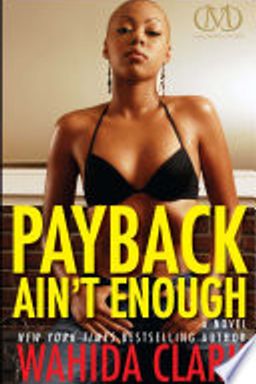
Ever felt the pull to “even the score,” only to realize the fallout spreads farther than you planned? In Payback Ain’t Enough, Wahida Clark argues that revenge inside the street economy is a compounding debt, not a clean settlement. She contends that payback is a trap disguised as justice: it promises closure, but escalates cycles of violence, exposes families, and destabilizes the very power you’re trying to protect. Her characters learn—often too late—that in a world governed by image and fear, retaliation is both currency and poison.
Clark drops you into Detroit’s shadow economy at a precise inflection point: a prison murder, a syndicate in flux, a widow’s rage, a jealous ex, and a rising tactician named Dark reshaping the board. The book’s chessboard features the Consortium (a cartel-like council), competing “connects” (suppliers), and a parade of high-stakes gatherings—funerals, boardroom-like meetings, VIP sections—where deals, reputations, and vendettas are staged. Meanwhile, women drive plot and consequence: Shan, Sharia, Mia, Janay, and Joy don’t just react to the game; they alter its weather.
What the book really argues
Payback Ain’t Enough insists that revenge is a mispriced asset. Yes, it buys compliance and proves mettle, but it also attracts heat—law enforcement, rivals, even your own crew’s resentment. Clark’s core claim: the payoff from vengeance never keeps up with the interest you owe in paranoia, betrayal, and blowback. You see it when Dark assassinates his wheelchair-bound mentor Forever in prison, setting off a ripple that reaches Forever’s brother Briggen, Forever’s widow Nyla, and an entire city’s power map. You see it again when Cisco flaunts his dominance and is swallowed by it; when Mia tries to anchor her future to a dangerous man and pays with her life; when Joy turns grief into a federal mechanism of reckoning.
How the world of this book works
Clark’s Detroit runs on three engines: perception, supply chains, and personal ties. Perception is performance—who looks strongest wins first. Supply chains are logistics—who controls the connect and the corners survives longest. Personal ties are volatile—who you love or betray will decide how you fall. From Sharia’s whispers to the Consortium’s votes, from Mr. G’s old-school discipline to Nick’s slick bid to monopolize pricing, the system rewards boldness, punishes error, and never forgets a weakness (compare to Don Winslow’s The Cartel or Mario Puzo’s The Godfather for similar themes of spectacle, supply, and family).
Why this matters to you
You might not run a block or a brand of dope, but you do trade in status, loyalty, and risk. Clark forces you to ask: Is the “win” I’m chasing worth the enemies, exposure, and collateral? Am I mistaking performance for power? Am I letting payback set my agenda? Her characters are archetypes of everyday dynamics—workplace feuds that become costly crusades, relationships turned battlegrounds, and “short-term W’s” that wreck long-term positioning.
Key Idea
Revenge buys you a headline; it invoices you for the rest of your life.
Preview of what you’ll learn
You’ll see how power is performed and priced—why funerals, VIP sections, and “all-white parties” double as boardrooms. You’ll explore the back-end business model beneath the beef—connects, price wars, couriers, trap cars, and money logistics. You’ll meet women who don’t just endure the game but hack it: Shan funds a legit-looking empire from a stolen stash; Janay rejects her father’s legacy to walk away; Joy weaponizes the rule of law. You’ll study Dark’s blueprint for a terror-based takeover and the cost of charisma without caution. And you’ll confront the rawest throughline: when love, loyalty, and legacy collide, there are no clean wins—only escapes, resets, or ruin.
Payback Ain’t Enough is urban noir with business case studies baked in. It’s a tableau of how reputations are made, markets are cornered, and families are lost. If you’ve ever believed that a well-timed clapback would fix your world, Clark’s answer is clear: it might feel good—but you won’t like the bill.