
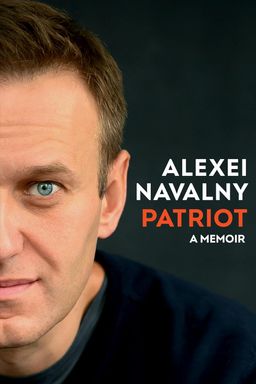
Patriot cover

Patriot

by Alexei Navalny

A posthumously published memoir by the late Russian political opposition leader and political prisoner who began writing this after his near-fatal poisoning in 2020.

Truth Versus a System of Lies

How do you build an honest politics inside a culture that normalizes deception? In this book-length account, Alexei Navalny argues that you fight lies with public proof, humor, and organized courage—and you keep doing it even when the system responds with courts, prisons, and poison. He contends that authoritarian rule in Russia survives by weaponizing legality and saturating daily life with falsehoods; the counter is a method that makes truth visible, mobilizes citizens, and forces the regime to pay reputational and political costs for its repression.

You follow a narrative that moves from childhood lessons about state deception (Chernobyl) to internet-era investigations, a breakout Moscow mayoral campaign, the creation of regional HQs, tactical voting, a near-fatal Novichok poisoning, and the grind of prison. Along the way, Navalny shows you how a movement can be built: with documents and drones, with memes and legal filings, with town-square tours and micro-donations, and with a clear policy vision he calls the "Beautiful Russia of the Future."

What the regime is and why it matters

The book presents the Kremlin not as arbitrary chaos but as a system that punishes opposition predictably while pretending to follow law. Courts schedule hearings on holidays to suppress protest, prosecutors recycle charges (Kirovles, Yves Rocher), and judges stage-manage trials to project legitimacy. Family members become hostages: Oleg Navalny receives real prison time while Alexei is suspended—an unmistakable signal to the principal target and the public. This isn’t unique to Russia (think of the theater of trials in the late USSR or Lukashenko’s Belarus), but Navalny gives it precision with dates, names, and courtroom choreography.

The counter-method: investigate, show, organize

Navalny’s method is simple to state and hard to execute. His Anti-Corruption Foundation (ACF) gathers unassailable evidence (property registries, bank records, offshore filings), turns it into vivid video narratives (drone flyovers of estates, on-camera documents), and pairs revelations with concrete calls to action (be an election observer, donate, vote tactically). The Medvedev film Don’t You Dare Call Him “Dimon,” the Chaika exposé, and the "Putin’s palace" investigation demonstrate the formula: paperwork makes claims credible; visuals make them unforgettable; humor turns them into culture.

Movement-building under censorship

Because TV is closed, Navalny builds a media ecosystem of his own: LiveJournal posts morph into professionally produced YouTube films; Instagram and later TikTok reach fresh demographics; Twitter vents serve as rapid-response commentary. Offline, he constructs a national organization: an insurgent 2012 Moscow mayoral run with “cubes” and courtyard meetings, then 82 regional campaign HQs led by coordinators like Liliya Chanysheva (Ufa) and Ksenia Fadeyeva (Tomsk). Tactical voting emerges as a strategic hack: consolidate the anti–United Russia vote behind the strongest alternative, win local footholds, and break the aura of inevitability.

Personal cost and the weaponization of care

The price is steep. Oleg spends years in solitary, Yulia faces searches and detentions, and Alexei himself endures repeated arrests, house arrest with an electronic tag, and eventually the Novichok poisoning in Tomsk (August 20, 2020). The sensory details—tea in a red cup, a tissue from Kira Yarmysh, the flight attendant who first dismisses and then realizes the emergency—make you feel the human scale. Eighteen days in a Berlin Charité coma, slow rehab, hallucinations of a Japanese neurosurgeon, and Angela Merkel’s quiet visit underline how the personal and political fuse when the state decides to kill rather than merely prosecute.

Prison as policy, survival as practice

Prison enters as the regime’s steady-state solution: SHIZO punishment cells, EPKT single-confinement, nightly body-cam checks, mail restrictions, provocateurs. Navalny’s 24-day hunger strike forces limited medical concessions—proof that disciplined, public nonviolence can extract narrow wins when the world watches (compare Gene Sharp’s analysis of power and consent). Survival becomes a craft: write, memorize scripture, set rituals, document abuses, and keep the public narrative alive so isolation never fully takes.

The destination: a normal country

The book ends not in bitterness, but in blueprint. The "Beautiful Russia of the Future" means rule of law, asset recovery from kleptocrats, decentralization so regions keep tax revenue, real wages that match lived reality, and European alignment—including ending the war in Ukraine, withdrawing, and paying reparations. It’s pragmatic and incremental: investigations plus organizing plus elections, all feeding a long game. (Note: This echoes Václav Havel’s “living in truth,” but with a distinctly 21st‑century media toolkit.)

Key line

You win hearts with images, convince minds with documents, and move feet with practical instructions—and then you repeat, even when the price climbs.

If you want a manual for democratic opposition under pressure, this is it: a lived theory of change that matches moral clarity with operational detail. You come away with tactics you can adapt and a sharpened eye for how modern authoritarianism cloaks power in procedure—and how citizens can pull back the curtain.


From Lies To Activism

Navalny’s origin story explains his style. He grows up in army towns and near Chernobyl, where adults whisper while soldiers in white suits measure car wheels for radiation. That early lesson—that officials prefer concealment to care—forms his political spine. Later, perestroika-era TV like Vzglyad and films like Assa and The Needle break the information monopoly, creating a cognitive split between lived reality and official narrative. You feel how a culture of lies births a lifelong revulsion to euphemism and doublespeak.

Chernobyl and the scab of lies

Chernobyl is his first civics course. The forced evacuation of his grandmother and the botched resettlement show him that the state treats the public as a problem to be managed, not a partner to be informed. Navalny cites Vasily Shukshin—"Lies, lies, lies…The whole of Russia was covered with lies, like a scab"—to name the disease you’re reading him treat. This moral diagnosis explains his later insistence on document-heavy, no‑hedge language: call a thief a thief, prove it on camera, and refuse the linguistic fog that protects power.

Army towns and the sociology of fear

In garrison life he sees hierarchy and hypocrisy up close: dedovshchina (hazing), tacitly sanctioned violence, and the comfort of belonging to a ring of protection around Moscow. Institutions survive by internal violence and secrecy—habits that later define the state’s policing of politics. You start to understand why Navalny treats transparency not as a tactic but as an ethic: secrecy metastasizes into arbitrary power; disclosure restores minimal fairness.

Debates, LiveJournal, and a civic hack

Navalny’s first big experiment is public debates. He organizes forums where rivals like Nikita Belykh and Dmitry Rogozin spar live, and he learns logistics: secure venues, handle provocateurs, and transform controversy into visibility. Then comes LiveJournal. He turns a blog into a political switchboard—recruiting volunteers, soliciting legal help, and moving online readers into offline action. When he calls for street protests after electoral fraud in 2011, thousands show. It’s the playbook’s seed: write plainly, share documents, give people something concrete to do today.

RosPil and the crowd-law model

RosPil crystallizes the approach: expose corrupt procurement, then ask readers to file formal complaints and lawsuits. Suddenly ordinary people behave like a distributed legal department, and the bureaucracy has to answer its own paperwork. Micro-donations (averaging ~400 rubles) fund the work; receipts and budgets are posted to build trust. This breaks a taboo in Russian politics: you don’t need oligarchs to finance opposition if you publish where every ruble goes. (Note: This parallels civic tech experiments in places like Taiwan’s vTaiwan and anti-graft crowdsourcing in Brazil.)

From biography to method

The through-line is tight. Early life amid institutional lying turns into an insistence on naming crimes. Garrison hierarchies become a case for transparency and rule-based governance. Perestroika’s media opening becomes a lifelong bet on communications: the right message, delivered with receipts, can turn passive viewers into active citizens. By the time Navalny moves toward citywide campaigns and later national infrastructure, you see a method born from biography: courage plus evidence, delivered at scale.

Key idea

Personal history isn’t backstory; it’s a toolkit. Navalny turns early encounters with systemic deception into a replicable model of public truth-telling that anyone with a phone, a spreadsheet, and a backbone can begin to copy.

If you’re looking for where to start in your context, begin here: identify one lie that harms people, gather proof, publish clearly, and offer a simple action. The rest—fundraising, legal follow-up, and organizational muscle—builds from that first honest loop between you and your fellow citizens.


Investigations That Mobilize

Navalny’s investigations aren’t just journalism; they’re engines that convert outrage into organization. You learn a three-part formula: documentary evidence that survives court scrutiny, visuals that make theft visible, and storytelling laced with humor and memorable symbols. When LiveJournal is blocked by Roskomnadzor (Error 451), Navalny pivots hard into video—discovering that audiences who won’t read a 3,000-word post will watch a 30-minute film and then show up in the streets.

Paper trails first, always

Every major case rests on documents: overseas property records, flight logs, foundation charters, offshore leaks, Swiss certificates verifying the price of a $620,000 watch. The Chaika film links the prosecutor general’s family to luxury assets and criminal networks; the Medvedev film maps a web of nonprofits and palaces with hacked emails and notarized transfers. The point is moral and tactical: you don’t argue by adjectives; you argue by pages. (In investigative classics like All the President’s Men, paperwork similarly beats denials.)

Make theft look like theft

Visuals transform abstractions into reality. Drones over Gelendzhik, cameras inside private dachas, aerial shots of vineyards—suddenly "corruption" has floor plans and fountains. The team hires a corgi actor to lampoon Igor Shuvalov’s pets flying on private jets; a rubber duck from Medvedev’s estate becomes a national meme. Images travel faster than PDFs. People laugh, then they get angry, then they ask what to do. That sequence is the movement’s ignition coil.

Production is politics

The team professionalizes: camera crews, editors, narrators, drone pilots, and on-screen graphics. Maria Pevchikh leads financial-trace work, Kira Yarmysh drives communications, Leonid Volkov coordinates ops. They storyboard like a studio, because in a closed media market, production value signals credibility. The result is exponential reach: a written post might hit a million; a video with drone footage can hit six million. After Don’t Call Him “Dimon,” protests erupt in 100+ cities—proof that narrative craft plus evidence can move bodies.

From content to coordination

Each video ends with specific asks: donate here, volunteer there, become an observer on this date. The Deripaska/Prikhodko yacht story—sourced from a provocateur’s Instagram—shows how even messy leads can become geopolitically significant when matched to travel and ownership data (Deripaska’s ties to Paul Manafort). Investigations become a funnel: they recruit, instruct, and deliver people to campaign HQs or rallies.

Diversify platforms, multiply audiences

When one channel dies, move. Instagram reaches women and new age brackets (Navalny notes women often prove more persistent activists). TikTok brings teens via short-form wit; Twitter serves instant commentary. An independent site fills gaps until censors block it too. This redundancy is strategic resilience: if YouTube throttles, your clips still ricochet via mirrors, Telegram, and local chats.

Operational takeaway

Build every story with three layers: receipts (documents), recognition (visuals and symbols), and routes (clear actions). You’re not making media; you’re making movement.

If you adapt this model, audit your pipeline: do you have an evidence engine, a production engine, and an action engine? Navalny’s point is that without the third, even the best investigation evaporates as entertainment. With it, the video becomes a lever that pries open a closed political system.


Building A National Machine

Movements live or die on logistics. Navalny shows you how to convert viral attention into durable infrastructure: compact street tactics, fast team formation, regional HQs, relentless touring, and election strategies that work even when the regime rigs the rules. The 2012 Moscow mayoral campaign becomes the prototype; the 2017–2019 expansion turns it into a nationwide machine.

Cubes and courtyards

In a media blackout, you bring the campaign to people’s doors. Navalny deploys two‑meter "cubes"—portable, message-wrapped kiosks that pop up across districts—to meet voters, recruit volunteers, and hand out materials. Courtyard meetings—literally on the stoops of apartment blocks—let skeptical pensioners ask questions face-to-face. These micro-arenas bypass television and build trust through proximity. Volunteers flood the HQ: IT professionals fold leaflets beside students and retirees. When Sobyanin’s machinery tries to smother the upstart, Navalny still clocks 27.2%—enough to prove viability and scare power.

Rapid assembly and role clarity

Speed matters. Navalny taps Leonid Volkov for operations, Vladimir Ashurkov for finance, and a bench of lawyers and regional coordinators. Newcomers get concrete jobs on day one. Transparency breeds trust, and trust attracts more talent. This is not staffing theater; it’s an org chart that puts investigations, comms, legal, and field ops on tight loops so a video on Monday becomes a rally on Saturday and a lawsuit on Wednesday.

Regional HQs as civic schools

By 2018 the team opens HQs in 82 cities. Coordinators like Liliya Chanysheva (Ufa) and Ksenia Fadeyeva (Tomsk) turn offices into training hubs: signature collection, election observation, security basics, legal complaint writing. Even after the presidential registration is denied, 40 core HQs keep operating—proving that election cycles are moments in a longer organizing arc, not the arc itself. The state eventually labels the network "extremist," which only confirms its effectiveness.

Touring as a credibility engine

Navalny visits places national politicians avoid—Biysk, Barnaul, Tomsk, Omsk—speaking in hangars, computer clubs, and even atop a snow pile after a zelyonka attack. Showing up changes minds; you can’t fake wet shoes in slush. Each stop feeds content to local channels and draws future coordinators into the fold. This is retail politics in a hostile environment, and it works.

Tactical voting: play the game that exists

When the regime blocks real competition, you treat elections like a coordination problem. Navalny’s tactical voting project identifies the non–United Russia candidate with the best chance and tells supporters to rally behind that person—ideology aside. The 2019 Moscow City Duma elections become a proof of concept: United Russia’s seats plunge (from 40 to 25), and genuine opposition deputies win. You learn a hard lesson: in a rigged market, you don’t boycott the store; you buy smarter than the owner expects.

Protecting people and processes

Field ops require security and legal training. Volunteers learn to document provocations, film arrests, and write immediate complaints. When the Kremlin excludes independent candidates from ballots, HQs help mount protests and legal challenges. The organization designs redundancy—if one office is raided, others can pick up the slack. (Note: This mirrors best practices from union drives and digital rights campaigns worldwide.)

Scalable lesson

Don’t wait for perfect conditions. Build small, movable platforms; turn every interaction into training; and use elections—even unfair ones—as moments to recruit, map your base, and stress-test the apparatus.

If you’re organizing under constraints, copy the mechanics: portable presence (cubes), proximity politics (courtyards), multi-city nodes (HQs), and game-theory strategy (tactical voting). You’re not just running campaigns; you’re building a resilient civic infrastructure that survives losses and compounds small wins.


Repression By Design

The state’s response is not random cruelty; it’s an algorithm. Navalny maps a repeatable playbook that mixes legal forms with political ends: calendar manipulation, theatrical trials, administrative suffocation, and family hostage-taking. Once you see the pattern—down to copy‑pasted verdict typos—you can predict the next move and plan countermeasures.

Calendar as cudgel

Courts shift hearings to dates that sap protest. A sentencing set for January 15 is abruptly moved to December 30—holiday’s eve—minimizing turnout and media focus. This isn’t mere bureaucracy; it’s behavioral control through scheduling. In healthy systems, calendars are neutral; here, the calendar is a weapon.

Scripted guilt

The Kirovles and Yves Rocher cases demonstrate how prosecutors reframe normal business into criminal conspiracy. In Yves Rocher, even the alleged victim has no complaint, yet Oleg is led away in handcuffs while Alexei receives a suspended sentence. The message is visual and moral: we can hurt your family because we can. Verdicts are recycled with identical phrasings across retrials, exposing adjudication as stagecraft rather than judgment.

Administrative suffocation

Between headline moments, the regime applies daily pressure: house arrest, electronic ankle tags, 24/7 surveillance squads, raids that seize equipment, travel bans, and mail restrictions. Navalny even publicly cuts off his tag to dramatize the absurdity of a suspended sentence enforced like incarceration. These measures isolate activists, spook volunteers, and normalize humiliation as policy.

Family as leverage

Oleg’s ordeal—years in solitary beyond legal limits, harassment of his wife Vika and children, and a post-release financial blockade when banks refuse accounts—shows how punishment outlives the courtroom. Yulia faces raids, detentions, and fines. The point isn’t just to hurt; it’s to force the activist into a moral bind: "Every new video hits your brother." Navalny’s choice—to continue—turns the hostage tactic into a test of movement stamina.

Countermeasures: transparency and speed

Because the regime seeks to hide repression behind legal veneers, the opposition’s best tool is daylight. Publish documents the day you receive them; film hearings and transfers; pre-commit to public responses if rules are bent. Legal teams (Lyubov Sobol, Ivan Zhdanov) file rapid appeals; communications (Kira Yarmysh) ensure each prosecutorial step has a reputational price. The aim is not instant victory but deterrence: raise the cost of every abuse.

Pattern recognition

When courts move dates abruptly, ask why. When family members are charged, read it as leverage. When charges multiply, see legal attrition by design. Pattern recognition is a survival skill.

If you support opposition work, measure success not just by verdicts reversed but by costs imposed: headlines generated, diplomats briefed, donors mobilized, and volunteers kept safe. Repression is a policy; your response must be a policy too—predictable, loud, and disciplined.


Poison, Coma, Return

The book’s most harrowing chapter is a minute-by-minute descent into a chemical attack. On August 20, 2020, after tea in a red cup at Tomsk airport, Navalny boards a plane, watches a Rick and Morty episode, and then feels focus shatter: cold sweat, language slipping away, motor control dissolving. In the galley he lies down and says, "I have been poisoned and am about to die." A flight attendant dismisses it—then panic spreads as his body shuts down. You watch a human DDOS as acetylcholine floods synapses—his own description of a nerve agent at work.

Medical terror, political meaning

What follows is clinical and cinematic: an emergency landing, Omsk hospital stasis, international pressure, and a medical evacuation to Berlin’s Charité hospital. Eighteen days in a coma, a slow climb back through language and motion, hallucinations (an invented Japanese neurosurgeon), and grueling micro-tasks like pouring water by spoon. Yulia draws hearts on a whiteboard daily. Angela Merkel visits quietly. Independent labs later confirm Novichok. The event shifts from personal horror to geopolitical signal: this was chemical warfare in peacetime, not a random medical event.

Rehabilitation as a second politics

Recovery becomes its own campaign. Nurses demand small triumphs—writing "water" legibly; taking first steps. Navalny jokes about dopamine and makes the hospital room into a war room: planning videos, receiving updates, calibrating return. The symbolism matters: getting back up is the counter-message to a regime that escalated from courts to poison. (Note: The narrative recalls, in a different key, dissidents’ recoveries in Solzhenitsyn’s accounts, where bodily survival itself is political testimony.)

Proof connects to accountability

By anchoring his sensations in nerve-agent physiology (acetylcholine overload) and tying them to forensics, Navalny closes the factual loop. Names and places—Tomsk, Omsk, Charité—fix memory to map. That map later powers investigative backtracking (phone records, operatives’ travel, and logistical footprints), catalyzing international exposure and sanctions debates. The body becomes evidence when the courts refuse to be.

Return as strategy

Choosing to return to Russia after the poisoning is the book’s moral hinge. It denies the regime a victory of exile and reframes fear as momentum. The price is immediate: arrest on arrival, cascading sentences, and eventually transfer to harsher prisons, culminating in an Arctic facility near Kharp. Yet the return keeps the narrative aligned with those who cannot leave. It’s a decision calibrated for legitimacy at home and credibility abroad.

Lesson in courage

Authoritarians escalate when truth starts to bite. Your counter isn’t bravado; it’s preparation, documentation, and a return that signals you intend to fight where the stakes are real.

If you ever wonder where personal risk meets political necessity, this chapter is your case study. It shows you how survival, proof, and the decision to go back home become the most potent arguments an opposition can make.


Prison And Survival

Imprisonment is not a pause in the story; it is the story’s new terrain. Navalny walks you through the architecture of modern political incarceration: pretrial jails like Matrosskaya Tishina, transfers through Kolchugino and Kirov, strict-regime colonies in Vladimir and Pokrov, the Melekhovo colony, and finally an Arctic prison near Kharp. Each step is calibrated to break you legally, medically, and psychologically while maintaining a legal façade.

Punishment by gradation

The system escalates methodically: SHIZO punishment cells, PKT and EPKT single-cell confinement, bans on parcels, lawyer interference, and mail seizures. Guards conduct nightly body-cam checks that destroy sleep; provocateurs scream from adjacent cells to erode sanity. Even basic courtesies are forbidden. It’s a matrix designed to erase social time and replace it with state time.

Medical leverage and hunger strike

Healthcare becomes a battlefield. After earlier attacks (zelyonka eye damage) and the confirmed Novichok poisoning, his later imprisonment includes denial of adequate care. The 24‑day hunger strike in 2021 forces limited concessions—civilian doctors and lab monitoring when potassium and other markers hit danger zones. Hunger strikes work only under spotlight; they are high-risk and require precise coordination with lawyers and supporters. The tactic re-anchors public attention when isolation deepens.

Everyday resistance

Survival turns on discipline. Navalny writes, keeps a diary, memorizes the Sermon on the Mount in multiple languages, learns meditation, and creates micro-rituals (bread and coffee on Sundays). He files meticulous requests and complaints to document each rights violation, transforming bureaucratic paper into a shield. The act of structure—routines, reading, humor—reclaims a piece of autonomy the prison seeks to nullify. (In The Gulag Archipelago, Solzhenitsyn similarly shows technique as salvation; Navalny’s version is updated for camera-age prisons.)

Torture and the archive

Behind the legal sheen lies violence: organized assaults, sexualized torture (mop rapes), and the recording of abuses to blackmail prisoners later. Navalny’s team uncovers a stored archive—proof that cruelty is systematic policy, not rogue sadism. Transfers to harsher regimes track public attention: when outcry swells, concessions appear; when it fades, punishments intensify.

Why this matters for you

If you aid political prisoners or anticipate repression, the book is a field manual: prioritize outside visibility, legal monitoring, medical advocacy, and personal routines. Train supporters to file constant complaints; keep lawyers in the loop even when access is restricted; and publish instantly to create reputational costs inside and outside the country. Survival is collective action—coordinated between the prisoner’s discipline and the movement’s megaphone.

Core insight

Prison is the regime’s preferred policy instrument because it looks legal. Your counter-policy is visibility plus procedure: make every rule they break a public exhibit, and every day you endure a story they cannot script.

By the time you leave this section, you understand prison not as an endpoint but as a battlefield where habits, humor, and paperwork become weapons—and where outside allies can tip the balance between silent suffering and public reckoning.


Beautiful Russia Of The Future

The memoir’s political heart is a plan, not a lament. Navalny asks you to imagine a normal northern country where the state tells the truth, courts work, regions keep their taxes, and prosperity flows from law rather than favors. He calls it the "Beautiful Russia of the Future," and it’s built from the same materials as his method: transparency, decentralization, and accountability.

Principles that rewire incentives

First, rule of law: independent courts so contracts and rights don’t depend on proximity to the Kremlin. Second, anti‑corruption: audit and recover stolen assets; stop writing off foreign debts that serve geopolitical theatrics, not citizens. Third, decentralization: taxes collected in regions stay there, empowering governors and mayors to answer to local voters. These aren’t slogans; they’re incentive shifts that tame rent-seeking.

Material promises, not abstractions

Navalny grounds the vision in household economics. He contrasts official wage statistics (45,000 rubles) with lived paychecks (12–15,000). He promises honest data, better public sector wages, and investment in healthcare and schools—funded by redirecting money now trapped in palaces, yachts, and offshores. When people see the duck on Medvedev’s pond, they’re really seeing their missing clinic and kindergarten.

Democracy as design problem

The presidency must hold less unilateral power; parliaments and courts must be real; media must be free. Elections have to be competitive by design, not by dispensation. Navalny’s practice mirrors his theory: he uses investigations, HQs, and tactical voting as parallel tracks to pry open institutions, trusting that small wins compound into structural change. (Note: This incrementalism echoes the democratic transitions literature, from Poland’s Solidarity to post‑authoritarian Latin America.)

War, peace, and reintegration

On foreign policy, he is blunt: end the war, withdraw from Ukrainian territory, pay reparations, and reorient to Europe economically and politically. The argument is moral and practical—war is kleptocracy’s diversion and an economic sink. Peace is the precondition for sanctions relief, investment, and a return to normal growth. You can’t build a law-based domestic order while prosecuting a lawless foreign war.

From vision to operations

A vision is only real if it connects to tools. Navalny’s tools—crowdfunded investigations, regional nodes, tactical voting, legal transparency—double as a transitional roadmap. When the door opens, the people who learned to observe ballots and file procurement complaints can staff honest administrations and watchdog NGOs. The movement’s habits become the country’s institutions.

Blueprint in a sentence

Reallocate stolen resources to public goods, rebalance power downward to regions, and make truth-telling the norm through transparent, competitive institutions.

If you’re crafting policy in your own context, crib from this: tie moral clarity to budget lines, publish the math, and build local capacity before you need it. A beautiful future isn’t a prophecy; it’s a set of habits practiced long enough to become law.

Dig Deeper

Get personalized prompts to apply these lessons to your life and deepen your understanding.

Go Deeper

Get the Full Experience

Download Insight Books for AI-powered reflections, quizzes, and more.