
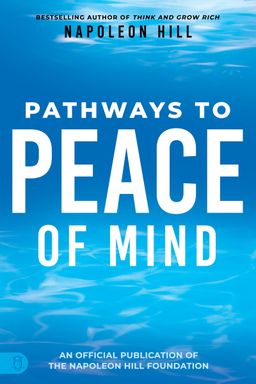
Pathways to Peace of Mind cover

Pathways to Peace of Mind

by Napoleon Hill

Pathways to Peace of Mind by Napoleon Hill provides a roadmap to achieving lifelong abundance and success through positivity, generosity, and meaningful relationships. Discover practical strategies and uplifting examples to transform your life, cultivate inner peace, and foster success in every area. Embrace the journey toward a fulfilled and prosperous existence.

Growing Rich with Peace of Mind

Have you ever wondered why so many people chase wealth, yet so few seem genuinely at peace once they find it? In Grow Rich! With Peace of Mind, Napoleon Hill invites you to look beyond riches as mere accumulation—and instead view prosperity as a well-balanced harmony between material success and inner tranquility. Hill, best known for Think and Grow Rich, argues that true wealth is not measured solely in currency but in emotional stability, purpose, and freedom from fear. Without peace of mind, he contends, riches become burdens rather than blessings.

Hill’s central premise is refreshingly countercultural: your mind is your greatest financial asset. The way you think—about your own worth, your past, your fears, and even your relationships—determines whether wealth will serve or enslave you. Through practical philosophy and personal experience, Hill draws a map toward abundant living, emphasizing mental clarity, belief, freedom from fear, healthy ego, and ethical prosperity.

Balancing Wealth and Inner Peace

Hill knew that many of his readers already understood the mechanics of getting rich. His earlier book taught millions how desire, faith, and persistence attract prosperity. But now he poses a more profound challenge—how do you keep your peace once success arrives? He insists that inner harmony comes from conscious mental discipline. You must first know your own mind—understand how your thoughts shape emotions and behaviors—before you can design a life free from fear and regret. If your mind is cluttered with guilt, resentment, or anxiety, no amount of external wealth can compensate for the inner poverty.

Freedom from the Past

Hill explores how many people sabotage their peace by clinging to past mistakes or disappointments. His principle of “closing the doors on your past” encourages you to stop reopening wounds and instead extract lessons from them. Dwelling on what should have been drains your confidence and focus—two essential ingredients of both wealth and serenity. Through examples of business leaders and inventors he mentored, Hill demonstrates that those who succeed are masters at self-forgiveness and emotional release.

Reprogramming the Mental Attitude

One of Hill’s most enduring messages is that mental attitude creates fortune. Optimism, confidence, and purposeful thought magnetize opportunity. This belief echoes modern cognitive psychology: you attract through the energy of your predominant thoughts. Hill distinguishes “peaceful prosperity” from anxious striving. A serene, constructive mind generates clear decisions and creative insight—while a fearful mind clings, reacts, and misses chances.

Mastering Fear and Desire

Fear remains the greatest thief of riches and peace alike. Hill’s fascination with fear began decades earlier, when economic depression made millions doubt their future. In this book, he reframes fear as mental energy that can be redirected. You overcome it through active purpose, spiritual faith, and the habit of service. Similarly, he reexamines desire—not as lust for possessions, but as fuel for creative achievement. In aligning your desires with higher objectives, you transform energy that could generate anxiety into energy that builds joy and fulfillment.

Money as a Servant, Not a Master

Hill challenges readers to view money with respect—but never worship. Wealth can empower freedom or imprison the soul, depending on how it’s managed. To master money rather than be mastered by it, you must develop ethical stewardship: give generously, share ideas, and use money for constructive ends. He introduces the “art of sharing your riches” as not only a moral act, but as a practical strategy for multiplying joy and goodwill.

Transmuting Energy and Living Authentically

Drawing on his earlier concept of “sex transmutation,” Hill explores how you can redirect emotional and physical energies toward creativity and ambition. He connects this with authenticity—“succeed in being yourself.” Peace, he says, arises when you stop imitating others and express your unique abilities fully. When your inner world and outer actions harmonize, energy flows naturally toward constructive achievement.

The Laws of Compensation and Belief

Hill believed that universal principles govern success—the Law of Compensation balances effort and reward, and belief activates potential. Your thoughts attract matching conditions, much like Emerson’s idea that “the universe backs the best version of yourself.” When belief and enthusiasm align, opportunity manifests with surprising precision.

Living the Life You Were Given

In his final chapters, Hill reminds readers of life’s brevity. “You are very important—for a little while,” he writes, urging you to invest time wisely and live according to divine design. Not too much ambition, not too little faith—balance defines the whole journey. The magic power of belief, enthusiasm, and service completes his formula for peaceful prosperity.

Ultimately, Grow Rich! With Peace of Mind is about transforming your mental relationship with wealth. It’s less a manual for making money than a blueprint for emotional independence. Through awareness, forgiveness, generosity, and belief, Hill shows that peace of mind is not the reward for success—it’s the foundation. Only when you live with inner calm and moral clarity will your external riches truly feel rich.


Knowing Your Own Mind

Hill begins with the most elemental idea of all: to grow rich peacefully, you must know and direct your own mind. Too many people live under the influence of others' opinions, fears, and definitions of success. Hill urges you to examine what you truly believe, what you desire, and what holds you back. This process is not quick—it involves self-reflection, quiet time, and often discomfort. But without it, your decisions will be reactive rather than intentional.

Identifying Outside Influences

Hill reminds you that family, culture, and even media shape how you think about success. If you measure wealth by others' standards, you risk chasing goals that don’t bring peace. He describes cases of executives who achieved immense material success but confessed misery and emptiness. Knowing your own mind means setting boundaries—drawing clear mental lines between external noise and your genuine convictions.

Creating Mental Independence

Hill believes independent thought is the birthplace of all achievement. You must make your own decisions free from fear of criticism. He emphasizes that every great leader—from Edison to Ford—cultivated confidence in their ideas, often against ridicule. He even suggests writing daily affirmations that define your ideals and reviewing them until confident belief replaces doubt. Mental independence yields peace because it eliminates the exhausting need for approval.

Aligning Desire and Purpose

Finally, knowing your mind requires reconciling desire with purpose. Hill’s philosophy bridges spiritual and practical worlds—you must clarify how your desires serve both your good and the wider good. Desire without direction breeds restlessness. Desire aligned with purpose generates serenity. When your goals support your deepest values, success feels natural, not forced.

The ultimate result is peaceful certainty. When you know your own mind, external events no longer disturb your inner calm. Your decisions flow from conviction rather than fear. That, Hill says, is the start of a rich life indeed.


Closing the Doors on Your Past

Regret is one of life’s quietest thieves. Hill teaches that revisiting your past mistakes prevents mental progress. You must “close the doors on your past”—not by forgetting, but by reframing. Every event holds a lesson; once learned, its emotional weight should be released. Many people, Hill observed, replay old failures so obsessively that they recreate them in new forms. Peace requires deliberate closure.

Learning Without Lingering

To close the past constructively, Hill suggests analyzing failures for patterns—why did you make the choice, what belief guided it, and what new action corrects it? Then, move on. He compares this mental practice to business accounting: log the loss, learn the reason, and then clear the ledger. Carrying emotional debt distorts present focus.

Forgiveness as Freedom

Hill’s perspective on forgiveness is deeply pragmatic. He writes that forgiving others, and yourself, is an efficiency strategy—it frees mental bandwidth for creativity. Unforgiveness ties up energy that could be spent on innovation. He cites how one entrepreneur doubled his productivity after releasing resentment toward a former partner. Real wealth, Hill concludes, includes emotional cleanliness.

The Past as a Teacher, Not a Prison

Hill doesn’t deny hardship; he reframes it. Each difficulty, he says, sharpened his insight. Those who reinterpret pain as preparation gain peace because they trust life’s design. This philosophy resembles Viktor Frankl’s view that meaning transcends suffering. Once you see the past as beneficial rather than binding, your future opens effortlessly.

Close those doors gently but firmly. What matters most now is not who you were, but who you are becoming—and peace of mind begins the moment you walk through to the present.


Mastering Money Instead of Being Mastered

Money, Hill insists, is a neutral power—like fire, capable of creation or destruction. What determines its effect is your attitude toward it. Those who fear money lack peace; those who worship it lose balance. His advice: regard money as a servant. Use it thoughtfully to enhance life, but never let it control your happiness.

Defining True Prosperity

Hill distinguishes monetary wealth from prosperity. Prosperity means having enough to live abundantly while preserving moral and emotional well-being. He references millionaires who gave generously and found joy far beyond business profits (similar to Carnegie’s philosophy of stewardship). Excessive accumulation brings complexity, not comfort. Simplicity fosters contentment.

Using Money Consciously

Hill encourages distributing wealth wisely—support creative projects, nurture community, finance education. Generosity transforms money from static substance into dynamic circulation. When giving is habitual, you feel richer because you help life expand. Conversely, hoarding contracts both wallet and spirit. A psychology of abundance keeps both financial and emotional reserves strong.

Freedom Through Financial Discipline

True freedom requires control—of spending, desire, and emotional impulses about money. Hill advocates regular reflection: do your purchases express joy, or fear of lack? He relates the story of a successful publisher who found peace only after releasing obsessive profit goals. When you see money as a flow rather than a possession, anxiety dissolves.

Mastering money begins in the mind: detach self-worth from wealth, make decisions from purpose, and manage with care. When money serves ideals, peace follows naturally.


The Art of Sharing Your Riches

Hill’s notion of sharing goes far beyond charity—it’s a spiritual and psychological principle. He teaches that abundance grows through circulation. When you give, you affirm belief in plenty, and that belief magnetizes further gain. Hoarding, by contrast, expresses fear and sets mental limits that block prosperity.

Giving as Growth

Hill points to many of his successful acquaintances who attributed their continued growth to generosity. One industrialist funded youth scholarships and later realized that the act expanded his creative vision. Giving generates spiritual dividends—ideas flow, collaborations spark. Sharing isn’t loss; it’s investment.

Emotional Benefits of Sharing

Peace of mind arrives when gratitude replaces greed. Hill explains that gratitude dissolves comparison, making you content with your portion while staying open to increase. He advises practicing daily gratitude for what you already possess—and extending help where needed. Emotional generosity multiplies serenity.

Circulation as Universal Law

In broader philosophy, Hill connects sharing to the Law of Compensation: every act returns multiplied consequences. Giving becomes a form of mental seed planting; the universe rewards expansion with expansion. The more peaceful your intent in sharing, the higher the quality of what returns.

Sharing your riches—whether material, intellectual, or emotional—creates continuity between prosperity and peace. In Hill’s words, those who give freely never lack peace, because they live aligned with abundance itself.


The Magic Power of Belief and Enthusiasm

Hill ends his work with two driving forces of rich living: belief and enthusiasm. Belief is mental power in conviction form. Enthusiasm is emotional fuel that activates that power. Together, these energies form the dynamic heart of peaceful prosperity.

Belief Creates Reality

For Hill, belief sets the boundaries of possible achievement. If you believe you’re capable and deserving, your mind finds ways to prove it true. He cites numerous cases—engineers, writers, entrepreneurs—whose faith in their vision sustained them through failure until results materialized. Belief aligns subconscious and conscious forces, producing unmistakable confidence that others perceive as charisma and trustworthiness.

Enthusiasm Energizes Belief

Where belief gives structure, enthusiasm gives speed. Hill calls it spiritual electricity—it invigorates purpose and communicates it instantly to others. Combined, belief and enthusiasm become magnetic; they attract partnerships, resources, and opportunity. He likens true enthusiasm to passion grounded in calm faith—not frenzy, but radiant confidence.

Balancing Passion with Peace

Interestingly, Hill warns against manic overdrive. Enthusiasm without peace burns out; peace without enthusiasm stagnates. The art is to combine faith in self with joy in action, allowing energy to circulate naturally. When your belief system supports your enthusiasm, and both rest on moral purpose, you create unstoppable yet serene success.

To grow rich with peace of mind, Hill concludes, you must learn to believe wisely and to feel deeply—the two together make life not only prosperous, but profoundly joyful.

Dig Deeper

Get personalized prompts to apply these lessons to your life and deepen your understanding.

Go Deeper

Get the Full Experience

Download Insight Books for AI-powered reflections, quizzes, and more.