
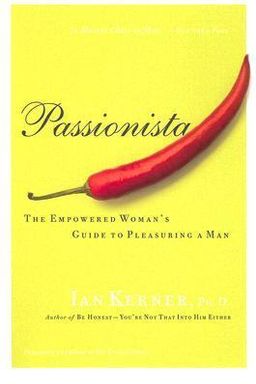
Passionista cover

Passionista

by Ian Kerner

Passionista is your essential guide to unraveling the complexities of male sexuality. Learn how to enhance pleasure, deepen emotional connections, and reignite passion in your relationship. This book offers practical techniques to transform your intimate life and empower both partners.

Becoming the Passionista: The Science and Soul of Pleasuring Men

What if the best way to have great sex wasn’t about learning new positions or mastering anatomy, but about understanding desire itself—the psychology, emotion, and physiology that make passion thrive? In Passionista, Ian Kerner flips the traditional script on male sexuality. Building on his earlier bestseller She Comes First, Kerner invites women to become “Passionistas” — empowered lovers who understand men’s sexual needs not as clichés about lust and speed, but as complex experiences shaped by protection, performance, anxiety, and longing for connection.

Kerner’s central argument is simple but revolutionary: pleasure isn’t just a physical act; it’s a psychological process built on trust, curiosity, and mutual understanding. While many sex guides for women focus on technique, Passionista contends that technique without empathy creates mechanical sex. True mastery requires seeing sex as a shared journey—a “shaky bridge” between safety and excitement, familiarity and risk, body and mind.

The Shaky Bridge Metaphor

At the heart of Kerner’s philosophy is the Capilano Bridge experiment, conducted by psychologists Arthur Aron and Donald Dutton. Men who met a woman on a wobbly, adrenaline-charged suspension bridge were far more likely to fall for her than men who met her on a stable one. Kerner uses this metaphor to show how novelty, risk, and excitement trigger the neurochemical roots of attraction—dopamine and adrenaline. Sex, he argues, should feel like crossing that shaky bridge, not staying safely on solid ground.

A Passionista is “the woman on the shaky bridge”: intelligent, curious, playful, daring enough to cross into unfamiliar territory, and skilled at leading her partner across with emotional intimacy and erotic depth. Kerner insists that being this woman isn’t about appearance or youth—it’s about mindset and courage. Great sex depends not on anatomy but on psychology.

Understanding Male Sexuality

Kerner invites readers to see male sexuality through an empathetic lens. Men, he shows, often live behind emotional armor. From childhood onward, they learn to protect their genitals—symbolically and physically. This guarding becomes psychological: they shield themselves from vulnerability. The result is sexual control, tension, and performance anxiety. “Every man is a knight in shining armor,” Kerner writes—and that armor can block true intimacy.

Understanding that armor means learning how men experience libido, protection, fantasy, and anxiety. Kerner explains male physiology with warmth and humor—from the three types of erections (psychogenic, reflexive, and nocturnal) to the role of testosterone, dopamine, and oxytocin in shaping desire. He shows how porn, Viagra, and cultural expectations of “performance” often create what he calls “spectatoring,” a state where men watch themselves perform instead of feeling present. The Passionista helps liberate men from this anxiety by being playful, confident, and reassuring.

Bringing Feminist Sexuality Full Circle

Kerner frames his book as the feminist counterpart to his earlier work. In She Comes First, he taught men to prioritize women’s pleasure; in Passionista, he teaches women to understand men’s pleasure while preserving their own empowerment. He emphasizes balance—sex should never be about sacrificing female desire for male satisfaction. Instead, mutual pleasure creates equality, the essence of erotic partnership.

In this way, Passionista becomes more than a sex manual—it’s a relationship philosophy. The shaky bridge symbolizes how couples can renew attraction even in long-term love. By mixing novelty with trust, they recreate the emotional thrill of first love without abandoning safety. As Kerner concludes through one memorable patient story, great sex isn’t a collection of techniques—it’s “the best sex he never had,” the kind that grows through honesty, imagination, and shared expansion.

Throughout the book, Kerner leads readers step by step from theory to technique, anatomy to emotion, caution to courage. Each chapter builds toward his closing insight from a happily married man named Charlie: sexuality, like the universe, is always expanding. The secret isn’t mastery of acts, but continual rediscovery of each other. Passionista, ultimately, is a guide to growth—not just sexual pleasure, but the ongoing adventure of intimacy itself.


Beneath His Armor: Inside the Male Body

Kerner begins by stripping away misconceptions about male anatomy. He wants women to see beyond the penis—to recognize the full “pelvic geography” that defines male sensuality. Men, he explains, are creatures of protection. Physically, their genitals protrude outward, so from childhood they instinctively shield them. Psychologically, this creates lifelong tension: a “pulling in” of the pelvic muscles that radiates into emotional guardedness.

The Male Pelvic Lockdown

Kerner draws on Dr. Louis Schultz’s research (Out in the Open: The Complete Male Pelvis) showing how chronic pelvic tension limits men’s awareness of sensation. Too much control, Schultz wrote, “is not to feel, to become numb.” Kerner expands this idea—control is not only physical but emotional. Many women complain, “He won’t let go; he keeps everything inside.” That tension mirrors the cremaster reflex, a physical pulling up of the testes. When men resist vulnerability, their bodies follow suit.

Protected Pleasure and the Male “Hot Zones”

Kerner takes readers on a guided tour of male erogenous zones: the glans, frenulum, shaft, scrotum, perineum, and anus. Each area holds pleasure potential—but also taboo. Anxiety about size, premature ejaculation, or “forbidden zones” like the anus can shrink a man’s sexual world. The Passionista’s role is to help him relax and “open the pelvis,” literally enabling more blood flow and sensation.

Throughout, Kerner balances physiology with empathy. For instance, when discussing foreskin sensitivity, he defends uncircumcised men from cultural shame. A foreskin, he notes wryly, is often “the best sex toy money can’t buy.” Likewise, he debunks size anxiety with humor and science—most women’s pleasure centers are near the surface, not deep inside, so girth matters more than length. When men worry about being too small or too big, it’s seldom physical—it’s emotional insecurity masked as measurement.

Unlocking the Pelvis

A central insight is that pleasure expands as protection relaxes. Kerner recommends pelvic massages, relaxation, breathing, and even mutual Kegel exercises. The goal isn’t physical fitness—it’s deeper surrender. By freeing the pelvis, men rediscover body awareness and can experience “global orgasms” rather than merely local ones. For women, understanding the armor beneath his arousal opens the path to deeper connection: helping a man truly let go, both physically and emotionally.


Male Desire: The Protected Process

Kerner reframes male arousal not as automatic, but as delicate. The stereotype—“men are always ready”—is false. Many suffer from low desire, not excess. He revisits Masters and Johnson’s sexual response cycle (excitement, plateau, orgasm, resolution) and adds a missing stage: desire. For men, desire is mercurial, intertwined with stress, shame, and relationship context.

Desire and Excitation Transfer

Kerner argues that desire can be cultivated through excitement. Sometimes arousal precedes wanting—“sex begets sex.” Couples stuck in low-libido cycles need novelty, the shaky bridge effect, to regenerate dopamine. Activities outside the bedroom—playful adventure, anticipation, flirtation—can spark the chemicals that fuel attraction.

He also explains the three types of erections—psychogenic (mental), reflexive (physical), and nocturnal (spontaneous). Each reveals how brain and body interact. When mental and physical stimuli disconnect, libido limbo results. The Passionista must notice what triggers each type and how to balance them through touch, fantasy, and emotional presence.

The Viagra Generation

Kerner critiques modern culture’s obsession with performance. Viagra and its cousins, he notes, treat symptoms but not causes. They reinforce phallocentric sex, focusing on erections instead of intimacy. In earlier decades, erectile therapy meant communication and foreplay. Now it’s a pill. Kerner warns: a hard penis doesn’t equal a happy woman or a fulfilled man. He calls this “Sexual Attention Deficit Disorder”—a culture fixated on instant gratification.

Resolution and Reconnection

In his final analysis, sex is not performance art but emotional art. Kerner encourages women to interpret male behavior compassionately. Snoring after sex, for instance, isn’t neglect—it’s biology. Men’s prolactin surge makes them sleepy. Understanding these patterns turns frustration into empathy. A Passionista learns his rhythms, aligns with his physiology, and helps him bridge the gap between desire and deep emotional connection.


The Brain and Chemistry of Passion

If sex starts in the body, desire begins in the brain. Kerner’s chapter “The Male Brain: The Itch” explores why love fades and how to reignite it. Drawing on Helen Fisher’s neurochemistry of attachment, he shows that infatuation floods men’s brains with dopamine, norepinephrine, and adrenaline—the chemical cocktail of obsession. Over time, these decline, replaced by oxytocin and vasopressin, the hormones of security. Safety replaces novelty, comfort replaces adventure—and libido dips.

Biology of the Bored Bedroom

Kerner connects this shift to “the seven-year itch” and boredom. Early-stage love excites the dopamine reward circuit; long-term attachment calms it. The thrill-seeker in each of us, he warns, craves novelty. When sex becomes predictable, passion wanes even if affection remains. His surveys confirm it: most men describe early sex as “hot and wild,” later sex as “safe and routine.” The goal isn’t to stay infatuated—it’s to consciously recreate the thrill through variety and surprise.

Candy Is Dandy, Dopamine Is Divine

Kerner compares dopamine to addiction. Like prairie voles—tiny monogamous mammals who mate over 50 times in two days—humans depend on dopamine to bond and pursue love. Absence, pursuit, and risk increase dopamine. Availability diminishes it. Hence, he advises couples to “reintroduce delay and anticipation.” Waiting for sex, playing hooky, or even gentle conflict (make-up sex) stirs adrenaline and dopamine, renewing desire.

Love and Expansion

Kerner concludes with a twist borrowed from Einstein: relationships must expand like the universe. When couples stop growing, love stagnates. Passion thrives in curiosity and mutual exploration. By blending biology with emotional adventure, the Passionista transforms predictable comfort into continual expansion. Every shared experiment—physical or emotional—is its own shaky bridge back to allure.


Fantasy and the Fear of Desire

Kerner’s discussion of sexual fantasy is one of the book’s most empowering sections. Fantasy, he writes, is “the engine of desire,” the mind’s way of keeping sex vivid and personal. Yet many people fear their own fantasies. They equate them with betrayal or abnormality. Kerner reassures readers: fantasies are not moral failings—they’re creativity in erotic form.

The White Bear Effect

Citing psychologist Daniel Wegner’s “White Bear Study,” Kerner shows that suppression intensifies obsession. When you try not to think about arousing ideas—like fantasizing about someone other than your partner—they dominate your mind. Guilt transforms harmless imagination into anxiety. A Passionista learns to accept her imagination as part of sexual health, using fantasy to deepen rather than hide desire.

Love Maps and Erotic Individuality

Every person has a “love map,” Kerner explains, borrowing from Dr. John Money’s concept—a unique erotic blueprint shaped by childhood experiences, early fantasy, and emotional needs. Fantasies reveal these maps. Some stem from nurturing desires (those who crave bondage may crave closeness). Others reflect rebellion against conformity. Kerner urges partners to share their maps as explorers, not therapists.

Porn and the External Fantasy Trap

Kerner is blunt: mainstream porn often hijacks fantasy. Men become dependent on external stimuli, losing touch with inner imagination. Porn replaces curiosity with mimicry, fostering “erotic junk food.” True fantasy involves co-creation between lovers. When partners share private dreams—through role-play, storytelling, or imaginative conversation—they rediscover their individuality and deepen connection.

For Kerner, expressing fantasy safely is liberation. It transforms sex from routine to revelation. A Passionista doesn’t suppress imagination—she channels it, guiding her partner to vulnerability and discovery. The courage to think differently becomes the ultimate act of intimacy.


Techniques: Connecting Mind, Body, and Action

Transitioning from theory to practice, Kerner lays out how to translate understanding into action. He insists that technique follows attitude. Great lovers aren’t mechanical experts—they’re attuned actors who adapt to each moment. Thus, his techniques link back to core principles: slowing down, staying present, and pleasure through mutual surrender.

Foreplay as Coreplay

Kerner redefines foreplay not as preparation but as the essence of sex. True foreplay begins long before the bedroom—at breakfast conversations, playful teasing, shared laughter. He advises women to stop scheduling sex like meetings and instead revive spontaneity: flirt in public, send suggestive texts, break routines. Mental arousal fuels physical readiness.

Safe Risk and Novelty

Through his “skydiving exercise,” Kerner encourages couples to express their secret desires as “I want” statements shouted together—symbolic jumps into vulnerability. Safe risk, he explains, means trying new things within trust: role play, flirting in public, or experimenting with power dynamics. Each novelty resets the brain’s reward circuits, reigniting dopamine, much like the shaky bridge experiment.

The White Tigress Spirit

Kerner introduces the ancient Taoist archetype of the White Tigress, a woman who treats sexuality as sacred energy. She uses sex to rejuvenate herself and her partner. He adapts this metaphor for modern women: be playful, fearless, sensual, and experimental—yet compassionate. In embodying both giver and taker, the Passionista transforms her relationship into continual renewal.


Pleasure, Connection, and the Expanding Universe of Love

Kerner closes with a poetic conversation between science and intimacy. Remembering his patient Charlie—the devoted husband who still has “the best sex of his life” after years of marriage—he reframes sex as expansion, not repetition. Just as Einstein discovered the universe grows endlessly, so too should relationships.

Sex as Self-Expansion

Kerner cites psychological research showing that falling in love is a process of “self-expansion”—discovering new aspects of oneself through another. Over time, partners stop questioning and exploring, and growth peaks. To revive intimacy, couples must engage in new experiences together—physical and emotional. Sex becomes the ultimate stage for mutual expansion, renewing identity and intimacy simultaneously.

Emotional Presence Over Technique

Charlie’s secret isn’t exotic tricks—it’s emotional presence. He and his wife share secrets, laughter, and constant curiosity. They protect novelty as a shared value. The most passionate relationships thrive on continual discovery rather than familiarity. “Sex reminds me of my wife,” Charlie tells Kerner, “and my wife reminds me of sex.”

The Eternal Shaky Bridge

Kerner’s final metaphor returns to the shaky bridge: excitement and connection coexist when couples balance risk and safety. A solid bridge may be stable, but a shaky one keeps hearts alive. The Passionista’s lifelong mission is to keep crossing it—to meet her partner halfway, again and again. Passion, like the universe, expands forever when curiosity, empathy, and playfulness guide the way.

Dig Deeper

Get personalized prompts to apply these lessons to your life and deepen your understanding.

Go Deeper

Get the Full Experience

Download Insight Books for AI-powered reflections, quizzes, and more.