
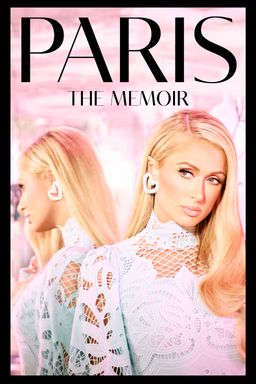
Paris cover

Paris

by Paris Hilton

Paris Hilton''s memoir is a candid and captivating exploration of her life beyond the limelight. From defining moments of resilience to her fight against the troubled-teen industry, discover Paris''s transformative journey as she reclaims her narrative, finds love, and becomes a powerful advocate for change.

Becoming Paris: Turning Pain into Power and Persona

What if the world’s most photographed person was also one of its most misunderstood? In Paris: The Memoir, Paris Hilton reclaims the story others have told about her for decades. Long dismissed as the superficial 'party girl heiress,' Hilton reveals a layered life shaped by trauma, survival, and relentless reinvention. She argues that you can turn pain into power when you control your own narrative—and that her glittering, chaotic celebrity persona was not an accident but an armor forged in the fires of abuse, family pressure, and public humiliation.

Hilton contends that behind the baby voice and sparkly dresses was always an intelligent, ambitious woman navigating a world that saw her as an object. Her memoir isn’t just about fame; it’s about reclaiming agency from both personal trauma and a culture that thrived on shaming women. She invites readers to journey through her ADHD-driven whirlwind of creativity, the hidden nightmares of teenage 'emotional growth' schools, and her transformation into an advocate and entrepreneur who weaponized celebrity into purpose.

The Glitter and the Darkness

Hilton’s story opens not with fame but with a diagnosis: ADHD, that she describes as 'a Ferrari with bicycle brakes.' Wildly creative and easily distracted, she frames ADHD not as a flaw but as her original source of inspiration. Yet her impulsivity and restless energy as a teenager fueled her conflicts with parents who prized perfection and control. In the 1990s, her rebellion—sneaking into clubs, dancing all night—was read as privilege run amok. What no one saw was that this behavior stemmed from trauma and an unending need to feel alive in a world that called her 'broken.'

At sixteen, her parents’ desperation to 'fix' her led them to enroll Paris in a series of abusive 'emotional growth' institutions, culminating in the notorious Provo Canyon School. There, she was strip-searched, beaten, and locked in solitary confinement. She describes those eleven months as the foundation for everything that came later: her insomnia, her detachment, even her obsession with control. The cruelty she endured taught her that silence felt safer than truth. Her famous blank stare on red carpets? A survival mechanism.

Reinvention and the Birth of a Brand

When she steps into adulthood, Hilton consciously builds a persona—a glamorous, carefree “Barbie” shield—to replace her powerless teenage self. She became what media wanted: the dumb blonde. In reality, it was a calculated marketing strategy. Long before anyone coined the term 'influencer,' Hilton realized that being seen was currency. Every paparazzi flash was a transaction. Every headline was free advertising for the growing empire she envisioned—fragrances, clubs, DJ gigs, and later global media ventures. Like Madonna before her, she mastered the art of self-invention, though Hilton adds: hers was also self-protection.

Her transformation led to The Simple Life, the reality show that made her a global icon. With co-star Nicole Richie, she played the 'spoiled heiress' stereotype to comic perfection. Yet beneath the camp lay Hilton’s subversive understanding: she was parodying the way the world mistook status for substance. She turned mockery into marketing—an act of cultural jujitsu that redefined celebrity for the 21st century.

Fame, Shame, and Reclamation

Then came the fall: the notorious sex tape, leaked without her consent when she was nineteen. Hilton details the devastation—how the violation destroyed her sense of safety and left her family humiliated. The public’s moral outrage was directed not at the perpetrator but at her. In a world that pretended to empower women while profiting from their pain, Hilton became tabloid punching bag #1. She writes with raw clarity about the hypocrisy of a culture that demanded she be sexy and punished her for being sexual. This scandal shaped her empathy for other shamed young women—from Britney Spears to Monica Lewinsky—whose private pain was public spectacle.

Years later, Hilton’s transformation into a DJ, business mogul, and activist closes the circle. Her global success wasn’t luck—it was survival alchemy. She learned how to transform what once controlled her into something she could control. The woman once mocked as vapid became one of the most disciplined entrepreneurs in entertainment. She multiplied her trauma into advocacy, spearheading reform for the 'troubled teen industry' that scarred her. By telling her story, she gives others permission to do the same.

Why Paris Hilton’s Story Matters

Hilton’s memoir is not a tabloid tell-all but a manifesto for reclaiming one’s voice. It asks readers: What parts of yourself did you hide to survive? How can truth-telling heal the versions of you still stuck in silence? Her journey reveals how shame and celebrity are twin addictions—both feed on attention. But when you own your narrative, the same light that once exposed you can set you free. That’s her ultimate argument: reinvention without self-acceptance is just another mask. The real power comes when your story stops being a secret. “The people who hurt you don’t get the last word,” she writes. “You get to tell the story of you.”


ADHD as Superpower and Struggle

Hilton’s memoir begins with her mind: fast-paced, chaotic, shimmering with ideas and distractions. Diagnosed later in life, she retrospectively frames ADHD as both her curse and her genius. The condition that made her 'lose her phone every five minutes' also powered her creativity and relentless curiosity. Dr. Edward Hallowell’s analogy—a Ferrari with bicycle brakes—anchors her self-understanding: immense horsepower without sufficient control.

Creative Chaos as Identity

Hilton’s impulsivity fuels her career and art. Her nonstop party-hopping as a teenager reflected a biochemical need for stimulation, not just rebellion. “Fun is my jet fuel,” she writes. This constant sensory seeking became an instinct for trends—her ability to anticipate fashion and technology shifts before they hit mainstream. (Neuroscientists note ADHD brains can excel at divergent thinking—seeing connections others miss—something Hilton personifies in her entrepreneurship.)

The Emotional Backlash

Yet ADHD also left her vulnerable. Misunderstood as lazy or careless, Hilton internalized shame early. She recalls being punished for behaviors her brain couldn’t regulate—fidgeting, zoning out, daydreaming. Adults dismissed her intelligence, a common experience for girls with ADHD, which research shows is often masked by charm or compliance. The scolding built emotional armor she’d wear into adulthood: perform perfection, hide the chaos.

Harnessing the Hyperfocus

By reframing ADHD as a creative asset, Hilton aligns herself with other “disruptors” she met in the documentary The Disruptors—will.i.am., Simone Biles, Justin Timberlake—showing how impulsivity and imagination can coexist. Her husband Carter Reum calls her ideas unpredictable but visionary; he grounds her without dimming her fire. Together they harness her hyperfocus: when she’s locked into a project, she becomes indestructible.

Hilton’s story reframes ADHD not as a disorder but a disposition—the raw material of innovation. For readers who feel 'too much' or 'too scattered,' her message is revolutionary: “You have to love your brain as it is.” Yet she also warns that ignoring its darker side—boredom, impulsive decisions, toxic adrenaline habits—can destroy you. Balance, love, and self-compassion, she insists, are the ultimate medications.


The Hilton Legacy: Privilege and Pressure

Born into the billion-dollar Hilton dynasty, Paris grew up flanked by both privilege and expectation. Her great-grandfather Conrad built the global hotel chain; her parents Rick and Kathy lived amid Manhattan parties and Hollywood decorum. “We were American royalty,” she recalls—but beneath that polish lay strict emotional codes: Don’t complain. Don’t embarrass the family. Appearance was currency.

Glamour as a Family Business

From childhood, Hilton was groomed for social perfection. Etiquette classes taught her which fork to use and how to pose for cameras. Her mother modeled poise after Nancy Reagan–level refinement: sophistication as survival strategy. Yet Kathy Hilton’s social savvy—her instinct to smooth over tension—became inherited poison. Paris writes that her parents were “the king and queen of sweeping things under the rug,” a habit she mirrored for years.

The Curse of 'Good Girl Energy'

Through detailed childhood scenes—pet-filled playhouses, parties at Brooklawn, and cameos with Andy Warhol—Hilton paints the paradox of wealth: material abundance and emotional scarcity. To be a Hilton meant never betraying vulnerability. When her mother discovered her diary and read it aloud for laughs, it cemented Hilton’s belief that emotions were unsafe. This early betrayal foreshadowed the larger one that came when her parents sent her away for 'help.'

Privilege with a Purpose

Hilton’s gratitude for her opportunities coexists with anger at their cost. She acknowledges her access opened doors, but the emotional toll was crushing. As an adult, she reclaims the Hilton legacy as permission—not to conform but to pioneer. Her entrepreneurism mirrors her ancestors’—from Conrad’s empire-building to Papa Barron’s innovations in Vegas—but she reinvents it for the digital age. “I’m a Hilton and I work,” she writes proudly. The old money rules—be quiet, be graceful—gave way to a new creed: be loud, be visionary, be free.


The Hidden Hell of the Troubled-Teen Industry

The memoir’s most harrowing chapters recount Hilton’s teenage imprisonment in 'emotional growth' programs—facilities marketed as therapeutic boarding schools that functioned as cultlike prisons. Taken from her bed in the night by hired 'transporters,' she was handcuffed and flown to CEDU and later Provo Canyon School. There, she endured strip searches, solitary confinement, and physical beatings. Her body became their battleground—and her silence, their victory.

Breaking Down Provo’s Mechanics

Hilton meticulously dissects how CEDU’s founder, Mel Wasserman, repackaged Scientology and Synanon brainwashing tactics as therapy. Students endured 'Raps'—ritualized verbal assaults masquerading as counseling—and invasive 'Propheets' that forced participants into humiliation until they broke down in tears. Girls were watched showering, touched under the guise of 'searches,' and forced to confess 'sins' including imagined crimes. It was psychological torture institutionalized as treatment.

The Silence that Sustains Abuse

Perhaps more haunting than the violence was the complicity. Parents were fed glossy brochures and professional reassurances that 'tough love saves lives.' Hilton’s calls home were monitored; any plea was framed as manipulation. When she screamed for help, her mother was told, “Don’t believe anything she says.” The betrayal scarred her most deeply. “They thought they were saving their daughter. They were sending her into hell.”

Survival, Memory, and Mission

Hilton’s escape attempts—running barefoot through mountains, bribing guards with charm—read like scenes from a dystopian film. Her final months at Provo erased time completely; eleven months felt like years. But survival became her rebellion. Decades later, through This Is Paris and her activism, she exposes these institutions, helping pass federal laws protecting children from similar abuse. Her advocacy redefines fame’s purpose: the spotlight that once burned her now illuminates others’ pain. “Advocacy saved my life,” she concludes. “Telling my truth saved someone else’s.”


From Tabloid Punchline to Business Empire

Hilton’s 2000s are a case study in reclaiming agency through commerce. Branded a 'bimbo,' she weaponized the caricature. “If every picture is worth something, why not make sure I get paid?” she muses. Leveraging media ridicule, she invented modern personal branding decades before influencers like the Kardashians systematized it. Every paparazzi flash became billboard space; every scandal, a marketing campaign.

Inventing the Influencer Economy

Hilton turned her socialite life into a revenue model—getting paid to attend parties, endorsing products, and later building over 19 lifestyle brands. She calls herself the “original influencer” without irony; the metrics prove her right. Her fragrance line alone brought in billions. Like Andy Warhol with soup cans, Hilton transformed mass consumption into art. (Cultural theorists now credit her as a precursor to Instagram’s monetized authenticity.)

The Art of the Persona

For Hilton, image wasn’t vanity—it was authorship. The glossy version of herself—baby voice, sparkle, pink—was a performance piece called 'Paris Hilton.' In The Simple Life, she made subversion look airbrushed. By fully inhabiting society’s stereotype of the 'stupid rich girl,' she exposed its sexism while profiting from it. “They laughed at me,” she writes, “but they paid attention—and attention is currency.”

Rewriting the Economics of Fame

What separates Hilton from other reality-era celebrities is her business acumen. She negotiated deals as her own manager, sometimes through a made-up one to command respect, and pioneered cross-platform presence long before social media analytics. The result: enduring wealth and control amid fleeting celebrity cycles. In a culture that monetized her body, she monetized the gaze. Her mastery of exposure turned vulnerability into value—and shame into strategy.


Trauma, Shame, and Female Public Life

Hilton’s re-examination of her sex-tape trauma serves as the book’s emotional center and cultural indictment. She was nineteen when a much older boyfriend released their private video to the world. What followed was not empathy but vilification. Ostensibly liberal media ridiculed her; late-night comics and even pop songs mocked her cruelty. “The full weight of shame came down not on the man who profited from it—but on me,” she writes.

The Culture of Humiliation

Hilton connects her ordeal to a broader pattern of misogynistic scapegoating—from Britney Spears’ breakdown to Monica Lewinsky’s infamy. This early-2000s tabloid cruelty is now recognized as the crucible that birthed modern media voyeurism. 'Before social media,' she notes, 'privacy was destroyed by paparazzi.' Her pain became clickbait before clicks existed. (Similar critiques appear in Jessica Simpson’s and Britney’s memoirs, which echo Hilton’s despair at being punished for desire.)

Owning the Image, Rewriting the Frame

Hilton fought back not through confession but control. She refused to give interviews until she reclaimed the narrative with humor—appearing on Saturday Night Live to turn invasive curiosity into punchline. Her later activism for 'revenge porn' victims reframed the conversation: consent is not retroactive, and violation is not fame. The woman once defined by humiliation became a voice for those silenced by it.

Healing in an Age of #MeToo

Writing in the wake of cultural reckonings like #MeToo, Hilton contextualizes her experience as both personal trauma and historic symptom. Forgiveness, she learns, isn’t absolution for others but liberation for herself. Her epiphany—“the people who hurt you don’t get the last word”—transcends celebrity. It’s the moment Paris Hilton stops being the subject of gossip and becomes its survivor-scholar, teaching what public shame reveals about who society chooses to destroy.


Reinvention Through Activism and Love

The final chapters of Hilton’s memoir move from spectacle to sincerity. The woman who once lived in cameras’ glare finds meaning in their absence—specifically in advocacy, technology, and marriage. She channels her entrepreneurial energy into 11:11 Media, a company linking content and cause. 'It doesn’t make money,' she jokes of her foundation, 'but it matters most.' Advocacy becomes her new adrenaline: proof that fun and purpose can coexist.

Love as Reclamation

Meeting venture capitalist Carter Reum grounds her story. After years of transactional love and abuse, she experiences partnership based on curiosity and care. Reum researches ADHD to understand her; he whispers 'Babe' to anchor her mid-meeting tangents. Their relationship model—two self-directed builders—contrasts sharply with her earlier dependency on men who exploited her. Marriage becomes a metaphor for internal integration: the businesswoman and the girl warrior merging into one.

Turning Fame Into a Force for Change

Through her documentary This Is Paris (2020) and public testimony before Congress, Hilton exposes the 'troubled teen industry' that abused her and thousands of others. Working alongside activists and lawmakers, she helps pass state and federal oversight bills. Her platform—once used to sell perfume—now amplifies survivor voices. She reframes 'influence' as civic leadership, proving celebrity can be policy’s ally.

Hilton closes with hope. Her IVF journey and motherhood dreams symbolize rebirth—the phoenix she names her son after. Through advocacy and love, she transmutes trauma into transcendence. The woman whose brand began as 'That’s hot' now burns with a different fire: compassion, clarity, and conviction. Her life becomes a Spirograph—the looping pattern she describes—where past pain and future promise intersect. Her message to readers: no matter who you are or what’s been done to you, the story is still yours to tell.

Dig Deeper

Get personalized prompts to apply these lessons to your life and deepen your understanding.

Go Deeper

Get the Full Experience

Download Insight Books for AI-powered reflections, quizzes, and more.