
Idea 1
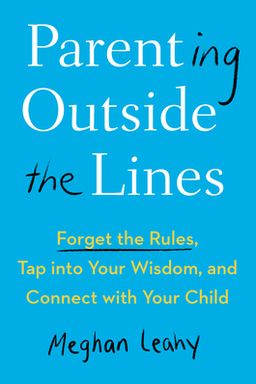
Parenting Outside the Lines: Rediscovering Trust, Connection, and Intuition
Have you ever felt like you’re failing as a parent—not because you don’t love your kids, but because no matter how many books you read or strategies you try, nothing really seems to work for your family? In Parenting Outside the Lines, Meghan Leahy—parent coach, columnist for the Washington Post, and mother of three—argues that the problem isn’t lack of information, but too much of it. The modern parenting culture, she contends, keeps us anxious, second-guessing ourselves, and disconnected from our children. What she offers instead is a compassionate rebellion against the 'rules' that suffocate our natural parenting instincts.
At its core, this book is an invitation to trade in panic and perfectionism for trust and connection. Leahy encourages you to stop seeking formulas and start listening—to your intuition, your child, and the emotionally rich, often messy relationship between you. Through candid stories of her own missteps and breakthroughs, she reminds readers that parenting is not a test to be aced but a practice to be lived.
Breaking Free from the Cultural Cage
Leahy begins by taking aim at the pressure cooker of American parenting. Parents today are bombarded with contradictory theories—from 'Tiger' to 'Free-Range,' 'Mindful,' and 'Positive' parenting. Each trend, while offering insights, also risks turning children into projects rather than people. You might find yourself switching from one strategy to another, hoping one will finally 'fix' your child. This frantic searching, Leahy explains, only fuels insecurity and burnout.
Instead of looking outward for the latest parenting strategy, she invites you to look inward. Every parent has what she calls a parenting 'heart'—an intuitive compass shaped by empathy, observation, and love. The trouble is, our modern culture trains us to distrust it. We fear making mistakes, so we cling to checklists and expert advice. Leahy’s mission is to help you reconnect with that inner wisdom.
Parenting as Connection, Not Control
Drawing deeply from Dr. Gordon Neufeld’s developmental and attachment theory, Leahy reframes the purpose of parenting. Behavior management and discipline aren’t ends in themselves—they’re tools to protect the relationship. A securely attached child feels safe, seen, and valued, and it’s within that connection that healthy development naturally unfolds. When parents shift their focus from controlling behavior to nurturing attachment, conflict and confusion start to ease.
In her coaching, Leahy learned that parents’ struggles often had less to do with the child’s misbehavior and more to do with the parent feeling disconnected, overwhelmed, or mistrustful of themselves. The solution isn’t another strategy—it’s slowing down enough to ask: “What is really happening here?” This pause, what she calls 'zooming out,' helps parents see patterns rather than reacting to each outburst. As she puts it, “The more we see, the less we scream.”
A Book for the Doubtful and the Weary
Leahy doesn’t shy away from the emotional reality of parenting: the exhaustion, guilt, and uncertainty that make us crave easy answers. But rather than promising fixes, she provides questions—each chapter concludes with reflective prompts designed to pull you inward. What do you really believe about control? How did your own upbringing shape your reactions? These questions are not self-indulgent; they’re the groundwork for wisdom.
Her approach blends humor with humility. Whether recounting the time she left a grocery cart full of food mid-aisle during a toddler meltdown or confessing her struggles with “drive-by parenting” (endless nagging from room to room), Leahy’s stories normalize imperfection. She shows that grace begins not when you get it right but when you start to see yourself clearly.
Themes of Trust, Humility, and Repair
As the book unfolds, Leahy explores recurring themes. One is humility—learning to lead without domination or submission, to be firm but flexible (“the boss without being bossy”). Another is repair—the practice of apologizing sincerely to your children when you’ve overreacted. Through the lens of 'rupture and repair' (from Dr. Dan Siegel), she argues that apologies model emotional maturity far better than constant correction.
She also critiques perfectionism in daily scenarios: sibling rivalries, food battles, tech addiction, and parental burnout. Each story points back to one truth: connection is the foundation of all effective parenting. Without it, rules are brittle; with it, even mistakes become opportunities for growth.
Why It Matters
In a culture obsessed with achievement and 'fixing' children, Parenting Outside the Lines offers something radical: permission to be human. It isn’t about abandoning structure or ignoring science; it’s about remembering that nurturing a child is relational, not transactional. Leahy’s message resonates with every parent who’s ever doubted themselves—reminding you that the path to good parenting isn’t paved with perfect answers, but with connection, curiosity, and courage.