
Idea 1
Becoming Real in Public
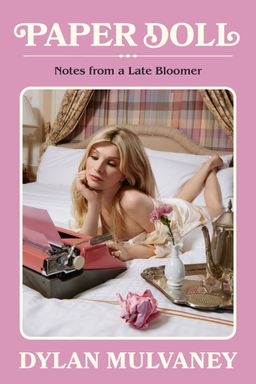
Have you ever felt yourself changing faster than your world can keep up—and then realized the world is watching? In Paper Doll: Notes from a Late Bloomer, Dylan Mulvaney argues that becoming yourself is both a private rite and a public act when your life unfolds on the internet. She contends that late-blooming womanhood—claimed out loud, day by day—can be joyful, comic, raw, and deeply costly, especially when identity meets commerce and culture war. To live it, you must understand how to build tenderness into visibility, set boundaries with brands and critics, and stitch together meaning in the blast radius of fame.
In this guide, you’ll see how Mulvaney turns "Days of Girlhood" into a daily ritual, navigates the firestorm of "Beergate" after a beer sponsorship, and rebuilds her mental health amid paparazzi, bomb threats, and dissociation. You’ll then learn how she repairs faith and family, pursues gender-affirming care with agency (from laser to facial feminization surgery), and reframes healing through ayahuasca in Peru. Finally, you’ll explore her "Celebrity 2.0" blueprint—trading the polished persona for present, truth-forward leadership—along with her awkward, funny, and brave return to desire and dating. Along the way, we’ll examine the mechanics of virality, the economics of influence, and the spiritual muscles that keep a late bloomer standing.
A memoir told in two timelines
Mulvaney splits the book between her first 365 days of transition (journal entries, 2022–2023) and the post-"Beergate" fallout (essays spanning before/after). That structure lets you feel both the innocent thrill of firsts—first tampon purchase, first beard video, first red carpet—and the weight of consequences when identity collides with politics and profit. The tonal range is intentional: campy Day 30 carpet glam with Kathy Hilton sits alongside security arrangements, paparazzi outside her hedge, and a dissociative shutdown in a Four Seasons hallway.
The core claim: sweetness is strength
Even as she learns harder edges (lawyers, contracts, safety plans), Mulvaney’s contention is disarmingly old-fashioned: "the fight to remain sweetly earnest as we age just might be the greatest fight of all." She flips apologies to gratitude in her comments, thanks women for support when early videos trigger TERF backlash, and protects her right to be goofy (interviewing bison, dancing at The Box) while addressing sobering realities (contracts that silence, bomb threats after a 15-second ad). The memoir suggests you can be both Barbie-pink and deeply principled—if you know when to say no and when to ask for help. (Compare Brené Brown on vulnerability as courage; see also Elliot Page’s Pageboy for the cost of visibility.)
Why these ideas matter now
We live in a moment when identity is clickbait and algorithms turn lives into products. Mulvaney’s story is a field manual for anyone building in public—queer or not. She shows how to weather internet pile-ons, re-center your nervous system, and transmute scandal into service (raising nearly $200,000 for The Trevor Project at her Day 365 "live"). She also models boundary-setting with family: breaking with her mother after a painful dispute over trans youth, then finding a language to repair. When she can’t find answers in press cycles, she looks to ritual—silent days in the woods, AA wisdom from her dad, a Unitarian service with a bowl of stones, a psychedelic ceremony in Cusco (with clear caveats).
Key Idea
“TikTok fattened me up. Big corporate bought me. And the media devoured me.” Mulvaney’s line isn’t nihilism—it’s instruction. Know the food chain you’re entering, and build your own spine: a therapist/coach (Mory), best friend (Lily), elders (Alok), and clear values.
What you’ll take away
Expect practical micro-moves—like turning "sorry" into "thank you," swapping doomscrolling for presence with a friend at the Grove, or choosing security over optics—as well as big frameworks: "Celebrity 1.0 vs 2.0;" a somatic language for dissociation; and a nuanced, safety-first approach to disclosure and desire. You’ll see how to hold both/and: a tie-dye muumuu and a White House interview; a Barbie pouch and medical privacy; a bad headline and a standing ovation at the Rainbow Room while singing Sondheim as your dad rushes the stage to hug you.
If you’ve ever tried to become more yourself while everyone else had an opinion, Paper Doll gives you a human-scale playbook: laugh where you can, bind up what hurts, choose your partnerships, and keep your heart—on and off camera—soft and sturdy.