
Idea 1
Palestine as a Continuous Historical and Cultural Entity
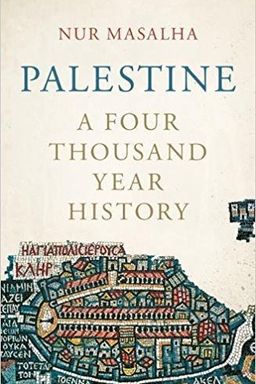
How can you trace an idea, a name, and a place across three millennia of shifting empires? In Palestine: A Four Thousand Year History, Nur Masalha argues that “Palestine” is not a modern invention or a colonial label but a continuous geographic and cultural reality. He takes you from Bronze Age inscriptions to Ottoman bureaucratic records, showing how the name, the people, and the territory persist through radical political transformations. The book’s core claim is that you cannot erase a region’s history simply by renaming it; the evidence—from epigraphy, archaeology, administration, and culture—reveals uninterrupted continuity.
Masalha’s central focus is the evolution of “Palestine” as both name and lived space: its early appearance as “Peleset” or “Philistia,” its classical and Roman formalization as “Palaestina,” its Islamic-era adaptation as “Filastin,” and its endurance into Ottoman and modern times. Alongside the toponymic thread runs another: the challenge to Eurocentric narratives, especially those derived from biblical literalism and colonial historiography, which treat Palestine as a void awaiting invention or return.
Reclaiming Historical Time
Masalha asks you to shift historical focus away from scriptural chronology and toward the tangible record—inscriptions, coins, mosaics, and administrative documents. He reminds you that Egyptian texts mention “Peleset” as early as the 13th century BCE, that Assyrian annals speak of “Pilistu,” and that Herodotus in the 5th century BCE already uses “Palaistinê” to describe the southern Levant. This long temporal arc demonstrates that “Palestine” is not a retrospective invention, but a continuous spatial imagination that surviving empires kept reusing.
The Roman transformation of Judaea into Syria Palaestina after Hadrian’s reorganization in 135 CE, and the subsequent Byzantine subdivision into three Palestines, gave bureaucratic shape to an already established toponym. When Arabic became the governing language, Filastin inherited those boundaries, showing how administrative function and linguistic translation work to preserve place memory rather than abolish it.
Archaeology Against Biblical Literalism
Where previous historians used scripture as archive, Masalha insists on treating archaeology as archive. Excavations at Ascalon, Gaza, Ekron and elsewhere reveal a cosmopolitan, urban civilization in Iron Age Philistia—contradicting depictions of the Philistines as barbarian invaders. The material record shows maritime networks, coinage, and urban planning that form the economic foundation of later Palestine. Similarly, the archaeological absence of evidence for the Exodus or the Davidic-Solomonic “United Kingdom” exposes how political myth often replaces empirical history.
Continuity Through Empires
Across Greek, Roman, Byzantine, and Islamic periods, governance keeps the outlines of Palestine practically intact. Caesarea, Gaza, and Jerusalem persist as administrative or sacred capitals, with Byzantium’s “Three-in-One” provinces (Palaestina Prima, Secunda, Salutaris) echoed later in the Islamic junds (Filastin, al-Urdun). The Arab Christian Ghassanids, often neglected in mainstream accounts, become crucial intermediaries: Arab federate rulers who maintain frontier defense and patronize Arabic culture long before Islam. Their existence dismantles the false start date of Arab history as 622 CE.
From Filastin to Falastin: Language as Heritage
By following the toponym through Arabic geographies and Ottoman records—Jund Filastin, Ard Filastin, Ahl Filastin—you see how a place name becomes a marker of lived legality and identity. Jurists like al-Ramli and historians like Mujir al-Din keep “Filastin” alive in their writings, while 19th- and early 20th-century teachers and journalists revive it as “Falastin” in the vernacular. The transition from formal to colloquial naming mirrors a shift from imperial subjects to popular citizens; it’s how geography turns into collective belonging.
Empire, Erasure, and Resistance
Masalha frames the modern Zionist and British colonial projects as the latest waves in a long contest over naming and memory. The 19th-century mapping of Palestine by the Palestine Exploration Fund, and later the institutional renaming campaigns after 1948, attempt to overwrite Arabic geography with biblical Hebrew equivalents. Yet this “toponymic colonization,” he argues, exposes its own anxiety: if erasure requires institutional effort, it means the past remains stubbornly present. The persistence of older Arabic names in refugee memory and oral tradition signals continuity against power’s amnesia.
Essential argument
Palestine is not a modern fabrication but a palimpsest of civilizations whose name, geography and institutions have never vanished—only translated through languages and empires. Understanding this continuity reclaims historical agency for Palestinians and challenges the politics of erasure that have sought to dissolve their antiquity into myth.