
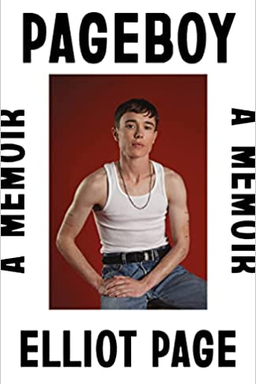
Pageboy cover

Pageboy

by Elliot Page

Pageboy immerses readers in Elliot Page''s candid journey of self-discovery and transformation. From navigating the pressures of Hollywood to embracing his gender identity, this memoir provides an inspiring narrative of resilience, courage, and the pursuit of authenticity against all odds.

Becoming Yourself in a World That Erases You

What does it mean to truly live in your own body? When you’ve spent years performing for others—acting, hiding, and obeying social scripts—how do you finally reclaim yourself? In Pageboy, Elliot Page invites you into that long and painful journey of self-realization, from childhood dysphoria to Hollywood stardom and eventual trans liberation. His memoir isn’t only about identity—it’s about visibility, survival, truth, and the universal challenge of becoming who you are when everything around you says you shouldn’t.

Page contends that gender, shame, and authenticity have been in constant conversation throughout his life. His story explores how upbringing, fame, and societal expectations fractured his sense of self, forcing him to exist in a body and career built from other people’s projections. Yet within that disorientation, Page finds the power of self-creation—writing as an act of rebellion and healing, transness as a portal to presence.

The Personal as Political

The book begins with Page’s acknowledgment that writing felt impossible for most of his life. His brain had been busy concealing discomfort, repressing identity, and chasing external validation. But with health care and trans-affirming support, he could finally sit still and listen to himself. That clarity transformed the act of writing into activism—his flesh and words resisting the efforts to silence queer and trans voices. Page makes clear that his journey isn’t universal; there are infinite ways to be queer and trans. His hope is that his ‘speck’ of truth contributes to dispelling misinformation and expanding empathy for all gendered lives.

Uneasy Fame

After his breakout in Juno, Page was catapulted into a celebrity machine that commodified youth and femininity. Publicists and executives told him what to wear, how to pose, and who to be. That pressure became physical—panic attacks, collapsing, depression—and emotional, as fame demanded he play a version of himself that negated who he really was. A cruel irony: he was being celebrated for repudiating himself. Page exposes Hollywood’s hypocrisy—its insistence on masking queerness while rewarding those who perform it ‘appropriately.’ This cultural gaslighting mirrors how many people are urged to hide their truth in exchange for safety or success.

The Trauma of Growing Up Different

The pain started long before the paparazzi. As a child in Nova Scotia, Page felt he wasn’t a girl, trying to pee standing up and asking his mother, “Can I be a boy?” Her response—‘No, you’re a girl, but you can do anything a boy can do’—set up years of contradictory messages: you can be yourself, but not really. Shame fermented in schools that bullied and misgendered him, in families that misunderstood queerness, and in early film roles that forced femininity onto his body. These experiences created an inner division so intense that self-harm seemed like the only way to release the disgust. Through storytelling, he translates that internal collapse into language, giving form to what many trans people feel but cannot express.

Liberation as Untangling

Page’s narrative is nonlinear because queerness is nonlinear—two steps forward, one step back. Each chapter mirrors the slow process of untangling the knots of shame, family, and performance. Coming out as queer in 2014 gave him partial relief, but the gender dysphoria remained. Only through solitude, therapy, and trans community could he finally see the truth staring back from the mirror. When he transitions, including undergoing top surgery in 2020, it is not portrayed as a magic cure but as the moment his reflection—and his reality—finally align. The act of saying “I am here” becomes political and spiritual. To exist sincerely is the rebellion; to live fully in one’s body is the revolution.

Why This Story Matters

Beyond its personal dimension, Pageboy illuminates systemic issues—violence against trans people, exploitation within media, and the suffocating confinement of gender norms. Page uses memory to expose these structures while reminding readers that everyone, in some way, experiences the tension between appearance and truth. Whether you’re queer or not, his story pushes you to question: where do I hide parts of myself to fit into the world? What would it take to show up whole? Page writes not to shock but to connect, showing that liberation lies in self-revelation. As Leslie Feinberg wrote decades before, “This movement will give you more room to breathe—to be yourself.” Page’s memoir offers that breath—a room full of air for anyone who’s ever held theirs too long.


Childhood and the Origins of Shame

Page’s early life in Nova Scotia reveals how gender expectations are embedded into our bones. From preschool onward, he sensed he wasn’t a girl, showing the innate nature of gender identity. His private ‘fort worlds’ and imaginary games—places where he could be Jason, a boy who wrote love letters from dangerous adventures—served as sanctuaries before he knew the word trans. Yet outside those walls, culture intruded. Schools, bathrooms, and playground hierarchies punished difference, embedding shame as a bodily reflex.

Family, Religion, and Notions of Protection

His mother, a loving public school teacher, often wished she could protect her child from society’s cruelty by guiding him toward conformity. “I just want what’s best for you,” she said, meaning safety in the gender binary. Like many parents shaped by religious and social norms, her “protection” unintentionally extended the harm. Page portrays her not as villain but as participant in a system that tells women they must reproduce its restrictive patterns to be good mothers. Over time, their relationship transforms—his mother’s later allyship shows how love can unlearn prejudice.

Early Encounters with Bullying and Desire

In recounting teenage crushes and humiliations—like being called a “dyke” after revealing he might be bisexual—Page shows how shame is socially scripted. An English teacher punishes him for being shoved into the boys’ bathroom, revealing how authority sides with cruelty. Simultaneously, confusion about desire emerges: longing for girls like Fiona or Paula but fearing the laughter that followed queer jokes in sitcoms and hallways. As he reads Kurt Vonnegut’s Mother Night, he internalizes the lesson: “We are what we pretend to be, so we must be careful about what we pretend to be.” Pretending becomes survival, but its cost is enormous.

Performance as Training for Survival

Acting, which begins at age ten, paradoxically saves and wounds him. Playing female roles in Pit Pony and other films required wigs and dresses that fueled dysphoria. Yet acting also allowed escape into imagination—the same private play that soothed him as a child. As in trauma theory (see Judith Herman’s Trauma and Recovery), dissociation becomes both coping and art. Page learns to perform convincingly while hollowing himself out. The blurred boundary between authentic emotion and impersonation becomes the template for future fame: how to emote convincingly while dying inside.

Through these memories, Page exposes the machinery that manufactures shame. It’s not inherent—it’s learned, taught by those who fear deviation. His later transformation depends on unlearning this inheritance, proving that identity healing requires confronting the stories that built it.


Fame, Gender, and Hollywood's Closet

Becoming a star in Hollywood didn’t liberate Page—it deepened the prison. After Juno, the media frenzy turned his queer body into a symbol and spectacle. Articles speculated about his sexuality, fans demanded clarity, and studio stylists demanded dresses. The system insisted he embody femininity so audiences wouldn’t suspect deviation. This forced masquerade pushed him into anxiety attacks, physical collapse, and self-loathing. Fame rewarded the suppression of truth.

The Business of Masking

Hollywood’s “machine,” as Page calls it, operates on fear of non-conformity. Publicists whisked him to luxury stores, forbidding suits and insisting on heels. Directors urged him to “play the part.” The irony is brutal: while male co-stars wore sneakers, he endured high heels disguised as empowerment. Controlled femininity sold movies, but erased humanity. Such policing echoes Susan Faludi’s observation in Backlash—that media sells empowerment while demanding submission. Even being openly queer was considered career suicide. Page’s body became collateral to protect Hollywood’s false normalcy.

Pressures and Panic

Living two realities—a private queer self and public “straight star”—caused physical collapse. Page describes nails in his stomach, constant panic attacks, and an overwhelming guilt for feeling miserable while being told his “dreams were coming true.” He reminds readers that success cannot substitute truth. Without authenticity, achievement becomes poison. When tabloids ran “The Ellen Page Sexuality Sweepstakes,” commodifying queer speculation, the humiliation confirmed how media turns curiosity into cruelty. Paula, his hidden girlfriend, suffered collateral damage.

The Cost of Performing Femininity

Page’s Hollywood years mirror countless queer people’s compromises. The persistent instruction “play the game” destroyed any notion of autonomy. Even as he earned nominations and acclaim, he felt invisible. Mirrors and photo shoots became torture devices. Every fitting symbolized erasure. As feminist writer Roxane Gay notes about body and identity, “Visibility without agency is just exposure.” Page’s exposure was suffocating; his visibility served everyone but himself.

By unmasking how fame enforces conformity under glamour, Page turns celebrity into a metaphor for all social performance. Whether in workplaces or families, many wear the same metaphorical heels—dressed up for approval, hiding what hurts underneath.


Love, Loss, and Learning Intimacy

Love in Page’s life evolves from secrecy to self-recognition. His relationships with women—Paula, Olivia, Kate Mara, and others—reflect the intersections between shame, desire, and healing. He writes candidly about intimacy both joyous and painful, showing how closeted existence distorts love’s natural flow. Each connection teaches him something about self-worth and boundaries, often through heartbreak.

Hidden Love and Surveillance

Paula, his first major partner, became a symbol of freedom and danger. They kissed in Halifax at the edge of discovery, but fame turned affection into risk. Paparazzi rumors endangered Paula’s privacy, forcing their relationship underground. Page notes the tragic irony: being queer and famous means erasure twice over—once by Hollywood, once by fear of violence. Their breakup left him collapsed but clinging to the memory of queer joy.

Experimenting with Safety and Desire

After coming out as gay, Page allowed himself to date openly, experiencing both liberation and confusion. His encounters—from one-night stands to romances with artists and actors—reveal how freedom doesn’t immediately erase the old scripts of shame. Learning consent and communication became political acts, mirroring broader queer ethics (as explored by Audre Lorde and bell hooks). Sex, once fraught, turns into discovery rather than punishment.

Boundaries and Codependence

Relationships taught Page about the danger of disappearance—how love can become refuge from confronting oneself. His bond with Kate Mara, rich with affection but constrained by circumstance, showed that connection without alignment breeds suffering. He quotes therapist insights: “love doesn’t constitute a relationship.” The learning: affection must coexist with autonomy. Letting go becomes an act of love rather than loss.

Across his romantic history, Page transforms intimacy into education. Love exposes what you hide; heartbreak reveals where healing starts. For him, partnership becomes less about belonging and more about returning to self—a shift that parallels his transition from performing to being.


Trauma, Silence, and Healing Through Storytelling

Throughout Pageboy, trauma functions not as spectacle but as thread—the invisible narrative stitching each memory together. From childhood neglect to sexual assault by industry figures, Page recounts experiences with startling honesty, refusing euphemism. Yet his goal isn’t retribution—it’s reclamation. By naming the harm, he reclaims agency over a history that others defined for him.

Violence and Exploitation

Page unveils disturbing patterns: mentors who groomed him, colleagues who assaulted him, and a culture that normalized predatory behavior under artistic pretenses. These revelations connect Hollywood abuse to broader patriarchal systems—the entitlement of men protected by prestige. Like Chanel Miller in Know My Name, Page writes vulnerability into power, transforming silence into evidence.

The Role of Creativity

Art becomes both witness and medicine. From acting in Hard Candy to writing songs in recovery, Page channels trauma into creative energy. He and his lifelong friend Mark write music post-surgery, echoing his first childhood imaginative games—closure through creation. Writing, for Page, replaces self-harm; language becomes the knife turned into pen. As trauma theorists suggest, narrativizing pain restores coherence where fragmentation once ruled.

Healing as Community

Recovery isn’t solitary. Page’s chosen family—friends like Julia, Bea, Mark, and Marin—model queer kinship as compassion without condition. These relationships counteract toxic family structures. Therapy, activism, and solitude in his Nova Scotia cabin all serve as layers of repair. Healing, he implies, is nonlinear and collective, not private redemption but participation in a community truth-telling.

Through trauma’s retelling, Page shows that storytelling is survival. When society erases queer pain, recording it reestablishes humanity. In speaking the unspeakable, he bridges personal grief with social witness—the memoir itself becomes the medicine.


Transformation and Trans Joy

The final chapters of Pageboy shift from pain to presence. Page’s transition—particularly his top surgery—becomes not a spectacle of change but a quiet homecoming. He situates transness as both deeply personal and universally instructive: a lesson in aligning inner truth with outer reality.

The Body as Portal

Living in isolation during the pandemic, Page begins seeing himself differently in the mirror. Masked walks through New York allow strangers to call him “sir,” offering fleeting alignment. “My reflection never gives me a rush,” he writes—until suddenly, it does. This moment crystallizes embodiment: joy not from external validation but from recognition. Transition becomes the act of finally meeting one’s own gaze.

Surgery and Rebirth

His operation in Toronto is described with serene clarity. No melodrama—just the detail of drains, bruises, and recovery. When the compression vest comes off, “there are no words.” That silence itself signifies peace. Page contrasts this gratitude with systemic injustice: many trans people lack such access, and liberation shouldn’t depend on privilege. His acknowledgment transforms personal joy into political empathy—a recognition that collective freedom requires collective care.

Living Authentically

Post-transition, Page describes a simplicity previously unimaginable: wearing button-downs, feeling the sun on his chest, injecting testosterone weekly. Each mundane act becomes sacred. In his words, “Let me just exist with you, happier than ever.” Yet he doesn’t romanticize trans life; he notes continued microaggressions, tokenization, and disbelief even among friends. Still, his existence stands as affirmation. Like memoirist Jan Morris once wrote, the journey is not toward perfection but presence.

Through trans joy, Page completes his arc—from suppression to embodiment. His story ends not with triumph over pain but with the ordinary miracle of existing freely. The revolution, he insists, is simply living and being believed.

Dig Deeper

Get personalized prompts to apply these lessons to your life and deepen your understanding.

Go Deeper

Get the Full Experience

Download Insight Books for AI-powered reflections, quizzes, and more.