
Idea 1
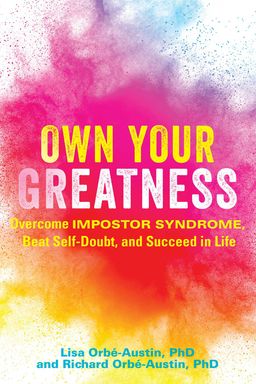
Owning Your Greatness: Overcoming Impostor Syndrome
Have you ever looked at your achievements and still felt like a fraud waiting to be found out? If so, you’re not alone. In Own Your Greatness, psychologists Lisa and Richard Orbé-Austin argue that impostor syndrome—the belief that your success is undeserved despite evidence to the contrary—silently sabotages many talented people. Their central message is both compassionate and empowering: you can dismantle the cycle of self-doubt and finally internalize your accomplishments through conscious reflection, mindset shifts, and structured action.
The Orbé-Austins contend that impostor syndrome isn’t a fixed part of your personality but rather a learned response shaped by family dynamics, cultural norms, and professional environments. The problem, they explain, is not your capability but your inability to recognize it. This book offers a structured and research-backed blueprint for breaking out of that mental trap so you can, as the title promises, own your greatness.
Why Impostor Syndrome Matters
When Lisa Orbé-Austin recounts being paralyzed in an underpaid job despite multiple Ivy League degrees, she reveals impostor syndrome’s real power: it can make bright, driven people stay small. Fear of being exposed often keeps individuals overworking, self-sabotaging, or avoiding opportunities entirely. The authors cite research showing that 70 percent of people experience impostor feelings at some point, meaning this isn’t about weakness—it’s about how success is often accompanied by insecurity in competitive, perfectionist cultures.
The cost is enormous. Impostor syndrome can lead to burnout, creative paralysis, damaged relationships, and underpaid careers. Yet, it’s not a disorder, the authors emphasize—it’s a cluster of self-defeating thoughts and behaviors that can be rewired. Their approach draws from psychology and coaching to guide readers through a systematic strategy to reverse impostor thinking.
The 3 C’s Strategy: A Practical Roadmap
At the heart of the book lies the 3 C’s Strategy—Clarify, Choose, and Create—a nine-step framework for confronting impostor syndrome’s origins and rebuilding self-trust. Each “C” represents a phase of transformation. First, you Clarify your impostor origins and recognize the false narratives that keep you stuck. Then you Choose new mental habits and behaviors through self-compassion, honesty, and boundaries. Finally, you Create a more authentic and future-oriented way of living that reinforces confidence and connection.
This method reflects decades of psychological research but is written as a hands-on workbook. Each chapter includes exercises, reflection questions, and real-world case studies—like “Brenda,” the teacher who sabotaged her observation lesson, or “Cal,” the marketing VP unable to name a single accomplishment—that illustrate impostor thought patterns in everyday life. These stories remind you that impostor syndrome doesn’t discriminate by title, gender, or success level.
Breaking the Myths
The book challenges the myths that impostor syndrome is simply about insecurity or humility. It’s often masked by overachieving, excessive preparation, or constant people-pleasing—all of which create a fragile self-image dependent on external validation. The Orbé-Austins trace these patterns to childhood experiences, like being labeled the “hardworking one” versus the “smart one,” or being placed in families where worthiness depended on perfection. These roles later translate into adult behaviors that keep impostor cycles alive.
Core Truth
You were not born doubting your competence. You learned it—and what is learned can be unlearned.
By untangling impostor syndrome from identity, the book frees readers from shame. You are not “an impostor”; you are someone who experiences impostor thoughts, and those thoughts can be disrupted. This reframing moves the concept out of pathology and into possibility.
Why Cultural and Gender Contexts Matter
One of the book’s unique contributions is addressing how impostor syndrome interacts with gender, race, and culture. While early research by Pauline Clance and Suzanne Imes focused on women, later studies (and the Orbé-Austins’ experiences) reveal that men suffer too—though they often cope by avoiding challenges rather than overworking (a contrast also noted by researcher Valerie Young in The Secret Thoughts of Successful Women). For marginalized groups, impostor feelings are intensified by external stereotypes and systemic bias. The authors highlight how “stereotype threat” and microaggressions confirm the false message that you don’t belong, making cultural awareness a cornerstone of real recovery.
Transformation Through Practice
Ultimately, Own Your Greatness isn’t a pep talk—it’s a process of rewiring. It asks you to keep a journal, build a Dream Team of allies, silence your Automatic Negative Thoughts (“ANTs”), and create “coping cards” filled with your new positive statements. The goal isn’t to eradicate self-doubt forever but to manage it skillfully. Even icons like Michelle Obama still experience impostor moments; the difference is they’ve learned not to let them drive.
By the end, you don’t just see how impostor syndrome operates—you gain a psychological and behavioral toolkit to rise above it. Whether you’re a perfectionist student, a new manager, or a seasoned professional, the book insists that you can stop surviving and start thriving. You’ve earned your place. It’s time to act like it.