
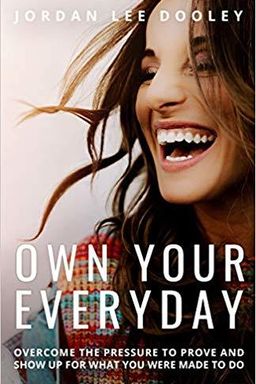
Own Your Everyday cover

Own Your Everyday

by Jordan Lee Dooley

Own Your Everyday empowers readers to break free from society''s pressures and embrace their true purpose. Through personal stories and practical guidance, Jordan Lee Dooley inspires you to find fulfillment by living authentically and transforming challenges into opportunities. Discover a life of purpose, free from comparison and distraction.

Owning Your Everyday: Purpose Over Pressure

Have you ever felt that crushing pressure to have your life completely figured out—to know exactly where you’re going and what you’re meant to do? In Own Your Everyday, Jordan Lee Dooley argues that purpose isn’t something hidden out in the world waiting for you to discover it after years of striving. Instead, she insists it’s already within you—woven into the rhythms of your everyday life. Her central argument is that the relentless pressure to prove ourselves, to look successful, or to be enough is what actually prevents us from walking in our purpose.

Dooley contends that many of us mistake purpose for perfection or performance. We think we have to find a dream job, earn a title, or hit some milestone to make our lives meaningful. Through a mix of memoir, faith-based encouragement, and practical coaching, she shows that true purpose is not a destination but a devotion—something lived out each day in how we love, serve, and show up. The heartbeat of her message is simple but radical: exchange the pressure to prove for the freedom to be faithful right where you are.

The Toxic Trio: What Holds Us Back

At the beginning of the book, Dooley identifies a “toxic trio” of forces that keep women stuck: insecurities, expectations, and the pressure to prove. These are the invisible barriers that turn purpose into a performance and keep you stuck in cycles of overthinking, overachieving, or comparing. Each chapter then unpacks one way these pressures show up—through impostor syndrome, perfectionism, shame, comparison, and distraction—and provides small, intentional steps to combat them.

Drawing from personal stories—from hiding behind sorority labels to grieving her grandmother and navigating career disappointment—Dooley reveals how she learned to shift from image maintenance to internal growth. This honesty anchors her teaching: she’s not writing as a polished expert but as a friend inviting you to sit at her kitchen table, eat popcorn, and talk about the messy, everyday parts of life.

Purpose Is Internal, Not External

One of Dooley’s biggest insights is that purpose isn’t about what you do but about who you are and how you love. She weaves this truth through every chapter, referencing how her faith taught her that external success—every label, title, or accolade—can never define identity. When your sense of meaning comes from performance, she notes, you’ll always live exhausted, because each success creates the fear of losing it. But when you base your identity on being “fully known and fully loved” by God, you’re free to fail, experiment, and grow without shame.

This idea parallels teachings in Brené Brown’s Daring Greatly and Jon Acuff’s Finish: real growth happens when you trade perfectionism for purpose and action. Dooley pushes you to live as if your life already matters—because it does. You can “own your everyday” not by hustling harder but by being faithful to what’s in front of you.

From Perfectionism to Priorities

A major theme throughout the book is the invitation to prioritize over perfect. Dooley acknowledges how women specifically bear pressure to do it all—to be flawless wives, friends, employees, and mothers. In a poignant kitchen-table conversation with friends, she exposes how perfectionism often stems from insecurity and pride: the fear of not being loved if we’re imperfect. To counter it, she offers practical steps—choosing three key priorities per life season, allowing yourself to fail at the rest, and giving yourself permission to bless and release the pressure to please everyone.

She reframes success as being faithful in the few rather than flawless in everything. In her words, “Perhaps we must fail at some things to be faithful in the few things that matter most.” This message echoes Greg McKeown’s Essentialism, urging readers to focus on what truly matters and let the rest go.

Breaking Through Comparison and Distraction

Dooley tackles two of the most modern thieves of purpose: comparison and distraction. Through vivid humor—like the story of an imaginary treadmill race at her gym—she illustrates how comparison keeps you sprinting in place, exhausted but going nowhere. Likewise, distractions, she argues, aren’t just about screen time; they’re anything that pulls you away from focus and intentional living. Her “10-10-10” strategy (considering the impact of decisions in ten minutes, ten weeks, and ten years) offers a memorable, practical way to discern what truly deserves your yes.

Redefining Success and Freedom

Ultimately, Own Your Everyday is a call to redefine success and reclaim freedom. For Dooley, success isn’t climbing faster—it’s walking faithfully. She warns against hustle culture’s mantra of “be everything to everyone” and contrasts worldly achievement with biblical purpose. Referencing women like Esther and Ruth, she reminds readers that meaningful lives are built not on fame but faithfulness. Through her own entrepreneurial and personal story, she models what it looks like to start small, fail forward, and trust that purpose unfolds over time.

By the end, Dooley challenges you to stop waiting for perfect conditions and to simply start living your purpose today. Whether that means taking the next small step, letting go of comfort, or dancing through doorways of opportunity with joy, her message remains the same: you don’t need to have it all figured out—you just need to show up with a willing heart. Purpose isn’t discovered someday; it’s owned every day.


Breaking Through Insecurity and Image

Jordan Lee Dooley begins by confronting one of the deepest roots of purposelessness: insecurity. Through her story in “You Can’t Walk Through Walls,” she revisits childhood memories with her grandmother Nana, who taught her to take big steps—both literal and metaphorical. After Nana’s battle with Alzheimer’s and passing, Dooley describes how grief led her to wrap her identity around achievements, titles, and external validation. She was the “girl who had it all together,” but inside, she was falling apart.

Masks, Labels, and Tape Walls

She compares the labels we live behind—“smart girl,” “fit girl,” “perfect wife”—to strips of masking tape she used as a child to build pretend walls on the carpet. They look sturdy but really just trap us in illusions. For Dooley, the tape symbolizes the false security of image management. When we rely on how others perceive us, we end up boxed in, unable to move freely into purpose. Her insight echoes themes in Shauna Niequist’s Present Over Perfect, where hustle and appearances replace authenticity and rest.

From Image to Intentionality

Dooley encourages readers to trade their obsession with image for genuine self-awareness. Through metaphors such as acne breakouts and skin care, she paints the picture of how we often treat insecurity at surface level instead of addressing the heart of the issue. Covering up flaws, she explains, only makes the wound worse. Healing begins when we dig beneath the surface, identify root causes (like fear, pride, or comparison), and take responsibility rather than assigning blame. “Breaking ground,” she writes, “is nonnegotiable if we ever want to build something real.”

Her approach is both spiritual and practical: cleansing the heart from self-reliance, facing the dirt we’ve buried, and giving God room to rebuild. Once you can define yourself by who you are—beloved, capable, growing—instead of how you look or perform, you’re ready to take your next big step outside the tape walls you've built.


Overcoming Impostor Syndrome by Taking Action

Dooley’s story of starting an Etsy business with a Sharpie marker and copy paper captures what she calls “incremental, implementable imperfection.” Her journey from college student to entrepreneur wasn’t the result of clarity; it was fueled by curiosity and small steps. When she first sold a hand-lettered print to a woman in Texas, she realized that trying—even clumsily—was better than waiting for perfection.

The Trap of Expectations and Opinions

Much like Sheryl Sandberg’s analysis of women’s self-doubt in Lean In, Dooley explores how social expectations, fear of judgment, and the need for approval keep women from experimentation. Her conversation with her mother becomes a turning point: when Mom advised her to “just try stuff,” she discovered the freedom to explore before everything made sense. From impostor syndrome to insecurity, the cure was action rooted in curiosity, not validation.

Permission to Be Imperfect

Dooley outlines common reasons we hesitate to start—expectations, labels, fear of embarrassment—and dismantles each one. She offers five strategies: ask questions and stay teachable, embrace your current reality, prepare for failure, redefine it as learning, and take small imperfect steps of execution. Her “first Etsy sale” stands as proof that purpose often begins with a risk that might look ridiculous on paper but grows into something meaningful.

Her mantra—“Done is better than perfect when it’s done with purpose”—empowers you to act before you feel ready. The lesson is clear: when fear whispers, “Who am I to do this?” respond by asking, “Who am I not to?”


Disarming Shame Through Vulnerability

One of the most vulnerable chapters of Own Your Everyday details Dooley’s struggle with body image and disordered eating. Through a raw and honest retelling, she exposes how shame—about weight, worth, or weakness—keeps us hidden, much like a woman closing her door to avoid being seen. The metaphor comes alive when Dooley recalls delivering care boxes and meeting a young woman clutching her door in fear. That moment becomes her revelation: she, too, was living behind closed doors of shame.

The Power of Bringing Secrets to Light

Dooley’s spiritual awakening mirrors author Brené Brown’s research that vulnerability is the antidote to shame. She writes that freedom requires “opening the door wide enough to receive love.” When you hide, you’re not free—“you can’t be 99 percent free and call that freedom.” For her, faith provided that breakthrough: releasing her pride, accepting God’s grace, and understanding that love is not earned but given.

Healing Through Community

Her friendship with a woman named Mel embodies how confession and connection heal. When both shared their secret battles, shame lost its grip, reminding Dooley that transparency fosters transformation. She insists vulnerability doesn’t require telling everyone your story, just inviting someone into it. Practically, she offers steps: find healthy community, identify triggers, set boundaries, and never let shame stop you from seeking professional help. These tangible moves parallel recovery frameworks in Christian counseling and cognitive therapy alike.

By turning her “thunder thighs” insecurity into testimony, Dooley proves that purpose thrives in what you’ve survived. Healing begins the moment you let the light in.


Escaping Comparison Through Compassion and Connection

Dooley combines humor and insight as she recounts a treadmill story that becomes a vivid metaphor for comparison: she’s sprinting harder than a stranger beside her but going nowhere. Comparison, she concludes, “is exhausting but doesn’t take you anywhere.” Her reflections create a roadmap for replacing envy with empathy, borrowing strategies reminiscent of Rachel Hollis and Gretchen Rubin but grounded in faith and humility.

Three Kinds of Comparison

She identifies comparison’s three disguises: comparing your status to others, your current life to your expectations, and your struggles to other people’s struggles. Each form leads to distortion—either pride or despair. To break the cycle, she offers practical “adjustment strategies”: remember your why, replace jealous thoughts with joyful ones, practice gratitude, let others win, and communicate. Her “10-10-10” thinking echoes Suzy Welch’s decision framework for future-minded choices.

Replace Competing with Cheering

Dooley’s favorite part of this transformation is simple but hard: celebrate others openly. When she stopped competing with the runner beside her and started cheering her on, she found new energy and joy. Later, an unexpected friendship with a woman she had envied at the gym underscored this point—connection cures comparison. Her conclusion: compare less, communicate more. Success multiplies when shared.

Her steps resemble principles from social psychology about empathy reducing envy, but she reframes them spiritually—choosing compassion over competition is what truly frees the heart to pursue meaningful purpose.


Prioritizing Over Perfection

Dooley’s chapter on overcoming perfectionism captures one of her most practical frameworks: exchange performance for purpose by defining your priorities. During a conversation with friends Lindsey and Hannah, she explores different perfectionist tendencies—striving for spotless homes, flawless bodies, or ideal marriages. Beneath them all, she identifies the same root: insecurity born of pride. We strive for perfection because we fear we’ll be unlovable without it.

Three Ways Perfectionism Holds You Back

Dooley outlines three effects of perfectionism: love feels conditional, priorities get hijacked by fear of failure, and perspective narrows to self-focus. The mirror metaphor she uses—living in a house of mirrors instead of windows—illustrates how pride traps you in endless self-scrutiny. Purpose, she argues, requires turning the mirror into a window to reflect love outward. When you stop striving to look perfect, you make space to love and serve others.

Practices to Break the Cycle

Dooley advises a “priorities audit”: pick three core areas to focus on each season and set sub-priorities for each. For her marriage, for instance, this meant weekly planning sessions, routines, and counseling. Her motto—“fail at the rest”—liberates readers from burnout culture. She adds three daily disciplines to stay balanced: live your priorities visibly, identify your triggers (like social media comparison), and confront procrastination by taking one concrete step with a timeline.

Her blend of spiritual simplicity and practical strategy recalls Greg McKeown’s Essentialism and Annie F. Downs’s That Sounds Fun: living well means letting go of the rest.


Redefining Success and Letting Go

In her later chapters, Dooley tackles the culture of hustle head-on. Through stories from her own entrepreneurial journey and marriage, she exposes how success defined by speed and visibility becomes toxic. Her sarcastic take on the Pinterest mantra “Hustle until your haters ask if you’re hiring” lands an important truth: when your work is rooted in proving worth, it destroys purpose.

Success as Faithfulness

Dooley redefines success as faithfulness rather than fame. Drawing inspiration from biblical women such as Esther and Ruth, she argues that these heroines didn’t chase visibility—they showed up in small moments and let obedience become influence. Their secret? They had space to listen. This perspective critiques modern “girlboss” culture (what she calls “the pressure to be everything to everyone”) and calls for rest, humility, and purpose-driven effort.

Micro-Success Factors

To make this practical, she introduces “micro-success factors”: small, daily actions that define what success looks like for you right now. Her examples include turning off her phone by 6 p.m., spending thirty minutes moving her body, and writing a set amount of words daily. Like James Clear’s Atomic Habits, she shows that daily faithfulness compounds into a meaningful life. Happiness, she argues, isn’t the goal—meaning is.

Her message to overachievers: you are allowed to slow down and still accomplish something profound. Showing up wholeheartedly for one person or task today might be the most meaningful kind of success there is.


Living Your Purpose Right Now

Dooley ends her book with a call to action that blends inspiration with challenge: stop waiting for ideal circumstances before you live with purpose. Her grandmother Nana becomes a recurring symbol of fearless joy—a woman who took big steps, danced through hardship, and laughed even after loss. Using metaphors from home renovation shows and seasons of waiting, she reminds readers that “demolition is part of preparation.”

The Waiting Season Is Still Purposeful

In “Stop Waiting, Start Living,” she warns against “Amazon Priming your life”—expecting instant transformation. Just as a remodel requires dust, debris, and downtime, personal growth takes patience. When you see yourself as a work in progress guided by divine timing, even seasons of uncertainty become sacred. This shift mirrors teachings from Lysa TerKeurst’s It’s Not Supposed to Be This Way: transformation often happens between what breaks and what blooms.

Fail Forward and Say Yes

Her concluding manifesto urges you to “fail forward,” keep your eyes ahead, and say yes to small steps that scare you. Whether that’s starting a conversation, a business, or simply showing up, your willingness matters more than your readiness. “Big steppers,” she says, “become ground takers and culture shapers.” Each yes shapes a legacy of purpose lived in ordinary places.

The lasting takeaway: your life is significant before it’s impressive. Stop waiting for the next season, and start living this one—fully, faithfully, and fearlessly.

Dig Deeper

Get personalized prompts to apply these lessons to your life and deepen your understanding.

Go Deeper

Get the Full Experience

Download Insight Books for AI-powered reflections, quizzes, and more.