
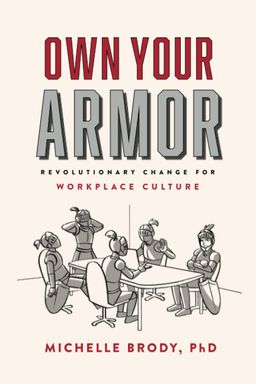
Own Your Armor cover

Own Your Armor

by Michelle Brody

Own Your Armor by Michelle Brody offers a groundbreaking approach to revitalizing workplace culture. Through ten transformative principles, it empowers teams to improve communication, boost productivity, and create a supportive environment, unlocking their full potential together.

Curse, Choice, and Courage in a Haunted Adventure

Have you ever wondered what you’d do if one innocent family heirloom carried a centuries-old curse—and you were the only one who could stop it? In Give Yourself Goosebumps: The Knight in Screaming Armor, R.L. Stine turns this chilling question into an interactive roller coaster of terror, humor, and courage. This choose-your-own-adventure story throws you—literally—into the action as a young protagonist who must face an ancient curse that threatens your entire family. The book’s magic lies in how it plunges *you* into medieval nightmares, forcing choices that could mean heroism or doom with every turn of the page.

R.L. Stine contends that fear is not just something to run from—it’s something that tests the limits of courage, intelligence, and imagination. Through cursed knights, talking heads, mud monsters, and time-bending clocks, he invites readers to explore how curiosity and bravery can both save and destroy. The narrative also plays with ideas of family legacy, choice, and fate: you’re a Saxton, a descendant of noble knights and cursed bloodlines alike. Your actions decide whether you’ll redeem that name or perish under its ancient burden.

A Family Visit Turns Sinister

The adventure begins innocently enough: your British cousins, Kip and Abbey, come to visit your family. Along with them arrive two giant wooden crates containing fifteenth-century suits of armor from your Uncle Will’s museum collection. But one suit bears a terrible legacy—the armor of an evil knight cursed centuries ago by a vengeful sorceress after a Saxton ancestor killed her beloved dragon. The other suit, belonging to the noble Sir Edmund Saxton, is said to protect those who are good. Unfortunately, the cousins’ arrival marks the breaking of the curse, and suddenly, doom isn’t just legend—it’s alive in your garage.

A World of Branching Fates

Unlike a straightforward ghost story, this book offers a labyrinth of possible outcomes. Every decision—from opening the right crate to choosing which clock to twist—creates a ripple of consequences. Your fate could involve shrinking in time, being buried in mud by gooey monsters, or wearing the armor of the Good Knight to defeat evil at dawn. Some endings promise victory, others eternal curses or twisted transformations. The result is an experiment in interactive tension: fear amplified by the weight of choice.

This design cleverly mirrors the book’s underlying themes. Fear often comes with uncertainty, and every path we choose—whether in fiction or life—reveals our character. The thrill of R.L. Stine’s “Give Yourself Goosebumps” series (similar to Goosebumps classics like The Cuckoo Clock of Doom) isn’t just the horror; it’s the act of confronting possibilities, learning from mistakes, and, sometimes, laughing at our own terror.

The Curse and the Courage Within

At its heart, The Knight in Screaming Armor is about breaking cycles—of fear, of family curses, and of self-doubt. The curse demands a Saxton with true honor and courage to fight the cursed armor before sunrise, or destruction will follow. This puts pressure not just on your fictional self but also on you, the reader, to embrace bravery even when the path is unclear. By choosing your way through frightening encounters—a sorceress aging you into dust, a dungeon of floating heads, or an electrified time trap—you confront the symbolic forms of anxiety, powerlessness, and moral tests.

Legacy, Laughs, and Lessons

Stine balances goosebump-inducing fear with humor and family dynamics. Abbey’s arrogance, Kip’s fear, and your own stubborn curiosity form a comic trio amid the chaos. These elements make the horror accessible rather than paralyzing—showing that fear can coexist with laughter. The book thus becomes more than a haunted story; it doubles as a metaphor for growing up, managing risk, and handling responsibility.

So why does this story matter? Because it gives you control in the face of uncontrollable dangers. You’re not just reading about bravery—you’re practicing it with each decision. The Evil Knight’s scream, the ticking of cursed clocks, and the final dawn duel all echo a timeless truth: courage isn’t the absence of fear, but the choice to face it, again and again.


The Saxton Curse: A Legacy of Fear

The tale of the cursed Saxton family is the story’s beating heart. Centuries before, Sir Edmund Saxton, a proud knight, killed a sorceress’s pet dragon. Enraged, she crafted a suit of armor that imprisoned an evil spirit—the Knight in Screaming Armor—and sent it as a “gift” to the Saxtons. That night, screams echoed through Saxton Castle, leaving only one survivor to carry the family name—and the curse.

Inherited Terror

When Kip and Abbey arrive at your house with the family artifacts, the curse reawakens. One suit—the Evil Knight’s—is bent on destruction; the other, Sir Edmund’s, holds the hope of salvation. This duality reflects a deeper truth: every family inherits both pride and pain. The Saxton curse is not just about supernatural punishment—it’s about the fear that past mistakes always return.

Breaking Cycles

In several endings, only courage—the willingness to act even when frightened—can break the curse. When the player dons Sir Edmund’s silver armor, they embody righteousness against evil. Whether you face the Evil Knight in a dungeon or on misty English hills, redemption depends on strength of heart, not bloodline. The message is clear: inheritance does not define destiny; choices do.


Interactive Fear: Choice as Power and Peril

R.L. Stine transforms fear into an interactive exercise. Each page puts you in command—but also at risk. Decide wrongly, and you meet one of dozens of bizarre fates: being turned into a bird, sinking into a wall of mud, or becoming a statue in the Evil Knight’s domain. The book’s design mirrors real fear—uncertainty layered with agency.

The Psychology of Control

When readers choose, they feel responsible for outcomes. That emotional investment makes terror more personal. Stine isn’t just scaring you; he’s making you aware of how fear sharpens decision-making. Every “turn to page 42” mimics moral choice—safety, curiosity, compassion, or cowardice?

Learning Through Loss

Most endings are grim, but they teach resilience. Each failed route offers insights: not every path promises reward, and sometimes danger must be faced again with fresh wisdom. This structure turns gameplay into an allegory for growth. (Similarly, scholars note how interactive fiction engages readers as co-authors, echoing life’s unpredictability—see Marie-Laure Ryan’s work on narrative theory.)


Family Dynamics and the Humor of Horror

The haunting might start in the garage, but the tension begins at the dinner table. Kip, Abbey, and the protagonist represent archetypes familiar to every reader: the anxious relative, the arrogant sibling, and the cautious dreamer. Their clashing personalities add lighthearted humor to what could otherwise be unrelenting darkness.

Sibling Rivalry Meets Supernatural Chaos

Abbey constantly corrects grammar and flaunts confidence, while Kip’s curiosity tips toward fear. You, caught between them, embody reason—and sometimes foolish bravery. The trio’s dynamic humanizes the chaos surrounding ancient curses and time-bending nightmares. Whether bickering over who opens the crate or laughing nervously in a dungeon, their banter reminds readers that fear coexists with humor.

Humor as a Shield

Stine’s comedic timing keeps horror accessible. Just as the Evil Knight looms, a sarcastic quip breaks the tension. This echoes why kids love his stories: laughter and terror feed off each other. By mocking the very monsters that frighten them, readers learn to disarm their fears—an essential coping mechanism in childhood growth and beyond.


The Magic of Time and Transformation

The recurring motif of time—embodied in cursed clocks, aging spells, and temporal loops—plays a central role in the story’s many routes. When the enchanted clocks malfunction, you and your cousins reverse or accelerate age, becoming infants or ancient husks within moments. These moments are both comedic and haunting, revealing time as both an enemy and a gift.

Temporal Tests

The magical clocks challenge your sense of control. In trying to manipulate time to fix problems, you often magnify them. This becomes a metaphor for how humans attempt to outrun destiny. R.L. Stine borrows this idea from his earlier work, The Cuckoo Clock of Doom, reminding fans that time travel and regret often walk hand in hand.

Reversing Without Undoing

In the book, time loops suggest that true courage isn’t about escaping the moment—it’s about acting rightly within it. Even if a clock can rewind mistakes, lessons remain. By forcing players to redo events, Stine cleverly transforms frustration into mastery. Like in life, every second chance still demands bravery.


Facing Evil: The Knight and the Sorceress

The Evil Knight may swing a sword, but it’s his scream—echoing across pages—that embodies pure terror. The Knight and his creator, the Sorceress, stand as echoes of vengeance and corrupted power. They’re forces that test the moral fiber of every Saxton descendant, and by extension, every reader who faces fear head-on.

The Duel of Darkness and Light

When you finally don Sir Edmund’s shining armor, a duel begins between Good and Evil Knights—a physical embodiment of inner conflict. It’s bravery versus corruption, legacy versus choice. Victory depends not on weaponry but on resolve. Stine uses this climax to dramatize moral decision-making: courage means wielding inner strength even when the odds scream against you.

The Sorceress’s Shadow

The Sorceress illustrates how pain can birth more pain. Her rage, though justified by loss, evolves into unchecked destruction. This parallels modern cautionary tales—from Tolkien’s dark lords to contemporary antiheroes—reminding readers that vengeance always imprisons its bearer first.


Triumph, Failure, and the Power of Imagination

With over 130 possible sections and dozens of potential endings, this book rewards creativity as much as courage. No single journey captures the entire story, which means every reader creates their own version of triumph or defeat. The structure itself becomes a celebration of imagination.

Multiple Endings, One Lesson

Whether you end up as a hero in shining armor or a cursed statue, each path highlights a truth: growth comes through participation. Stine’s message is quietly empowering—mistakes aren’t final; they’re feedback. In this way, the book turns passive reading into an act of self-discovery.

Imagination as Armor

By giving young readers control over death-defying situations, Stine arms them with something better than steel—imagination. When you decide how to face monsters, you’re rehearsing problem-solving and emotional resilience. That’s why, even when “The End” arrives, the reader feels more powerful than when they began. Fear became a game, and courage, a habit.

Dig Deeper

Get personalized prompts to apply these lessons to your life and deepen your understanding.

Go Deeper

Get the Full Experience

Download Insight Books for AI-powered reflections, quizzes, and more.