
Idea 1
Escaping the Trap of Being Overworked and Overwhelmed
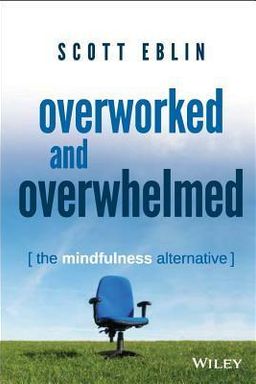
Have you ever felt like you're sprinting through life—emails, meetings, family commitments—all while wondering if you’re getting anywhere meaningful? In Overworked and Overwhelmed: The Mindfulness Alternative, executive coach Scott Eblin offers a powerful yet practical antidote to the relentless pace of modern work and life. He argues that the defining condition of today’s professionals is chronic overcommitment—a nonstop loop of doing more, driven by ever-rising expectations and constant connectivity. The solution, Eblin contends, isn’t to work harder or search for balance, but to work differently through mindfulness: a state of awareness and intention that allows you to show up as your best self in every sphere of life.
Eblin’s core claim is deceptively simple: mindfulness isn’t limited to meditation or spiritual retreat—it’s an accessible discipline of attention you can practice right where you are. The heart of his book teaches you how to move from being “overworked and overwhelmed” to living what he calls the mindfulness alternative, a mode of life built around your ability to be conscious of what’s going on inside and outside, make deliberate choices, and live with intention. Drawing from leadership coaching, neuroscience, psychology, and his own life—including coping with multiple sclerosis—Eblin offers a step-by-step model for transformation anchored in what he calls the Life GPS: a map that helps you navigate toward clarity, productivity, and peace by focusing on how you are at your best, the routines that sustain it, and the outcomes that matter most.
Why Life Feels Crazier Than Ever
Eblin starts by diagnosing the modern dilemma. The 24/7 smartphone era and post-recession restructuring have flattened organizations and expanded individual workloads. Executives, managers, and professionals now operate in environments with perpetual urgency, blurred boundaries, and impossible expectations. The myth of “work-life balance,” he says, is dead. We live in what Admiral Thad Allen called the “tyranny of the present,” where everything demands attention right now, and rest, rhythm, and reflection are luxuries few grant themselves. Surveys and psychology research confirm it: stress-related illnesses have skyrocketed, and chronic multitasking is degrading both health and cognitive performance. Most people have no space to think clearly or recharge—so they get trapped on a mental treadmill, mistaking motion for progress.
Mindfulness as Practical Rebellion
Against that backdrop, mindfulness emerges not as a luxury but as a necessity—a tactical skill that enables high performers to reclaim control of their minds and schedules. Eblin reframes mindfulness from its usual soft or spiritual packaging into a leadership tool. Mindfulness, he defines, is “awareness plus intention.” It’s noticing what’s actually happening—both externally and internally—and choosing how to respond rather than react. When people act mindlessly, they succumb to what Eblin calls chronic fight-or-flight mode: a physiological state in which stress hormones flood the body and distort decision-making. Mindfulness activates the opposite—what science calls the rest-and-digest response—restoring clarity and emotional regulation. In that calm, you can act with focus instead of frenzy.
This approach isn’t theoretical. Eblin illustrates it through stories of leaders who embody calm awareness under pressure—from Admiral Thad Allen’s poised leadership during Hurricane Katrina to business executives who carve out moments for reflection despite constant demands. These people aren’t slowing down to stop achieving; they’re slowing down to achieve sustainably.
Building Your Mindfulness System: The Life GPS
The Life GPS model gives readers a blueprint for translating mindfulness into daily life. It revolves around three questions: (1) How are you at your best? (2) What routines enable you to show up at your best? (3) What difference does that make in your life at home, work, and community? By answering these and keeping them visible—literally on paper or screen—you create a roadmap aligning actions with intention. Eblin uses examples like Elaine, a chronically stressed professional who reclaimed energy and focus through a simple morning swimming routine, illustrating how even small shifts can ripple across wellbeing and performance.
Each part of the book deepens this model: Part One defines the problem and the science behind stress; Part Two explains how to clarify your best self; Part Three presents actionable routines across physical, mental, relational, and spiritual domains; and Part Four shows how to sustain progress and measure meaningful outcomes. Instead of uncertain advice about “balance,” Eblin emphasizes rhythm and routine—manageable habits that build resilience precisely because they’re small and repeatable. (This parallels concepts from Charles Duhigg’s The Power of Habit and Jon Kabat-Zinn’s work on Mindfulness-Based Stress Reduction.)
A Coach’s Perspective: Excellence as Habit
Eblin’s coaching stories—like Crystal Cooper’s transformation through yoga and meditation, or Doug’s shift from negativity to mindful leadership—illustrate Aristotle’s timeless insight: “We are what we repeatedly do. Excellence, then, is not an act but a habit.” The book’s recurring theme is consistency through simplicity. People don’t need radical overhauls; they need routines that are easy to do and likely to make a difference. Those routines, whether physical exercise or breathing, crowd out harmful patterns through repetition. Over time, small improvements compound into lasting change.
Why This Matters
At its heart, Overworked and Overwhelmed is a manifesto for reclaiming agency—not by escaping work, but by transforming how you engage with it. Eblin’s mindfulness alternative isn’t about perfection or balance; it’s about rhythm, awareness, and compassion—for yourself and others. It’s the art of showing up repeatedly at your best in a world filled with distraction and demand. For leaders, parents, and professionals alike, it’s a reminder that high performance and peace of mind aren’t opposites—they’re interconnected outcomes of living intentionally. And if you can spend just a few mindful minutes a day strengthening that connection, Eblin promises, you’ll work less frantically, think more clearly, and create a life that feels fulfilling rather than overwhelming.