
Idea 1
Stitching Time Confetti into Whole Lives
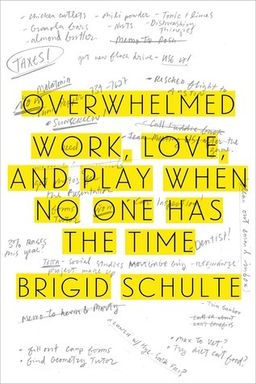
How can you feel less torn and more whole in a culture that glorifies busyness? In Brigid Schulte’s book, she explores why so many people—especially working parents—are trapped between work, caregiving, and an inner sense that time itself has shattered into confetti. Schulte argues that chronic busyness, gender biases, and fragmented attention converge to steal not just leisure but meaning. Her central claim: the problem isn’t a lack of minutes, but how we experience and value them.
Rather than a time-management guide, the book is a cultural diagnosis and a humane blueprint for repair. It asks how you can move from measuring time to savoring it—from surviving overload to designing a life where your relationships, work, and mind thrive together.
The illusion of time scarcity
Schulte introduces the term “time confetti,” the scattered scraps of minutes that never cohere into true leisure. Studies by John Robinson show that people often have measurable blocks of leisure but don’t experience them as restful. Email, guilt, and multitasking contaminate the calm. The mismatch between measured leisure and felt leisure defines the modern paradox: you possess free time but don’t feel free in it.
Robinson’s provocation—“time is a smokescreen”—suggests that claiming not to have time often hides disordered priorities. You are not just counting minutes; you are fighting for attention and permission to rest.
Busyness as status and self-worth
Across the U.S., people equate crowded calendars with value. Sociologist Ann Burnett’s archive of holiday letters reveals how phrases like “hectic” and “whirlwind” became badges of honor. Busyness now performs identity. Global researchers confirm that this performance carries health costs—anxiety, depression, and lost productivity. Smartphones magnify the rush, creating constant micro-interruptions that fracture attention and feed compulsive checking.
You socially learn busyness from others. To resist, Schulte urges visible rebellion: protect a lunch break, delay replies, and question whether your “busy badge” signals purpose or conformity.
The neuroscience of overload
Overwhelm doesn’t just feel bad—it alters the brain. Chronic stress shrinks the prefrontal cortex (your reasoning center) and inflames the amygdala (your fear hub). Researchers like Emily Ansell and Bruce McEwen demonstrate measurable reductions—up to 20% less gray matter—in chronically stressed people. Allostatic load quietly accumulates, trading emotional regulation for hyper-reactivity. The practical result: impatience, memory lapses, and deteriorating health.
Yet the brain is plastic. Exercise, predictable rest, and meditation can reverse these effects, restoring the architecture of focus and calm. Protecting your prefrontal cortex is a survival imperative in the digital age.
Culture, policy, and the architecture of time
The book connects overwhelm to systemic design. The U.S. lacks universal childcare and paid parental leave—a void traced to Nixon’s 1971 veto of the Comprehensive Child Development Act. That decision enshrined privatized, fragmented childcare, forcing families to improvise. Other nations, like Denmark and Sweden, built supportive systems—paid leave, standardized hours, and universal childcare—that yield more leisure, gender equality, and what Danes call hygge: contented simplicity.
Schulte frames these contrasts to show how personal time begins in public policy. Families are not failing individually; they are navigating systems built on outdated ideals.
Gender and the stalled revolution
Despite women’s advances in paid work, unpaid domestic labor remains disproportionately theirs. The “Ideal Worker” archetype—always available, unencumbered by family—still dominates corporate culture. Studies by Joan Williams, Shelley Correll, and others expose how mothers face penalties (lower pay, fewer promotions) while fathers receive bonuses. Even progressive men experience exhaustion as they try to meet dual ideals of provider and caregiver.
Schulte spotlights Jessica DeGroot’s “Third Path,” an intentional partnership model where couples negotiate equality and mental load explicitly. Success depends not on ideology but on rhythmic conversation and shared design of daily life.
The repair: mindfulness, play, and confidence
At the book’s heart lie renewal practices. Working in focused pulses (Tony Schwartz) respects natural rhythms; weekly “worry dumps” clear mental clutter; short mindful pauses rebuild brain calm. Schulte also celebrates adult play—Nadia Stieglitz and Sara Baysinger’s Mice at Play groups prove that playful creativity replenishes energy and joy. Stuart Brown’s neuroscience echoes that play rewires resilience.
Finally, her parenting insights—driven by Angela Duckworth and Carol Dweck—teach that cultivating grit and gratitude beats perfectionism. Let children struggle; model leisure; design ordinary rituals instead of chasing intensive mothering ideals.
The transformation
Schulte’s message is both cultural and personal. You can reclaim time by refusing false urgency, designing shared care, and defending deep rest. The endgame is not perfect balance but meaningful presence—a life where time feels whole again. (Comparable to works like Anne-Marie Slaughter’s Unfinished Business and Oliver Burkeman’s Four Thousand Weeks, this book reminds you that freedom in time is crafted, not granted.)