
Idea 1
Reclaiming Kinship in the Age of Disconnection
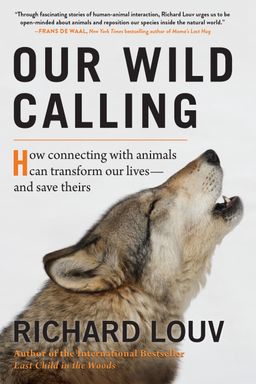
As the twenty-first century accelerates through digital connection and ecological crisis, you might notice a paradox: the more connected humans are through technology, the more disconnected many feel from other life. This tension—between proximity and alienation—forms the heart of Richard Louv’s work. He calls this condition species loneliness: the psychological and cultural loss that arises when daily contact with animals and nature fades. It’s not just emotional absence; it erodes empathy, imagination, and civic health.
Across this book, Louv builds from this diagnosis to a hopeful prescription: a new era he calls the Symbiocene. This is more than environmental reform—it’s a shift in consciousness toward intimacy, reciprocity, and partnership with the more-than-human world. The book weaves science, ethics, design, and personal story to show how such a transformation might take root in hearts, cities, institutions, and law.
The Age of Separation
Louv begins with an unsettling portrait of the Anthropocene—the human-ruled epoch in which species vanish, ecosystems destabilize, and natural experience is replaced by screens. He draws from Elizabeth Kolbert’s The Sixth Extinction and World Wildlife Fund data showing a 60% wildlife decline in recent decades. Yet these facts alone cannot rebuild connection; they must be joined to feeling. Data without story, Louv warns, yields resignation, not action.
From this diagnosis arises his search for a cultural antidote: experiences and practices that repair empathy between humans and other species. Encounters with a black fox or a child reading to shelter cats exemplify how affection, curiosity, and story can awaken responsibility. If you learn to care first, knowledge will follow naturally.
The Habitat of the Heart
Beneath the philosophy lies a psychological insight: awe and kinship do not come from argument but from attention. Louv’s “habitat of the heart” describes the fleeting but transformative zone where self and other—human and animal—overlap. Whether it’s a fox’s gaze, an octopus’s exploratory touch, or a child whispering to a pet, such encounters bend scale and time. They awaken what Martin Buber called the sacred “I–Thou” relationship, an experience that reorients you morally toward care.
These experiences are accessible to anyone. Through sit-spot practices, journaling, and quiet presence, you enter a language older than speech. The practice trains awareness—from noticing alarm calls to reading scent trails. As Jon Young and Bernie Krause show, learning to “listen” to nature’s conversations reconnects you not only emotionally but cognitively with the community of life.
From Individual Healing to Collective Design
Yet personal renewal is only the beginning. Louv shows how empathy scales into design, education, and policy. He profiles biophilic urbanists like Tim Beatley and Doug Tallamy, who reimagine cities as part of living ecosystems, not walled fortresses against them. Their “Symbiocene Cities” build wildlife corridors, native plant networks, and green roofs that invite coexistence. Even zoos, long symbols of captivity, can pivot toward rescue, education, and sanctuary, becoming nodes of regional conservation—if they adopt humility over exhibition.
At the same time, technological progress presses a moral choice. Will humans settle for technological nature—screens, robotic pets, and synthetic ecosystems—or use innovation to deepen real contact? Apps like eBird or Animal Tracker can democratize awareness; yet if gadgets replace wonder, species loneliness will only grow. The task is to wield technology as a bridge, not a barrier.
Education, Ethics, and the New Covenant
Education turns out to be the hinge on which this shift depends. Humane schools, Louv argues, can train empathy as deliberately as literacy—through animal-assisted programs, outdoor classrooms, and critical anthropomorphism that asks students to imagine what life feels like for other creatures. These practices cultivate a sense of co-becoming, mutual growth between species, echoed in therapy animals and service programs.
Above all, Louv calls for a new contract—an ethics of reciprocity rooted in Thomas Berry’s idea of a “communion of subjects.” If animals heal us emotionally and ecologically, justice requires we return the favor through protection, habitat restoration, and law. This principle already animates rights-for-nature cases from Ecuador to New Zealand and the One Health initiative linking human, animal, and planetary well-being.
Toward the Symbiocene
By the close, Louv recasts hope as a design challenge, a spiritual practice, and a civic duty. The Symbiocene is not utopia but a direction—a commitment to rebuild relationship at every scale: from a child’s intimacy with a pet to intergovernmental agreements that give rivers personhood. In this vision, you belong to a family older and wider than humanity. Restoring that awareness may be the most urgent psychological and political task of our time.
In sum, the book argues that the future of conservation is not fear-based but love-based. If society learns again to feel wonder for its kin—including the fox, the ant, the tree, and the stranger—it might yet design an era that heals both planet and soul. That is the real work of the Symbiocene: to turn empathy into infrastructure, awe into policy, and relationship into the organizing principle of civilization.