
Idea 1
Schools Make Race—and Can Unmake It
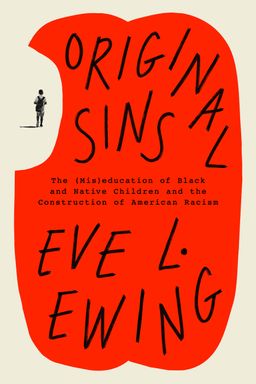
How do everyday school routines help build a racial order—and how might you undo it? In this book, Eve L. Ewing argues that schools are not neutral mirrors of society; they are laboratories that make race feel real. She names this system the Race Machine: a sorting technology that compresses the infinite variety of human life into rigid categories, distributes resources accordingly, and convinces you that those categories are natural. To change racial outcomes, you must see schools as active makers of racial meaning and material inequality—then re-engineer what they do and whom they serve.
Ewing contends that the Race Machine does its work through layered mechanisms: founding ideas that justify hierarchy (Thomas Jefferson’s writings and the Doctrine of Discovery), assimilationist schooling that constructs a unified Whiteness (Noah Webster’s language projects, Horace Mann’s common schools, and Francis Bellamy’s Pledge), and carceral and testing regimes that classify, surveil, and exclude. All of this unfolds inside racial capitalism, where wealth built on slavery and land theft still underwrites educational opportunity. If you want justice, you must confront both the epistemic (whose knowledge counts) and economic (who owns assets) foundations that make inequality feel inevitable.
The sorting starts early—and feels ordinary
In early grades, you meet the Race Machine in small acts: reading groups named for butterflies or caterpillars, norms about hair or speech, discipline patterns that tag some kids as leaders and others as problems. Those micro-decisions scale into tracks, gifted placements, and safety allocations. Research Ewing cites shows children recognize race in infancy and absorb stereotypes by age six. By the time students reach middle school, expectations and opportunities have already hardened into different futures.
Foundations that licensed inequality
Ewing reads Jefferson’s Notes on the State of Virginia alongside his political acts to show how ideas about difference became policy blueprints. Jefferson framed Black people as intellectually deficient and Native peoples as fated for disappearance or forced assimilation. These claims, echoed in the Doctrine of Discovery, set up schooling as a technology to produce citizens for some and containment or erasure for others (compare with Roxanne Dunbar-Ortiz on settler colonialism; Ewing integrates these traditions into a K–12 lens).
Assimilation and the making of Whiteness
As European immigrants arrived, schools pressed for "unanimity": one language, one flag, one story. Webster’s grammar, Mann’s common schools, Bellamy’s Pledge, kindergarten and playground movements, and home economics curricula all trained bodies and habits into a standard that could absorb some Europeans as White and position others outside (Irish Catholics, at first) until they conformed. These rituals weren’t just patriotic; they were tools to manufacture the national "we"—and to mark who didn’t fit it.
Black and Native schooling as control
After emancipation, freedpeople demanded schools as citizenship. Many White reformers offered saviorism instead: moral readers that preached meekness (Lydia Maria Child’s The Freedmen’s Book), industrial training at Hampton and Tuskegee (Samuel Chapman Armstrong, Booker T. Washington), and the archetype of the "White Lady Bountiful" to civilize labor. For Native youth, boarding schools like Carlisle enforced cultural death (Richard Henry Pratt’s "Kill the Indian. Save the man.") through hair cutting, uniforms, surveillance (the Man-on-the-Band-Stand), English-only mandates, and outing programs that replaced learning with domestic and agricultural labor.
Measurement and the myth of inferiority
Testing granted a scientific halo to hierarchy. From skull collectors (Samuel George Morton) and polygenists (Josiah Clark Nott, Louis Agassiz) to Progressive-Era eugenicists (Charles Davenport) and test adopters (Lewis Terman, Carl Brigham), measurement projects repeatedly naturalized social differences as innate intelligence. The Army Alpha/Beta tests proved mass testing was scalable; the SAT flowed from that lineage. Ewing warns you to recognize standardized tests as cultural technologies built in a context of racial science, not timeless arbiters of merit (compare Ibram X. Kendi’s critique of biological determinism).
Carceral habits in the classroom
Schools often teach children to live under watch: metal detectors, police in hallways, zero-tolerance rules, and suspensions that prepare bodies for the school-prison nexus. Ewing points to painful examples—from the field trip to Cook County Jail to historical child prosecutions like Hannah Ocuish and George Stinney—that reveal how punishment routines disappear children rather than keep them safe. For Native youth, federal jurisdiction (Major Crimes Act, post–Crow Dog) compounds over-policing and dispossession with under-protection in juvenile systems.
The crooked playing field of racial capitalism
Education unfolds inside an economy built on stolen land and coerced labor. Northern banks and insurers (New York Life, Aetna, Lehman Brothers) profited from slavery; land-grant universities like Cornell and the University of Minnesota were bankrolled by eleven million acres taken from nearly 250 tribes (Morrill Act). The Dawes Act’s allotment and trust system, later exposed by Elouise Cobell’s lawsuit, suppressed Indigenous wealth-building. Wealth—not income—moves educational odds through home equity, legacy admissions, and intergenerational transfers (see Raj Chetty and Thomas Shapiro’s findings).
Key Idea
The Race Machine doesn’t just label difference—it assigns life chances. To build just schools, you must redesign sorting mechanisms, expand what counts as knowledge, and repair the material thefts that schools sit atop.
A different future: abolition, Land Back, braiding
Ewing closes with practice and hope: abolitionist teaching (Mariame Kaba, Bettina Love) that meets material needs while dismantling punishment, Land Back as educational design (Leanne Betasamosake Simpson; Gregory Cajete), and "braiding" as a method of solidarity (Robin Wall Kimmerer; Sarah Ayaqi Whalen-Lunn). You build "schools for us" by centering community care, land-based learning, and shared sovereignty—making the Race Machine obsolete by refusing the logics that power it.