
Idea 1
Organizing from the Inside Out
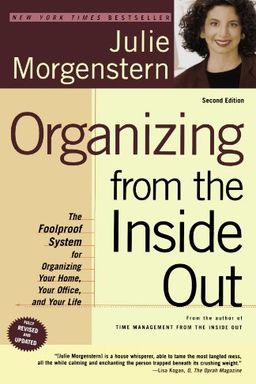
How can you create order that lasts instead of temporary control? In Organizing from the Inside Out, Julie Morgenstern argues that lasting organization begins not with containers or labels but with self-understanding. Her core premise: your environment should reflect who you are, not who someone else is. The goal isn’t to mimic a minimalist Instagram feed but to design systems that harmonize with your personality, habits, and lifestyle. When you start from the inside—clarifying what you value and identifying hidden causes of disorganization—your systems become intuitive, efficient, and stress-free.
From outside-in failure to inside-out success
Most people, Morgenstern explains, try to organize “from the outside in.” They buy containers, copy a friend’s setup, or follow tips that ignore personal context. These short-term fixes collapse because they don’t address underlying behavior. Morgenstern’s client Carol, an arts director, is a classic case: she tried systems from assistants and consultants but fell behind on mail constantly. When Morgenstern realized Carol thrived on collaboration—not solitude—she reframed “mail hour” as “decision hour” with her secretary at her side. The process engaged Carol’s social nature, transforming drudgery into teamwork. The result: sustainable order because the system matched the person.
What “organizing” really means
The book defines organizing as “the process by which we create environments that enable us to live, work, and relax exactly as we want to.” Organizing is not about neatness—it’s about empowerment. A system that supports your best self saves time, restores focus, and makes maintenance natural. The end goal is freedom, not perfection. Morgenstern’s diaper-bag story—where labeling and grouping small items revolutionized her mornings—shows how personalization, not strictness, drives long-term success.
The three-step organizing cycle
Morgenstern distills every organizing challenge into a three-step cycle: Analyze, Strategize, and Attack. These must occur in sequence: you can’t design before you understand, and you can’t purge before you plan. In Analyze, you study what’s working and what’s not; in Strategize, you plan zones, layout, and timing; in Attack, you execute using her SPACE formula—Sort, Purge, Assign, Containerize, and Equalize. Each cycle ends with maintenance, forming a rhythm instead of a one-time clean sweep. The process is repeatable for any context: a purse, kitchen, inbox, or entire life.
Diagnosing what’s really broken
Before tackling clutter, you must uncover its true cause. Morgenstern’s diagnostic tool examines three levels: technical errors (flawed mechanics like inconvenient storage), external realities (constraints beyond your control, such as limited space or time), and psychological obstacles (fears, attachments, or habits that make mess comforting). Just as a doctor treats the root problem, you must identify which level dominates your chaos. Often, technical fixes solve most issues—but when progress stalls, the deeper layers reveal themselves.
For instance, a woman who wanted a bigger apartment discovered her real issue wasn’t square footage but “more stuff than space”—a technical error masked by emotional attachment. When she decluttered and reallocated, she saved herself a costly move. Diagnose accurately, and every intervention becomes smarter, cheaper, and longer-lasting.
Beyond systems: the emotional dimension
The emotional component of clutter is central. Many people fear losing creativity, abundance, or comfort if they let go. Julie’s client Jennifer, a writer, resisted order because she equated mess with inspiration. Instead of enforcing sterility, Julie designed creative “zones” with color-coded files and project boxes. Creativity flourished because the environment mirrored Jennifer’s mental flow. Similarly, perfectionists, sentimental savers, and “conquistadors of chaos” all learn to work with—not against—their patterns. Awareness becomes the lever for change.
Organizing as a life skill
Ultimately, Organizing from the Inside Out teaches a transferable life skill. Whether you’re reconfiguring a garage, reclaiming desk space, or sorting digital files, the practice is the same: analyze yourself first, strategize around your habits and motivators, act step-by-step, and then equalize to maintain. Morgenstern shows you how to diagnose, design, and sustain order in a way that reflects the person you are becoming, not the person you used to be. (In this sense, her framework resembles David Allen’s Getting Things Done, but focused on physical and emotional alignment rather than pure efficiency.)
Key takeaway
True organization starts from within. Clarify your goals and personality first; then build environments and habits that nurture, rather than fight, the way you naturally live. The order you design this way becomes effortless to maintain.
By shifting focus from appearance to authenticity, Morgenstern gives readers permission to let systems evolve with them. Organizing becomes not chores or restraint, but the gentle art of aligning outer order with inner purpose—a lifelong skill for clarity, calm, and freedom.