
Idea 1
Building Winning Teams: The Power of Organized Performance
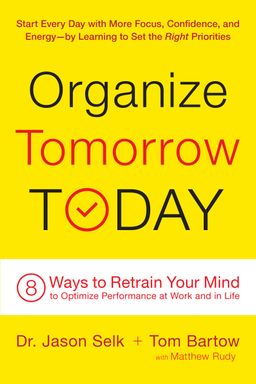
Why is it that some teams seem to effortlessly produce greatness year after year, while others—despite talent and resources—collapse under pressure? In Organize Your Team Today, performance coach Dr. Jason Selk and business strategist Tom Bartow argue that high-performing teams aren’t born—they’re built through deliberate systems of focus, trust, and disciplined mental habits. The authors contend that sustainable group success comes from mastering organizational psychology: understanding how people think, work, and connect under shared pressure.
Based on decades of coaching elite athletes, Fortune 500 executives, and financial advisors, Selk and Bartow present a manual for transforming talented individuals into cohesive, unstoppable teams. They use examples from dynastic sports programs—the St. Louis Cardinals under Tony La Russa, Nick Saban’s Alabama football teams, and John Wooden’s UCLA Bruins—to illustrate how greatness comes from structure, clarity, and mindset, not mere skill.
How Great Teams Are Made
Selk and Bartow begin with a simple truth: teams thrive when every member knows the most important goal and their specific role in achieving it. They argue that cohesion starts with alignment—every player understanding not only what the goal is but also why it matters. The authors draw parallels between sports and business, noting that dynasties like Belichick’s New England Patriots and Apple’s executive team under Tim Cook succeed because they maintain focused, clear expectations while cultivating adaptability and respect.
The book divides team development into three phases—Consistent Winning, Playoff Level, and Dynasty Level. Readers learn first how to stabilize performance, then how to handle adversity during high-stakes “playoff” moments, and finally how to build the rare culture that sustains excellence over decades. Each stage introduces tools grounded in psychology and leadership science, such as self-evaluation, trust-building, and structured goal management.
From Chaos to Clarity: The Mental Framework
At the heart of Selk and Bartow’s method is the notion of mental toughness. They argue that elite teams behave like elite minds: disciplined in thought, resistant to distraction, and capable of controlling emotional reactions under pressure. You must learn, they explain, to limit mental overload—what they call respecting your “channel capacity.” Teams and individuals often fail not because they lack ideas but because they try to change or accomplish too many things at once. The most effective leaders know when to delete distractions, focus on one priority, and master it before moving on.
The authors weave in cognitive science—explaining that humans can focus on only one improvement at a time—and practical examples of organizations that honor this principle. Ted Jones of Edward Jones, for instance, built one of America’s most successful financial networks by giving his advisors just two simple daily goals: meet twenty clients and open ten accounts per month.
Trust, Cohesion, and the Championship Mindset
Winning teams, Selk and Bartow emphasize, run on trust. They distinguish between superficial chemistry—liking your teammates—and deep cohesion, where everyone is accountable and aligned under common expectations. They tell stories like Tom Bartow’s “brick through the window” analogy, which taught financial clients to expect three good years and one bad year in any investment cycle. By managing expectations honestly, Bartow won trust that lasted decades. Likewise, coaches like Wooden and Belichick built their dynasties on clarity and repetition, ensuring players knew precisely what was required—and consistently delivered it.
The deeper lesson? Leadership is about managing human psychology. Teams perform better when leaders reduce uncertainty, eliminate unnecessary complexity, and affirm effort over perfection. As the authors note, mental toughness emerges from daily habits: clear priorities, respectful communication, honest feedback, and the courage to disagree agreeably.
Why These Ideas Matter
In today's workplace, collaboration is no longer optional—it’s the engine of innovation. Yet most teams underperform because they’re unfocused, overloaded, or plagued by mistrust. Organize Your Team Today provides a roadmap for reversing that decline through concrete, psychological practices. It’s not about motivational slogans or fancy management jargon; it’s about building systems people can believe in. By mastering channel capacity, managing expectations, evaluating with honesty, and fostering a no-victim mindset, you don’t just improve productivity—you make greatness repeatable. And as Selk and Bartow remind us, dynasties are not accidents; they are built, one disciplined day at a time.