
Idea 1
The Human Engine of Openness
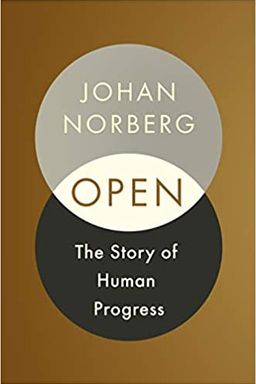
Why do some societies stagnate while others flourish? The book argues that openness—to people, ideas, and exchange—is the invisible engine behind history’s greatest leaps in prosperity and knowledge. Openness is not a moral slogan but a working system: when barriers fall, creativity compounds; when fear or control rises, progress stalls. You are part of this cycle every time you trade, learn, collaborate, or welcome difference.
Across history, humans have relied on cooperation and specialization. Trade allowed early humans to exploit comparative advantages, migration multiplied productivity by matching talent with opportunity, and science thrived when intellectual exchange flowed freely. The book calls these systems “the open machines” that made the modern world. But they are fragile: infection, ideology, or nostalgic politics can close them. Understanding how these forces intertwine is essential for defending openness today.
From Tribal Minds to Trading Networks
You evolved both to cooperate and to discriminate. Tribal instincts once identified allies and enemies to survive—but markets, cities, and laws helped redirect those instincts toward peaceful exchange. Archaeological finds—obsidian tools traded across 80 kilometers in East Africa, Ötzi’s copper axe from Tuscany—show that trade long predated states. This is humanity’s oldest technology for scaling trust among strangers.
As trade expanded, it reshaped behavior. Experiments by Joseph Henrich and others showed that market-integrated societies play fairer in economic games, suggesting that markets cultivate fairness toward strangers. The first accountant, “Kushim,” may have been humanity’s earliest symbol of abstract trust: a person recording trade before kings or poetry existed. Openness begins here—with the willingness to extend trust beyond kin.
How Openness Multiplies Wealth and Knowledge
Trade, migration, and science each exhibit a central pattern: non-zero-sum growth through collaboration. When you trade, both sides gain; when people migrate to places where their labor is more productive, total output rises; when scientists debate and replicate findings, truth progresses. The Great Enrichment—the thirtyfold rise in global incomes since 1800—was not a miracle of machines but of institutions that protected experiment and exchange. Europe’s fragmentation and pluralism made it impossible for one orthodoxy to lock the lid on progress. (Deirdre McCloskey calls it the “bourgeois revaluation”—a moral shift that made improvement respectable.)
The same logic informs digital revolutions. The internet grew not because of a plan but because of permissionless innovation. ARPAnet, TCP/IP, and Tim Berners‑Lee’s web protocols let anyone build on open platforms. Each layer amplified experimentation. In contrast, closed systems—from the Soviet computer committees that banned home PCs to China’s tightening control of entrepreneurs—demonstrate the costs of fear over freedom.
Fear, Closure, and the Politics of Backlash
Openness creates abundance but also anxiety. Because your brain evolved in small-band environments, it misreads modern interdependence as zero-sum competition. Gains for others feel like losses to you. This “physical fallacy”—treating value as if it were a pile of matter—drives protectionism and populism. When crises hit, the authoritarian reflex strengthens: fear primes conformity. Karen Stenner’s research shows that perceived disorder activates a yearning for stronger leadership and uniformity.
Pandemics, cultural disruption, and media sensationalism all exploit this reflex. The COVID‑19 crisis replayed old patterns: nationalist hoarding and censorship alongside rapid, open collaboration in genome sharing. The lesson is timeless—when uncertainty rises, people cling to closure unless institutions and leaders deliberately keep exchanges open.
Cultural Hybridity and Adaptive Identity
Cultural borrowing is the engine of creativity. Languages, alphabets, cuisines, and fashions are mosaics. From the Phoenician alphabet to jeans, cultural exchange blurs ownership. Genetic evidence mirrors it—humans are “mongrel” species; purity myths collapse under DNA’s gradient data. The chapter on cultural hybridity argues that respectful exchange strengthens societies, whereas purity politics breeds stagnation and division. Assimilation, as U.S. immigrant histories show, is often noisy but successful within generations.
Designing openness therefore means building institutions that maximize contact and minimize coercion—free trade over mercantilism, immigration channels over fortresses, open science over censorship, and civic forums over echo chambers. You can’t erase tribal wiring, but you can redirect it toward inclusive identities (“we the citizens,” “we the explorers”) instead of exclusionary myths.
The Moral Imperative of Openness
Openness is not a utopian faith but a moral design principle: it aligns freedom with progress. Closed systems temporarily promise order but end in stagnation or oppression. Cardwell’s Law reminds you that every innovation threatens incumbents, yet only societies that protect dissent avoid permanent regress. Historically, each Great Enrichment or Renaissance came from risky tolerance: merchants, migrants, heretics, and inventors allowed to tinker.
Your challenge, then, is to keep the open machine running amid anxiety. Support fair compensation for disruption, foster civic deliberation to cool tribes, and defend rule‑of‑law constraints that stop fear from mutating into autocracy. The fate of prosperity and liberty depends not on genius planners but on countless individuals who choose conversation over censorship and exchange over isolation. That is the essence of the human engine of openness.